

Washington and Ottawa clashed over a stalled trade deal, but there are bigger players—and shifting energy and geopolitical ties—that are quietly reshaping the negotiation dynamics between the United States and Canada.
Negotiators in Washington shrugged when Ottawa walked away over a language provision, but the fallout is more than a simple misunderstanding. The US has leverage in this moment, and two outside actors—China and Venezuela—are quietly changing the balance. Those shifts matter for $900 billion in bilateral trade and for how Washington approaches its northern neighbor.
President Donald Trump announced on August 28 that the United States has agreed to secure a majority of Venezuela’s proven 65 billion barrels of crude oil. US officials coordinated with Venezuelan government officials and planned to use a “partnership” with unnamed private businesses to implement the agreement. “This Transaction will greatly strengthen the already growing relationship between Venezuela and the United States,” Trump wrote, and his team framed the move as a major energy pivot.
“This Historic Transaction MORE THAN DOUBLES American Oil Reserves, greatly increases our Oil Supply, and will substantially lower Gas Prices for all Americans, long into the future, while helping to continue to set Venezuela on a course toward Tremendous Success and Great Prosperity,” the president said, laying out the energy talking points in plain language. That claim feeds into a larger US strategy to blunt energy dependence and reshape global oil leverage.
The announcement lands while Americans face roughly $4-a-gallon gasoline and while the Strategic Petroleum Reserve sits near historic lows. The United States now produces about 14 million barrels per day and is moving aggressively to secure maritime routes and energy sources. Gaining access to Venezuelan heavy crude changes the calculus when the US considers how much it needs Canadian oil in its supply mix.
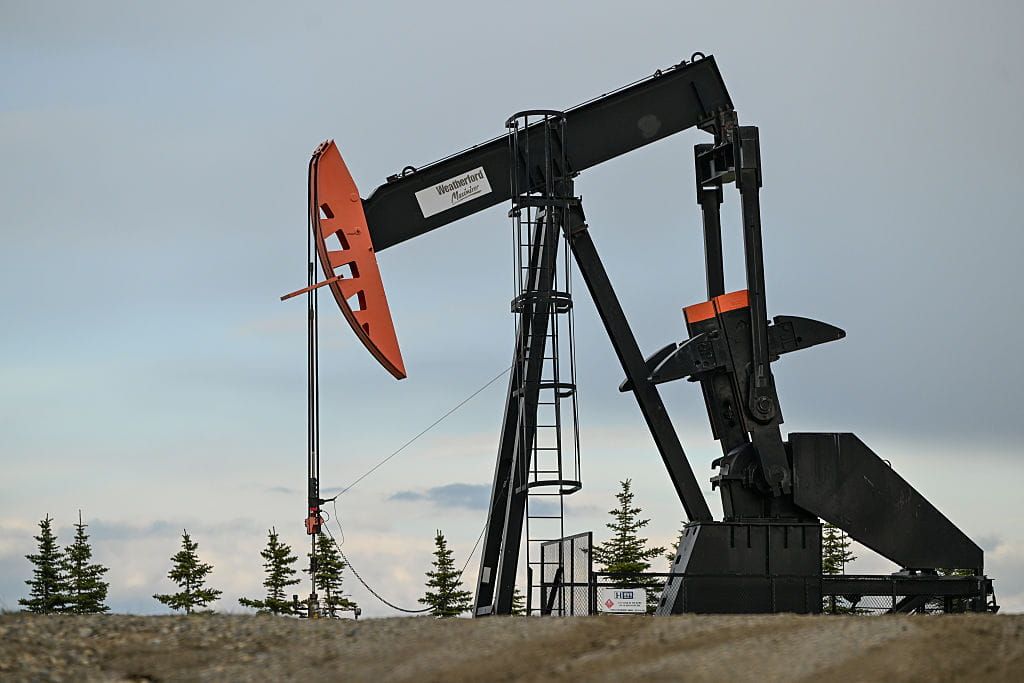
Canada exports roughly four million barrels of oil per day to the United States, much of it heavy crude that demands intensive refining. If Washington can tap abundant Venezuelan reserves in the Western Hemisphere, America’s negotiating dependence on Canadian energy erodes. That doesn’t erase ties, but it weakens a bargaining chip Ottawa once held near the top of the table.
Meanwhile, Ottawa has been courting Beijing, including a January 2026 trip to reset relations and to announce a “strategic partnership.” That outreach has raised alarms in Washington, especially as Canadian leaders signaled openness to importing Chinese electric vehicles despite US security concerns. The optics of cozying up to China at a moment of strategic rivalry are costly.
US officials have repeatedly flagged worries over transshipments—Chinese goods routed through third parties to dodge tariffs and restrictions. If Canadian supply lines become a backdoor for Chinese steel, aluminum, or autos, it undermines the policies the US has put in place. Suspicions about such trade channels are central to why Washington is leery of a broad Canada-China pivot.
If Treasury Secretary Scott Bessent is the market whisperer, then Trade Representative Jamieson Greer is the scion of international trade, and his public comments have clarified US concerns. Greer’s interviews provided more useful context for Canadians than official messaging from Ottawa, and that gap in clarity has only sharpened tensions. The US side is signaling that national security and trade integrity come before bilateral niceties.
From Ottawa’s perspective, losing leverage doesn’t feel inevitable, but the arithmetic is changing. With automobiles, crude oil, and even maple syrup stripped from the leverage box, Canada’s strongest remaining sector is a heavily subsidized lumber industry. High tax rates, widening deficits, and stagnant GDP per capita make the Canadian economic pitch thinner at the negotiating table.
Political theater will keep playing in Canada—blaming personalities and railing against “Orange Man Bad” may distract voters, but it doesn’t restore lost leverage. The practical work of trade policy now runs through energy access, supply-chain integrity, and alliances in the Indo-Pacific, and those elements will determine how future US-Canada talks unfold.

