

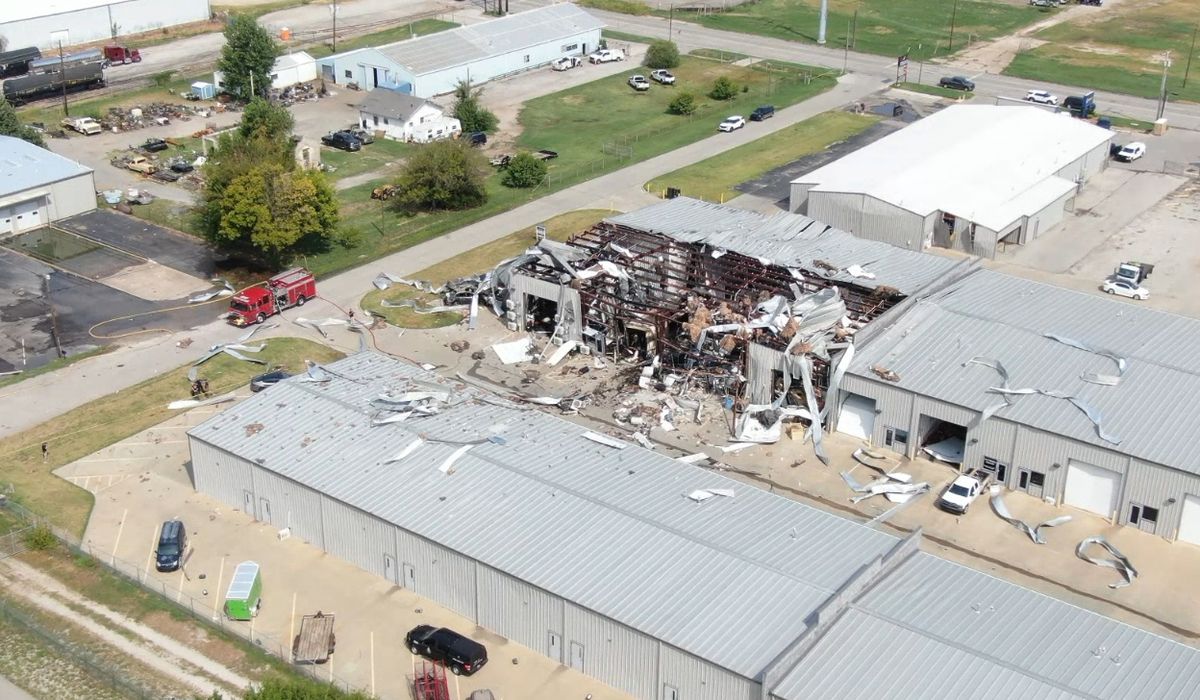
An Oklahoma man has been charged with murder after an explosion at a marijuana extraction facility that killed two employees and damaged surrounding businesses, prosecutors said Monday.
The criminal case centers on a blast at a marijuana extraction operation that left two workers dead and left neighboring shops and offices with structural and financial damage. Local authorities quickly moved from emergency response to a criminal investigation as investigators sought to determine what caused the explosion and whether criminal conduct played a role. Prosecutors said Monday that the suspect faces murder charges tied to the incident, signaling a prosecutorial view that the events crossed beyond accidental harm.
Exploration into industrial-scale cannabis extraction often focuses on volatile solvents and high-pressure equipment, and investigators typically check records, permits, and safety protocols to establish a timeline. Forensic teams examine the scene for evidence of improper storage, faulty machinery, or deliberate tampering, while prosecutors gather testimony from witnesses and survivors. That work helps determine whether the disaster resulted from negligence, reckless behavior, or intentional wrongdoing.
Charging a business operator with murder in the wake of an industrial accident is rare and reflects an intent to hold someone criminally accountable for loss of life rather than treating the case as a civil or regulatory matter. Prosecutors pursuing murder counts must show that the defendant’s actions met legal standards for culpability under state law, a higher bar than showing mere negligence or code violations. That legal distinction will shape the defense strategy and the kinds of evidence presented at trial.
Families of the victims and the broader local community often demand answers and accountability after such tragedies, and public pressure can influence how aggressively authorities investigate. Business owners whose properties were damaged face the added burden of repair costs and lost income as insurance claims are sorted out and structural assessments are completed. The explosion’s ripple effects extend beyond criminal proceedings, touching zoning enforcement, municipal inspections, and neighborhood safety conversations.
Industry analysts say commercial extraction carries inherent dangers when proper safeguards are not in place, including ventilation, explosion-proof equipment, and trained personnel familiar with hazardous processes. Regulators and licensing agencies typically set standards intended to prevent catastrophic failures, and investigators will want to see whether the facility complied with those requirements. If the inspection record shows lapses, that material can be crucial in both criminal and civil cases that follow.
Emergency responders who arrived at the scene encountered a complex incident scene involving structural collapse, fire damage, and hazardous materials concerns, requiring coordination among fire, police, and hazmat teams. Their reports and on-scene observations are often among the first pieces of evidence evaluated by prosecutors and defense lawyers alike. Those initial findings can shape the narrative for both sides and influence whether plea negotiations or pretrial motions take place.
In criminal cases tied to industrial accidents, prosecutors may rely on expert witnesses to explain technical matters like solvent behavior, ignition sources, and compliance with safety codes to a jury. Defense teams commonly challenge such testimony and pursue alternative explanations, including equipment malfunction or unforeseeable circumstances, to undercut claims of criminal intent. The complexity of the science involved means trials can hinge on competing expert analyses rather than just eyewitness accounts.
Business owners, employees, and municipal officials are watching how authorities proceed because the outcome could set precedents for future enforcement and criminal accountability in the cannabis industry. Lawmakers and regulators may respond by reviewing licensing requirements, inspection regimes, or penalties when fatal incidents prompt public concern. Meanwhile, affected workers and families seek clarity on responsibility and compensation amid the ongoing legal process.
The case will move through arraignment, pretrial discovery, and potentially a jury trial if it does not resolve by plea, and each phase will reveal more about the facts prosecutors believe support the murder charge. As investigators continue to collect physical evidence, communications, and records from the facility, the legal arguments will sharpen around questions of foreseeability, duty of care, and the defendant’s state of mind. The community impact of the explosion, including the human toll and economic harm to nearby businesses, remains a central part of the story as the criminal case progresses.

