

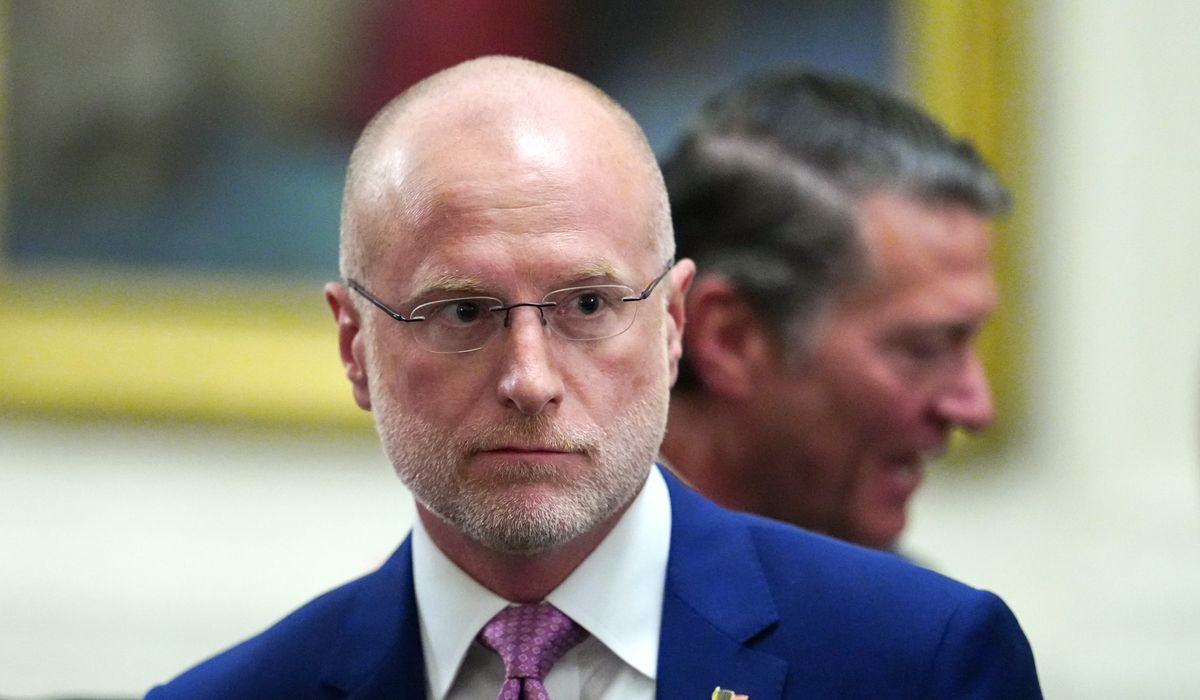
Brendan Carr backs President Trump’s skepticism about media bias and says it’s reasonable to call out networks he views as politically motivated while urging accountability within the communications ecosystem.
Federal Communications Commission Chairman Brendan Carr said President Trump is right to question “partisan” television networks, and that remark has stirred the usual debate about media influence and government oversight. The exchange reflects long-standing conservative concerns about newsroom slant and whether legacy broadcasters meet the public-interest obligations that come with the privileges they enjoy. For Republicans, the focus is simple: bluntly name the problem and seek fair treatment rather than ceding the narrative to Washington elites.
Carr has positioned himself as a watchdog for viewpoint diversity, arguing that broadcast outlets operate under a special legal framework and therefore should answer to the public they serve. That does not mean endorsing censorship or government-controlled news, but it does mean insisting on transparency and consistent enforcement of rules. Conservatives argue that pushing back against concentrated media power protects free expression by opening space for alternative voices and independent journalism.
Critics will claim this rhetoric threatens press freedom, but from a Republican vantage it is aimed at restoring balance, not silencing dissent. When networks with national reach act as unofficial arbiters of acceptable opinion, citizens lose the ability to make informed choices free from institutional pressure. The remedy conservatives favor includes more openness about editorial practices, clearer standards for content, and a regulatory posture that treats all outlets uniformly without partisan favoritism.
The conversation also touches on licensing and the public-interest standard that governs broadcast spectrum use. Broadcasters operate on frequencies the public grants them, and many conservatives believe that privilege carries responsibilities beyond commercial success. If networks consistently serve a narrow political agenda, they risk betraying the principle that airwaves belong to the people, not the pundits on a payroll.
Social media companies changed the information ecosystem, but they did not erase the influence of television networks. Traditional broadcasters still set national agendas during key moments, and when those outlets tilt repeatedly in a single direction, the consequences are real. Republicans point to this concentration of influence as a reason why citizens distrust both the media and the institutions that depend on accurate reporting to function.
Policy responses preferred by conservatives emphasize transparency, competition, and enforcement of existing rules rather than new mandates that expand government power. That means encouraging more outlets, protecting platform neutrality, and using oversight tools already on the books to ensure broadcasters meet their obligations. The goal is to compel better behavior through market and regulatory pressure while defending free speech and journalistic independence.
Ultimately the debate over media bias is also a debate about civic trust. When political leaders and regulators call out perceived slant, they are tapping into a broader demand for fairness and accountability. For Republicans, pushing back against “partisan” coverage is part of defending the marketplace of ideas and ensuring that citizens, not elites, decide which voices deserve the nation’s attention.

