

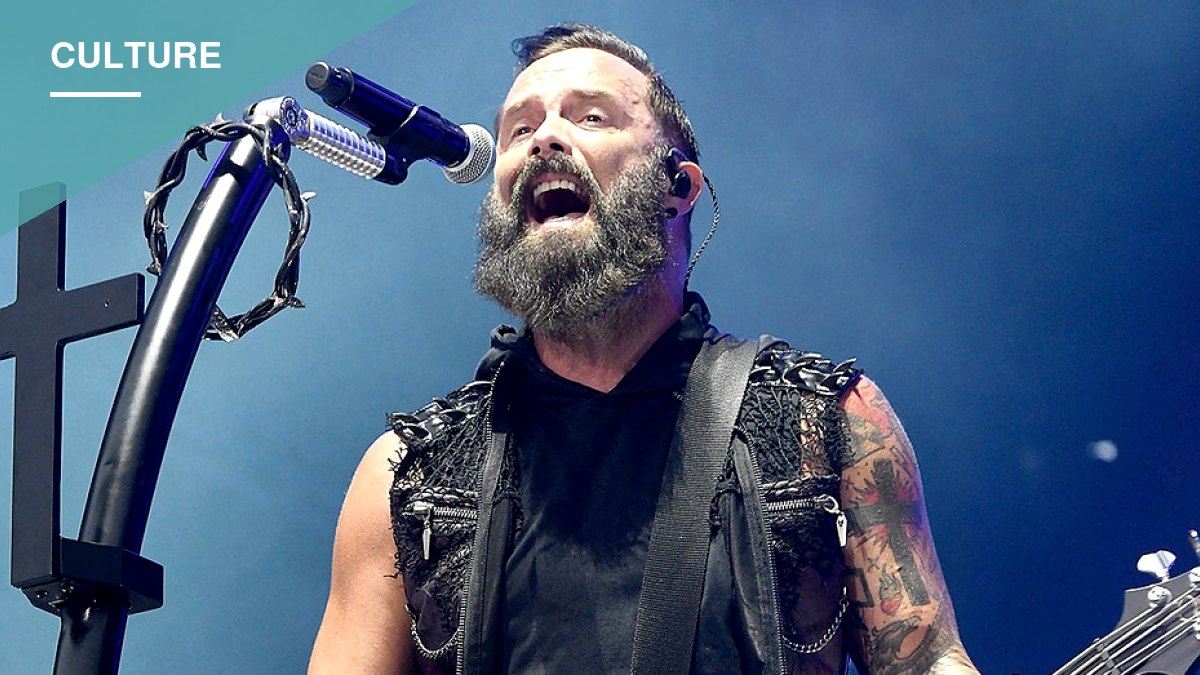
Skillet frontman John Cooper says he believes people commonly labeled “woke” are often driven by genuine good intentions, even as he argues their methods end up causing harm.
Speaking on the “Unashamed with the Robertson Family” podcast, Cooper said, “I think it’s really worth mentioning that people that we would call woke, the things that we find really problematic, I think it’s worth mentioning that most of those people really have big hearts. They want justice. They want the world to be better.”
He added that the trouble lies in execution. “They’re just going about it in a way that they don’t know is wrong, and it’s actually hurting them,” Cooper said. “It’s hurting everybody. It hurts society.”
Cooper pointed to conditions in inner cities as an example, criticizing politicians who claim to champion marginalized communities. “I look at the things that the politicians that say they want to help the poor, they want to help the marginalized, they want to help people of color, whatever it may be, and all they do is keep hurting them more and more and more,” he said.
He said his view isn’t abstract — he’s seen it among people close to him. “I know these people. Some of them work for me. They’ve worked for me for 15 years. I love them,” Cooper said. “And I say to them, ‘I know you’re trying to be a good person, but it’s going to hurt people.'”
Cooper traced his disagreement back to his Christian faith. “What they’re doing is not true, and it’s not based on the Bible,” he said. “It goes against the way God tells us how to live. They end up hurting themselves, and now we’ve got a culture so nihilistic that doesn’t know that they matter. They’re looking to matter by doing social justice, but they keep hurting themselves more.”
A defense of free speech
Cooper, who has fronted Skillet for roughly 30 years, told Fox News Digital he remains firmly committed to artistic freedom despite his religious convictions shaping some of his professional choices.
“I am a huge believer in freedom of speech,” he said. “I hate cancel culture. I don’t want anybody to be canceled because I’ve never said, ‘So-and-so rock artist sings a song against Jesus and I want him pulled down from Spotify.’ I would never say that, because that’s not what art is.”
He said he has performed alongside atheists and artists openly hostile to Christianity. “Some of them, I would say, are probably personally not only atheist, they probably personally are a little anti-Christ,” Cooper said. “And they would know it. They would say, ‘The truth is, John, I just hate the concept of Jesus.’ And we’re still friends.”
Still, Cooper said there have been rare limits. “I can only think of two things in my entire career I’ve turned down,” he said, describing one instance involving a band that planned to feature “Jesus on an upside-down cross” in its stage show.
“I don’t think I want to tour with that act,” Cooper said. “And it’s not because I hate them. I don’t hate them at all. I’m not calling for them to be pulled down from Spotify. I just go, ‘Hey, this is just something that you’ve gone a little too far to desecrate something that I think is sacred.'”
Cooper said the answer to disagreement isn’t suppression but open debate. “I would like to share my faith in Jesus,” he said. “And because of that, I don’t mind if somebody else sings a song that’s against what I believe. Freedom of speech. Let’s go put all the ideas out there in the free market and let’s see which one wins.”

