

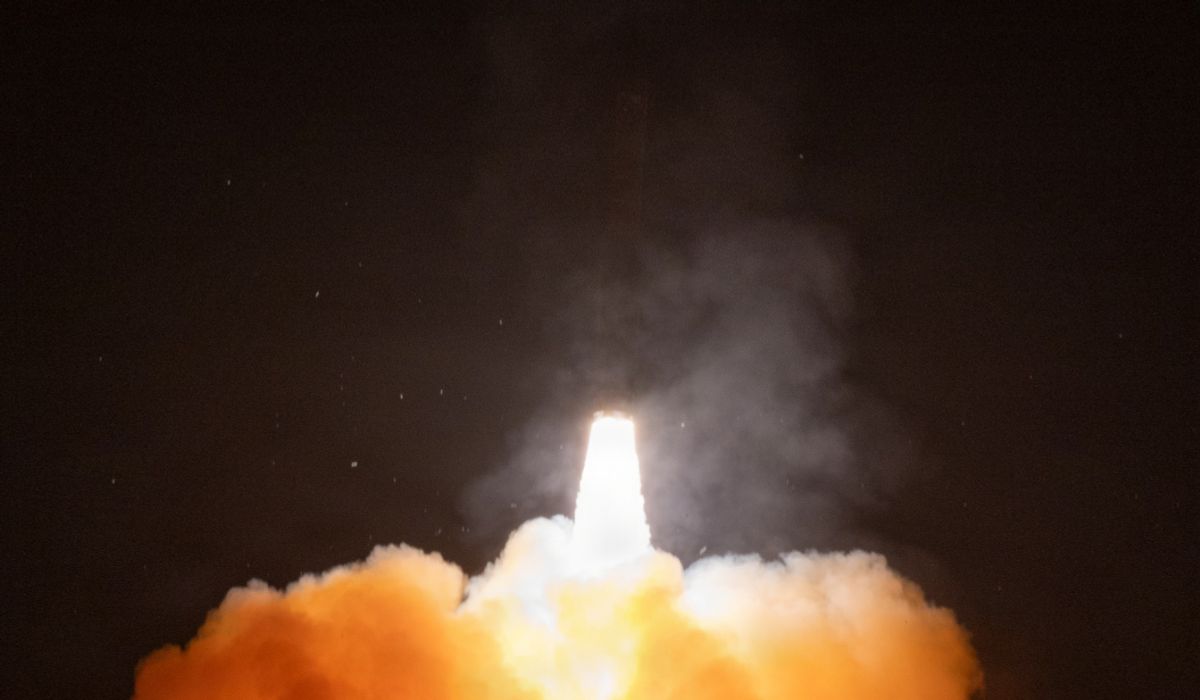
The Air Force launched an unarmed Minuteman III intercontinental ballistic missile from a base in Southern California early Wednesday as part of the service’s continuing effort to evaluate the weapon system’s reliability and readiness.
The launch was an unarmed Minuteman III intercontinental ballistic missile fired from a base in Southern California early Wednesday, carried out to check system performance and gather technical data. Officials described the test as routine and planned, part of an ongoing program of evaluations aimed at ensuring the missile force functions as expected. The exercise involved ground crews, range support and telemetry systems working together to collect a wide range of diagnostics.
These flight tests are not about escalation; they are about assurance. Data from the launch helps engineers understand how components behave under flight conditions, confirms guidance and propulsion systems, and highlights maintenance needs. That information feeds directly into schedules for inspections, repairs and upgrades so the force stays reliable without unnecessary risk.
On the human side, tests like this also train personnel who operate and maintain the missile force. Launch operations exercise command-and-control procedures, coordination with range safety authorities and the logistics that support missile units. Regular training keeps crews sharp and ensures that any technical issues are identified and addressed before they become operational problems.
From a strategic standpoint, a credible ICBM capability is a cornerstone of deterrence and national defense. Maintaining land-based missiles, even in peacetime, signals to potential adversaries that the nation can protect its interests and respond if necessary. Tests provide transparency about routine activity while reinforcing the posture that underpins deterrence.
Safety and public notification are built into every scheduled launch. Tests are planned well in advance, coordinated with civil aviation and maritime authorities, and tracked to prevent any danger to people or property. Authorities emphasize that the missile was unarmed and that safety protocols were observed throughout the countdown, flight and telemetry collection phases.
Technically, the Minuteman III remains a tested and maintained element of the strategic triad. Engineers monitor solid rocket motors, guidance packages and reentry vehicle interfaces to ensure each subsystem meets performance standards. The information gathered informs long-term modernization efforts and helps prioritize investments that extend service life and improve reliability.
These launches also feed fiscal and policy discussions that determine how the nation fields its deterrent forces. When service tests confirm systems are performing well, decision-makers can better justify targeted upgrades rather than wholesale replacements. That approach aims to balance fiscal responsibility with the need to keep an effective and credible defense posture.
Critics sometimes question the expense of modernizing old systems, but routine tests show why steady maintenance matters. When components are exercised under flight conditions, latent flaws become visible and can be fixed before they affect operational readiness. That prevents surprises and keeps costs from ballooning due to emergency fixes or rushed programs.
Observers who watch these launches note that they are part of a predictable schedule of tests rather than isolated events. The Pentagon and the services use recurring exercises to benchmark performance across time, compare results against models and refine maintenance cycles. That continuous feedback loop improves reliability and gives commanders confidence in the force.
At the operational level, range and telemetry teams play a central role in turning raw test flights into actionable improvements. Sensors, tracking radars and post-flight analysis convert a short flight into months of engineering and maintenance work. The process strengthens institutional knowledge and informs decisions about spare parts, depot work and contractor support.
For the public, the most visible aspect is a headline and a routine notification; for technicians and commanders, the same event becomes a trove of technical readouts and procedural lessons. As long as global threats and strategic competition exist, routine, transparent testing like this will remain a necessary part of sustaining a safe, secure and effective deterrent force.

