

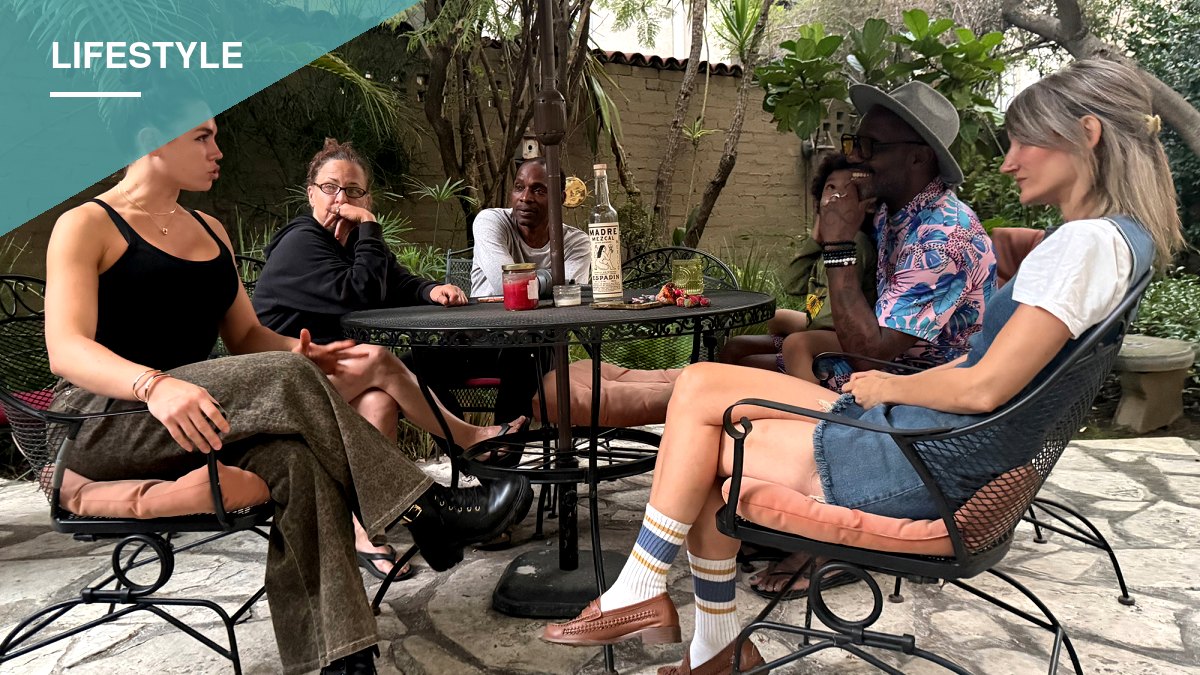
Mary Dahm, a writer and medical technology publicist, says it took her eight years of living in Los Angeles to find real community — and it was waiting the whole time in the courtyard of her own apartment building.
In an essay published by the New York Post, Dahm describes moving into a Spanish Art Deco building from 1927, steps from Hollywood Boulevard, three years ago while apartment hunting on her own. For the first two years she barely engaged with her neighbors beyond a passing hello, including a neighbor named Shawn who always greeted her warmly.
That changed when she ran into Shawn at Trader Joe’s alongside another neighbor, Colin. The two greeted her as old friends, and the three walked home together talking. That encounter opened the door to a social world she hadn’t noticed: a courtyard with tables and a fountain that served as a gathering spot for residents, including Shawn’s wife Alicia, longtime residents Joe and Glenna who have lived there 20 years, and a set designer, painter, fashion photographer and local bartender.
Dahm notes that Shawn, a former nightlife entrepreneur who once threw parties for thousands of people, and Colin, who she says gets uneasy around more than four people, now take a walk together every Thursday — a friendship she says would likely never have formed outside the building.
Dahm, who writes that she is single by choice and has never wanted children, says the courtyard relationships changed her daily life even though she already had close friends she saw in the evenings. Working remotely, she writes, used to mean going entire days without speaking to anyone in person. Now a trip to the mailboxes or a walk through the courtyard can turn into conversation — including with Shawn’s son Finn, whom she calls the only child who has ever hugged her unprompted.
She cites a 2022 Harvard Business School study finding that people who interact with a wider variety of people throughout the day — not just spouses and close friends, but acquaintances, strangers and neighbors — report greater happiness. Sociologists refer to these looser connections as “weak ties,” which Dahm argues provide a sense of belonging that close friendships alone cannot.
She argues that Los Angeles’s car-dependent layout works against these chance encounters, since residents typically know their destination and treat the unexpected as an inconvenience rather than an opportunity. That, she writes, has helped fuel an industry of paid social clubs, friendship apps and curated dinners designed to manufacture the very interactions many people have engineered out of their own neighborhoods.
Dahm closes her essay describing a recent moment in the courtyard when Shawn introduced himself to a new resident in his early twenties who looked startled by the gesture — a reaction Dahm recognized, since she says she once felt exactly the same way before she found her own community close to home.

