

Democratic socialism has re-emerged as a force built on social media-era theater, and many of its rising figures are trying to laugh off past excesses while moving toward actual power.
Democratic socialism looks less like a coherent movement and more like a chorus replaying an old, awkward hit. Candidates who once embraced the loudest fringes of woke rhetoric are now recalibrating as they chase electability. That shift has become obvious on talk shows, in interviews, and across resurfaced social posts.
The people carrying this banner came of age with social media as default public life, so their mistakes and provocations are preserved forever online. When past tweets and videos resurface, the instinct is to downplay or deny rather than defend. That tactic is working for some, at least so far.
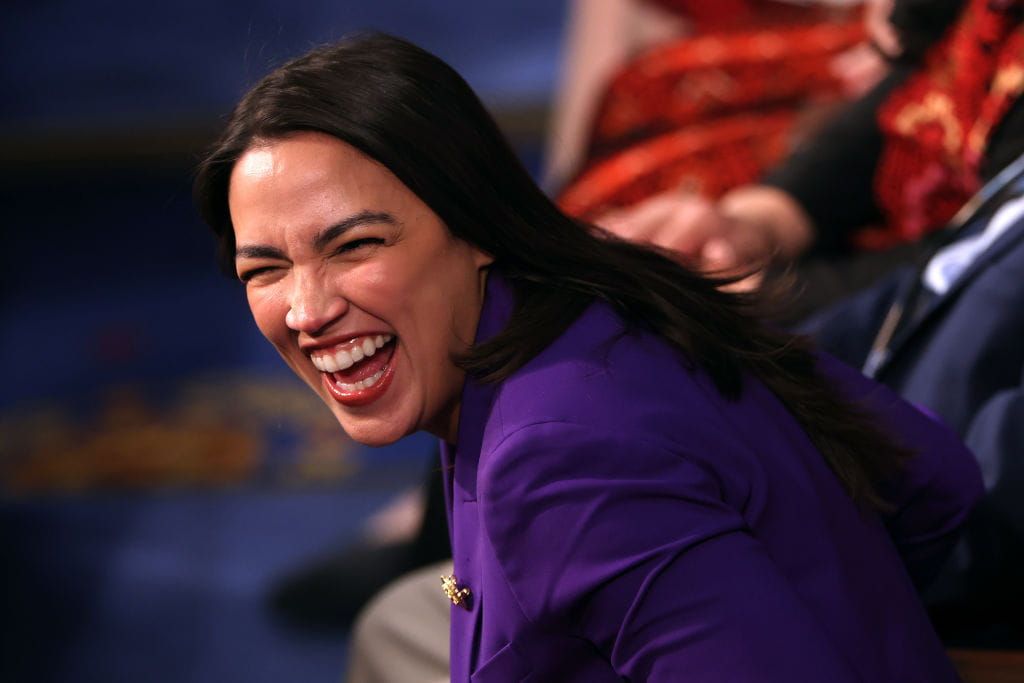
Rep. Alexandria Ocasio-Cortez shrugged publicly at some of her earlier rhetoric and leaned into a lighter tone on network television. “I have a local city councilman that has this saying: ‘Woke 1 was crazy,’” AOC said, adding that the rhetoric espoused by her and other Sanderistas would never be emulated today. Her laughter was meant to signal reinvention more than repentance.
Not long ago, AOC backed calls to defund the police, proposed an expensive Green New Deal, argued against building prisons, and defended Drag Queen Story Hour as a protected cultural event. Those stances were loud and unambiguous during peak cultural conflict. Today they often get reframed as youthful heat or political theater.
Wisconsin candidate Francesca Hong supplied a textbook example of the combustible social media past. In November 2020 she said the United States should “cancel Thanksgiving.” She followed that with a longer line about colonization and pandemic symbolism that made national headlines.
Hong also wrote that “police exist to uphold white supremacy,” and she backed defunding and dismantling prisons. She even posted a personal anecdote on X: “I ate two bites of my kid’s cheeseburger at a Culver’s in black river falls [sic] and told him they ran out of ice cream. Mostly just wanted to leave bc I was on the verge of a anxiety attack…to [sic] many old white people who didn’t think we spoke english.” Those moments are the kind that haunt modern campaigns.
Other self-described democratic socialists have similar histories: New York hopeful Darializa Avila Chevalier has pushed for open borders and sweeping economic changes, and Abdul El-Sayed once supported defunding police due to “systemic racism and police brutality.” These stances resurface in rapid media cycles and force candidates into defensive maneuvers. The record matters because voters can and will review it.
Some officeholders show that a controversial online past does not always block advancement. New York City Mayor Zohran Mamdani’s rise suggests voters can overlook radical language if the promise is generous enough. Many progressive hopefuls now wrap big spending and wealth redistribution in kinder packaging, even as critics call the approach “legalized larceny.”
There is also a philosophical irony at play when reformers become what they opposed. German philosopher Friedrich Nietzsche wrote in his 1886 book Beyond Good and Evil that centering your mind on fighting iniquities could risk adopting the very same destructive mindset. “Whoever fights monsters should see to it that in the process he does not become a monster. And if you gaze for long into an abyss, the abyss gazes also into you,” Nietzsche wrote. The warning about mirror-image corruption feels oddly relevant today.
The practical effect of this evolution is a set of candidates who are part cautionary tale and part recalibrated package. Their pasts remain a political ledger that opponents and voters can consult. The debate now is whether softened rhetoric hides unchanged policy goals or signals genuine moderation, and that question will shape contests in the near term.

