

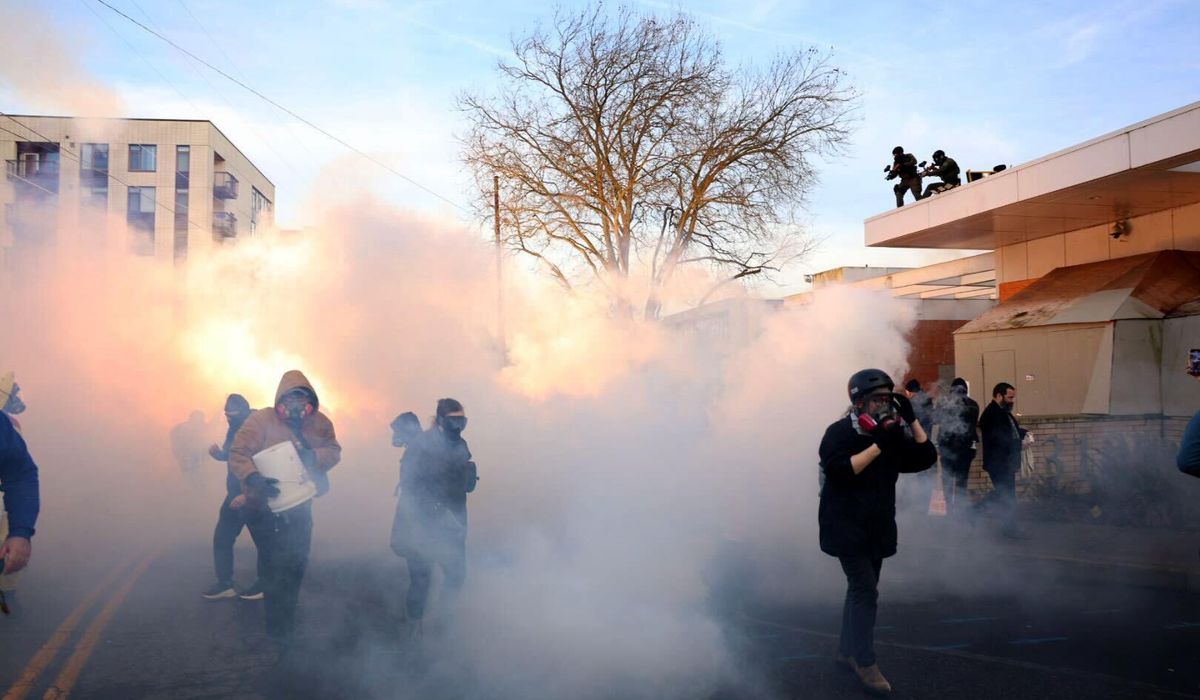
A federal appeals court paused a lower court ruling that had criticized ICE’s response to riots in Portland, finding the agents were carrying out law enforcement duties rather than retaliating against protesters.
The appeals court’s decision to block the lower court ruling shifts the dispute back into the legal arena and gives federal agents breathing room while the case proceeds. That pause matters because it preserves the ability of federal officers to protect property and enforce the law without an immediate injunction tied to a contested finding of retaliation. For conservatives who prioritize order and rule of law, this is a welcome check on activist courts moving too fast to tie the hands of law enforcement.
The original lower court had concluded ICE overstepped in its tactics, ruling at least in part that agents’ actions amounted to unconstitutional retaliation against protected speech. The appeals court disagreed enough to halt that ruling, signaling that the legal question about intent and proper conduct is not settled. This isn’t about endorsing every tactic used on the streets of Portland, it’s about making sure courts examine the full context before issuing remedies that limit federal enforcement.
Portland became ground zero for the national debate over protests, property damage, and the limits of federal intervention. Agents were sent to protect federal courthouses and other federal assets after repeated clashes and attacks on government property. Critics painted the deployment as heavy handed and politically motivated, while supporters argued it was a necessary response to violence and lawlessness that local authorities failed to control.
The appeals court’s move recognizes a basic principle: federal officers must be allowed to carry out their duties while appellate review proceeds. An immediate enforcement of the lower court’s finding could have curtailed standard law enforcement responses across similar situations. From a conservative perspective, that would set a dangerous precedent where tactical split-second decisions face sweeping judicial second-guessing before facts are fully developed.
Legally the fight centers on whether actions were aimed at silencing protesters because of their views or aimed at stopping criminal behavior and protecting property. Courts look at evidence of intent, the sequence of events, orders given, and what alternatives officers had. The appeals court blocking the prior ruling means judges want a fuller record and clearer legal analysis before deciding that federal agents crossed a constitutional line.
On the ground, residents and business owners in downtown Portland were left to witness nightly unrest that drained the city’s sense of safety and commerce. Local leaders who criticized federal involvement often blamed the presence of agents for escalating tensions rather than addressing why federal property repeatedly became a target. The debate exposes a deeper split: some officials prioritize an expansive tolerance for protest tactics, others insist on protecting citizens and property from violence.
This case will now continue through the appellate process and could wind up setting national precedent on how courts weigh law enforcement necessity against First Amendment protections. If the appeals court ultimately sides with the lower court, federal agencies will face stricter limits on how they respond in future unrest. If the appeals court upholds the block or reverses the lower ruling, it will reaffirm the discretion of federal officers in high-risk, chaotic situations.
The legal back-and-forth also raises questions about local governance and accountability. When cities decline to use their resources to secure federal buildings or tamp down violence, it invites federal intervention. Republicans will point out that lawful order cannot be optional, and that federal resources exist to fill the gap when local officials fail to act. The appeals court decision simply buys time for courts to sort those responsibilities without immediately hobbling federal capacity.
Whatever the final outcome, this is a reminder that constitutional protections and public safety are not mutually exclusive, and that courts must carefully balance rights with the practical need to stop violence. The appeals court’s move to block the lower ruling reflects that caution and underscores the importance of measured judicial review in politically charged cases. The fight over Portland’s protests and federal response is far from over and will keep testing where our system draws the line between protest and public disorder.

