

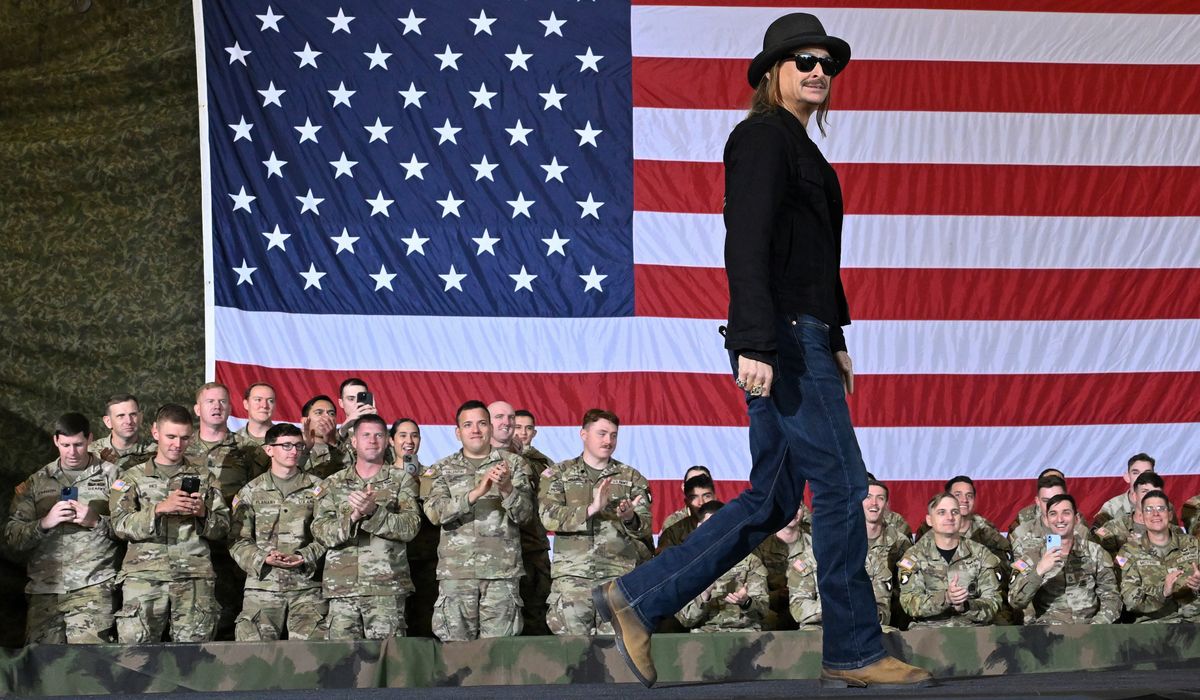
Kid Rock and Defense Secretary Pete Hegseth flew together in Army Apache attack helicopters at a Virginia base on Monday, an action confirmed by a defense official that came weeks after military pilots had drawn public scrutiny.
The joint flight drew attention because it placed a high-profile musician alongside the civilian head of the Pentagon in a frontline aircraft, and the defense official confirmed both rode in Apache attack helicopters on the same day. That detail matters because it speaks to how military access and visibility are managed for public figures and officials. The timing, coming after recent scrutiny of military pilots, added another layer of public interest.
From a Republican perspective, the optics are straightforward: a defense secretary going to see aircraft and crews in person shows leadership doing the job. Pete Hegseth’s presence in the cockpit signals a willingness to be hands-on and to evaluate readiness firsthand rather than relying only on briefings. Bringing a civilian ally to see the platforms can be framed as support for the force and its modern equipment.
Kid Rock’s ride in the Apache also fed media appetite for spectacle, but the important thing is what the flights actually represent for soldiers on base. These moments can boost morale and make a statement that civilian leaders and public figures recognize the sacrifices of service members. Republicans tend to view such visits as common-sense displays of respect for the men and women who operate complex, dangerous machines daily.
Questions about who gets escorted onto military flights are fair, and officials have an obligation to be transparent about procedures and safety. Yet there is a risk in turning every visit into a political football, especially when allegations or scrutiny levied at pilots are not fully explained to the public. The right approach is to be clear about the rules and to keep focus on maintaining operational safety and discipline.
There is also a broader point about the relationship between the Pentagon and public life. Allowing a prominent entertainer to ride in a combat helicopter invites attention, but it can also humanize the mission for civilians who rarely see military hardware up close. As long as rules are followed, these kinds of outreach moments can bridge the civil-military divide and remind people what their armed forces do.
Accountability remains key after any high-visibility flight or incident that draws scrutiny. If pilots or crew members face questions about conduct, the chain of command should investigate and explain findings without political theater. Republicans often emphasize that discipline and unit cohesion depend on clear standards, not on headlines or rushed judgments.
Finally, public officials who visit bases should do so with an eye to improving readiness and supporting troops, not just scoring a photo op. Traveling with public figures can be useful when it raises awareness about needs like funding, training, or equipment upgrades. When those visits are handled properly, they become part of a healthy partnership between civilians and the military rather than a source of needless controversy.

