

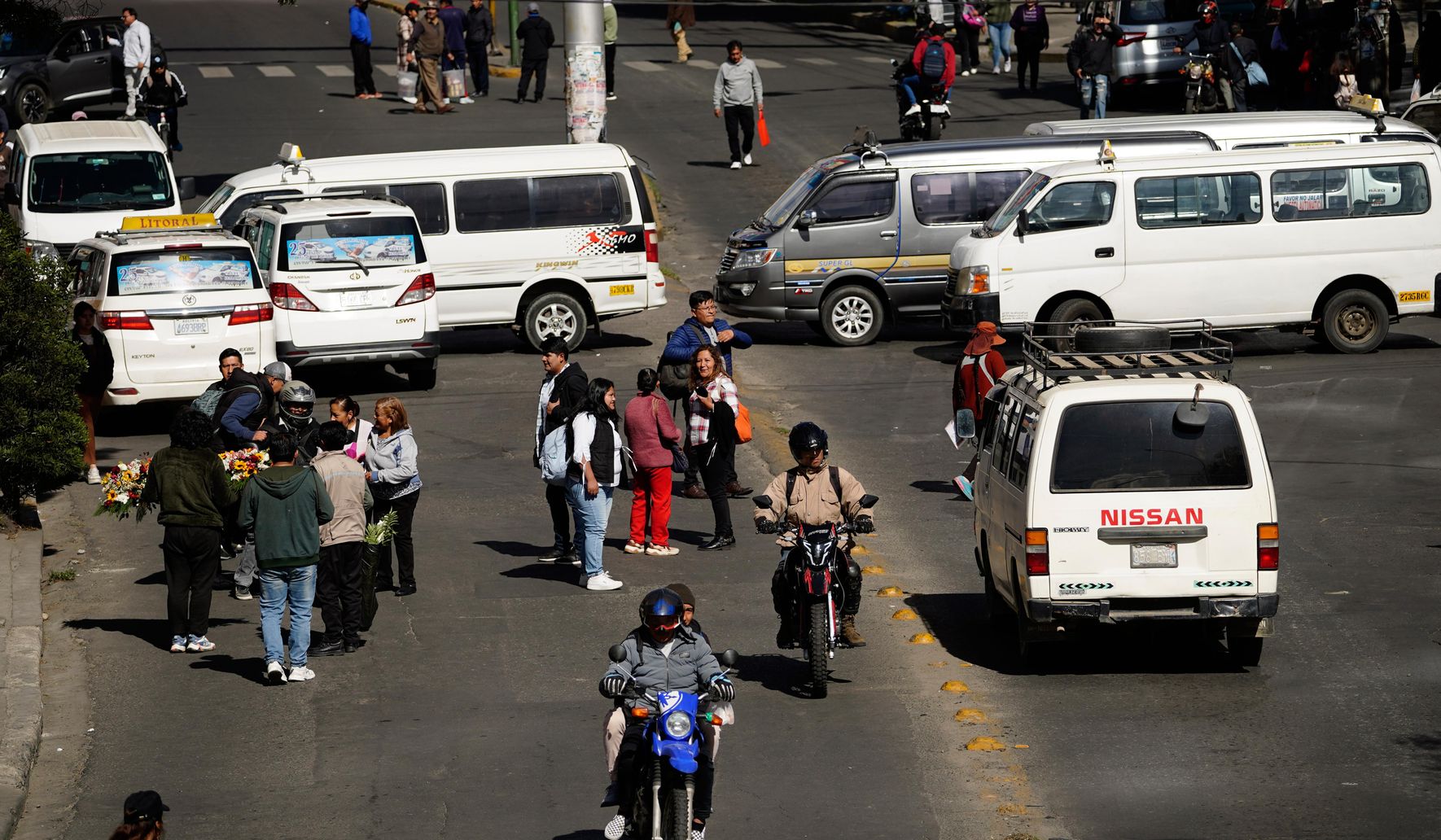
The streets of Bolivia’s largest cities, La Paz and Santa Cruz, were brought to a standstill on Friday as public transportation workers went on strike against a 100% fuel price increase ordered by the government.
Public transportation workers staged a sudden strike, halting buses, minibuses and other services across La Paz and Santa Cruz. Commuters found routes canceled and schedules evaporating, turning normally busy corridors into waiting zones. The action targeted a government decision that doubled fuel costs overnight, a move that removed a predictable expense structure for drivers and operators.
City streets filled with idled vehicles and clusters of stranded passengers, and informal ride offers popped up where routes once flowed. Markets and small businesses felt the ripple almost immediately as deliveries slowed and customers arrived late or not at all. The human cost of the price shock became visible fast: workers following strict schedules lost hours, and families faced unexpected transport bills.
Operators argued that a 100% increase in fuel wiped out tight profit margins and made daily runs unsustainable without an equivalent fare adjustment. Drivers on fixed contracts said the sudden expense hit their take-home pay hard, pushing some to consider pausing service until compensation plans were clarified. Union leaders framed the walkout as a defensive move to protect livelihoods rather than an unwillingness to adapt.
On the ground, commuters improvised with carpooling, walking longer distances and turning to private taxis where they could afford them. Those alternatives often came with higher prices and longer waits, and some neighborhoods reported near-total paralysis during peak hours. The immediate impact showed how reliant urban life is on predictable fuel costs and regular transit schedules.
The government defended the measure as necessary to correct pricing distortions and relieve fiscal strain, but the timing and speed of the change drew heavy criticism. Officials said removing subsidies or adjusting prices would restore market discipline, while critics noted the lack of a gradual phase-in or safety net. The contrast between policy goals and practical effects left many citizens caught in the middle.
From a Republican perspective, policy shifts that hit working people should be handled with clear transition plans and targeted relief, not sudden shocks. Responsible reform means cushioning the vulnerable and ensuring markets signal efficiently without causing immediate hardship. The way a change is implemented matters as much as the reasoning behind it, and perception of fairness can determine whether reforms stick.
The broader economic consequences are hard to ignore: higher transport costs feed into food prices, delivery fees and service charges, nudging inflation upward. Small firms that rely on daily deliveries face squeezed margins and potential cuts to staff or hours. These second-order effects can slow recovery, especially in cities already managing tight household budgets.
Strike tactics included roadblocks and mass withdrawal of services at key transit hubs, amplifying pressure on municipal authorities to open talks. Local union officials demanded either a rollback, subsidies for fuel, or a defined compensation plan tied to the additional costs. Negotiations were expected to begin quickly, but trust would likely be an issue after the abrupt policy shift.
Political fallout could be significant for leaders who pushed the increase without broader buy-in, as public patience wears thin when daily life is directly affected. Opposition groups seized the moment to highlight planning failures, while governing officials sought to emphasize long-term benefits and fiscal necessity. The situation underscored how economic choices can translate into political vulnerability when communication and transition are mishandled.
As talks proceed, the immediate questions are practical: will there be targeted relief, a phased approach, or compensation tied to routes and incomes? Workers want clear, enforceable guarantees before resuming normal operations, and citizens want predictable service restored. The coming days will test whether policymakers can reconcile fiscal aims with the urgent need to keep cities moving.

