

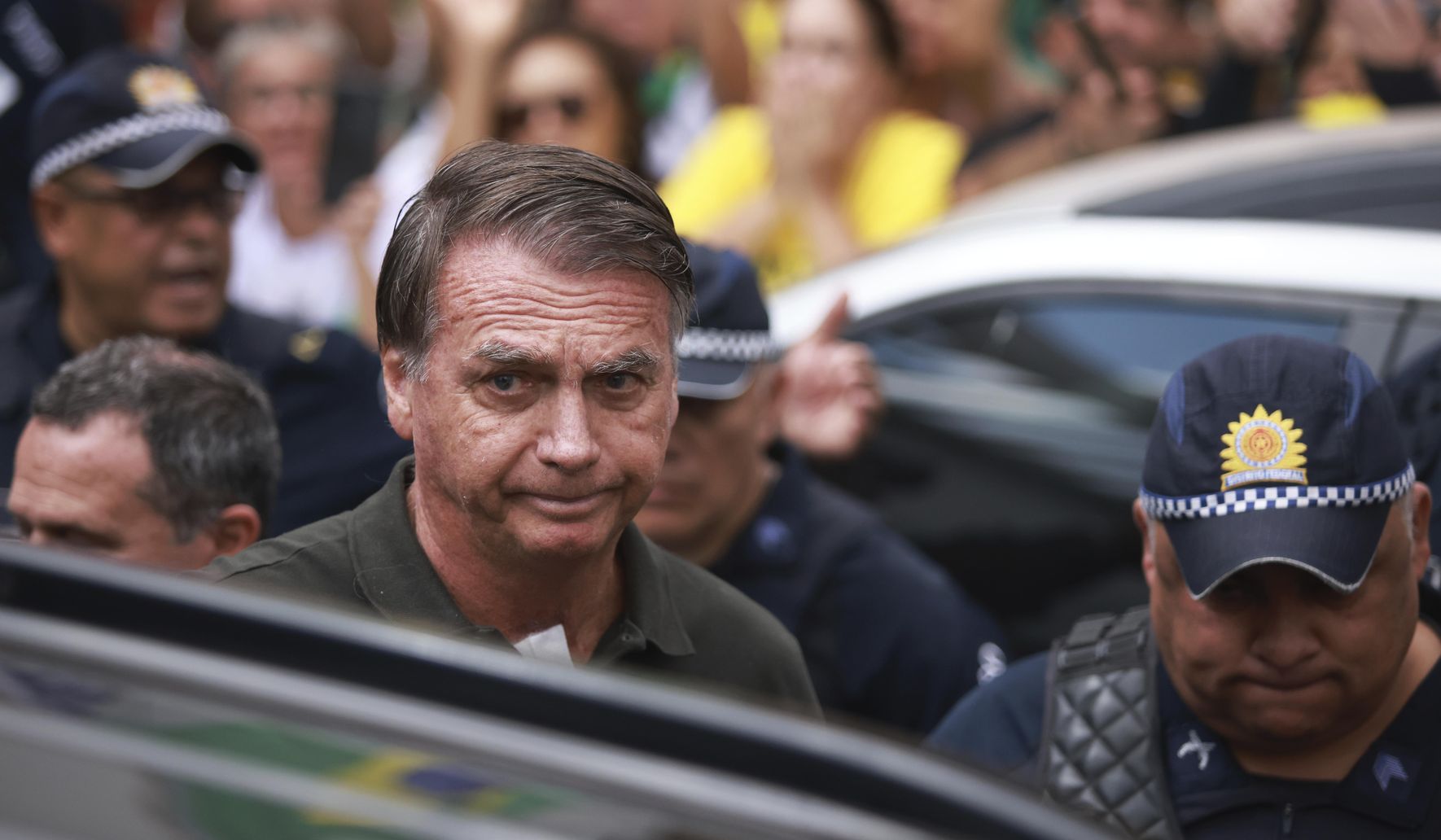
Brazil’s top court has kept former President Jair Bolsonaro confined under house arrest after he acknowledged trying to tamper with his ankle monitor, a development that sharpens the clash between the judiciary and Bolsonaro’s political base.
Brazil’s Supreme Court upheld Monday former President Jair Bolsonaro’s incarceration after he admitted to trying to break his ankle monitor this weekend while under house arrest. The decision landed hard in a country already split over accountability, legality, and political survival. For many supporters, the move feels like proof the system is determined to sideline a popular leader.
The scene is part legal dispute and part street politics, with supporters and critics trading narratives about justice and overreach. Bolsonaro’s defenders say the court’s action looks like selective enforcement, one more example of institutions stepping beyond neutral law enforcement. Opponents argue the court is enforcing rules that apply to everyone, regardless of past office.
House arrest with an electronic monitor is meant to balance detention and movement restrictions, but tampering with the device is a serious violation. The admission to attempting to break the ankle monitor undercuts public claims of innocence for those who argue he only faces political targeting. At the same time, it gives the court clear grounds to tighten supervision.
The broader legal context includes multiple investigations and charges that have shadowed Bolsonaro since his time in office, and the judiciary faces intense scrutiny over how it handles high-profile figures. Republicans and conservatives watching from abroad worry about precedent: when judges move aggressively against a political leader, it changes the rules of engagement for opposition politics. That concern fuels a larger debate about where the line between law and politics should be drawn.
Public reaction has been loud and unpredictable, with protests and social media campaigns amplifying every development. Bolsonaro’s base still sees him as a symbol of resistance against political elites and a checkpoint against shifting cultural tides. The judiciary’s choices therefore ripple beyond courtrooms into campaign messaging and the mobilization strategies of parties across the spectrum.
From a legal perspective, the court’s ruling sends a direct message about consequences for noncompliance with monitoring conditions. Courts rarely act without legal hooks, and an admission of tampering provides a straightforward justification for stricter measures. Still, the optics of putting a former president under tight control feed narratives of a politicized judiciary among his supporters.
For Bolsonaro, the immediate challenges are practical as well as political: he faces restricted movement, heightened surveillance, and legal teams forced to respond quickly. Strategists aligned with him must balance legal defenses with the pressure to maintain a public presence and rally supporters. Those decisions will shape whether his movement stays energized or fragments under the strain.
International observers are watching how Brazil navigates this tension between law enforcement and political fallout, with implications for democratic norms across the region. Some democracies see this as a test of institutions’ ability to apply rules uniformly. Others worry that the enforcement of those rules can be weaponized, especially in polarized societies.
Ultimately, the case demonstrates how legal and political systems collide when high-profile figures are involved, and it highlights the fragile balance between accountability and perceived fairness. The court acted on a concrete admission of tampering, yet the decision also strengthens the narrative that political opponents can be sidelined by judicial processes. For Republicans and conservatives tracking the story, the outcome raises long-term questions about judicial restraint and electoral legitimacy.
What happens next will depend on appeals, enforcement choices, and how Bolsonaro’s allies respond in the streets and in the ballot box. Legal teams will challenge procedural aspects while political teams shape the message for voters who remain intensely polarized. Meanwhile, the country watches as institutions test their authority and leaders test their limits.

