

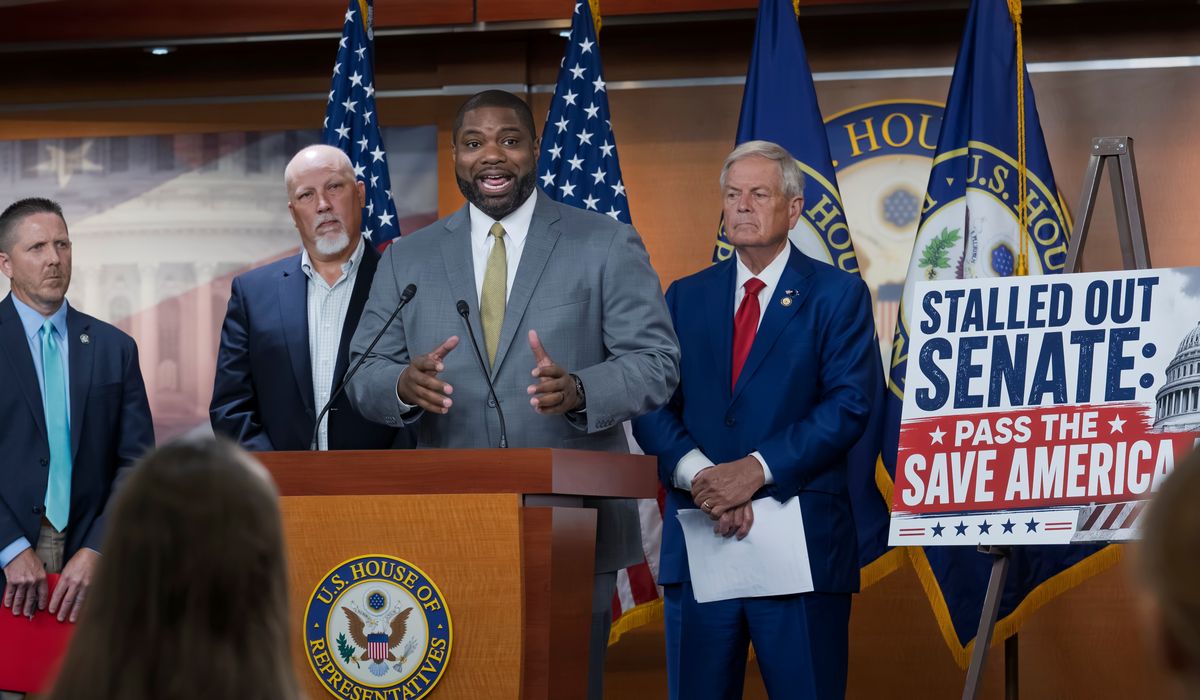
Byron Donalds is pushing legislation aimed at stopping artificial intelligence data centers from straining utility systems and raising costs for everyday consumers while balancing technological growth with taxpayer protections.
Byron Donalds, a Republican congressman running for Florida governor, on Monday announced legislation intended to prevent artificial intelligence data centers from driving up utility costs, the latest
The proposal targets cases where massive computing facilities shift large electricity expenses onto local ratepayers instead of covering their fair share. The idea is straightforward: if a company brings heavy demand to a grid, it should not offload the cost onto families and small businesses. That principle appeals to conservative values of fairness and fiscal responsibility.
Lawmakers are framing the bill as a consumer-protection measure, not an anti-technology stunt. It would push utilities and regulators to make sure infrastructure upgrades and demand-driven charges reflect who actually benefits. The language emphasizes transparency in contracts and up-front cost allocation so customers are not surprised by sudden rate hikes.
Supporters argue the growth of AI farms has outpaced the safeguards designed for traditional industrial users. These facilities can require as much power as small towns, and the upgrades needed to serve them are expensive. Without clear rules, those costs can be socialized across the utility’s entire customer base.
From a Republican viewpoint, the bill aligns with local control and market fairness, insisting private companies absorb the costs associated with their growth. It discourages corporate freeloading and prevents utilities from shifting long-term investment burdens onto future ratepayers. That stance aims to preserve reliable service without hidden taxes in electricity bills.
Critics of unregulated deployments point to strained distribution networks and the risk of rolling outages if grids are pushed beyond design limits. Planning and permitting need to be stricter when demand spikes suddenly. Better upfront assessments can protect grid stability while still allowing job-creating projects to proceed sensibly.
Another focus of the legislation is contract clarity between utilities and large customers. It would require explicit agreements that tie infrastructure upgrades to the entities creating the demand. This prevents vague cost recovery mechanisms that ultimately land on residential bills.
Proponents also want to make sure local governments and regulators have the tools to review proposed projects with full financial transparency. That includes time-bound impact studies and enforceable guarantees that investment costs won’t be passed onto communities. Those measures are pitched as common-sense protections for taxpayers and ratepayers alike.
Economic arguments come into play as well: while data centers do bring jobs and investment, the net benefit can be undermined if public services suffer or utilities face underfunding. Smart policy seeks to balance the economic upside with the fiscal realities of maintaining a robust grid. Conservatives emphasize that growth must be responsible and pay its own way.
Environmental questions are part of the conversation, too, but the bill’s emphasis is fiscal rather than purely green. It calls for efficient use of energy and cleaner planning of capacity additions, not for banning data centers outright. The point is to align technological expansion with sound energy policy and fiscal discipline.
The measure also pushes for clearer rate structures so customers can see how costs break down and who shoulders new investment. When pricing is transparent, regulators and voters can make informed choices about infrastructure priorities. That kind of openness is central to accountability and public trust.
Politically, this move helps Donalds position himself as a candidate who will defend taxpayers without shutting down innovation. It offers a concrete policy stance that appeals to voters concerned about rising household costs. The message is one of protecting families and small businesses from hidden rate increases caused by outsized corporate demand.
Implementation details would still need to be worked out with utilities, regulators, and local officials to avoid unintended consequences. The mechanics could include phased hookups, demand charges, or special infrastructure fees tied to individual projects. The goal is to craft tools that preserve grid health while allowing responsible development.
As the bill moves through discussion and possible committee hearings, expect debates over balancing investment incentives with consumer protections. Stakeholders from industry, utilities, and consumer groups will weigh in on how best to preserve both growth and affordability. The process will test how ready policymakers are to shape 21st-century infrastructure policy with a conservative approach to stewardship and fiscal fairness.

