

The Gall of It All: CAIR Demands Hate Charges Be Dropped Against Muslims Who Vandalized Texas Church
Three individuals recently admitted to vandalizing a Texas church, scrawling anti-Israel messages and profanity across sacred walls in early March 2024. They told police their actions were motivated by the church’s support for Israel and its military, which moved prosecutors to treat the case as a hate crime and upgrade misdemeanor counts to felonies. That decision has sparked a predictable cultural and political firestorm over protest, speech, and the limits of criminal law.
The response from some corners of the left has been to frame the prosecution as an attack on free speech and protest rights, even as the vandalism included targeted, faith-based language and profanity. You do not get a hall pass for vandalism because your views are angry or popular among activists, and elevating charges in cases with clear bias motives is how the law protects vulnerable communities. Conservatives see this as common sense: crimes motivated by hatred of a protected class deserve a harsher legal response.
Flip the scenario and imagine a few Christians scribbling anti-Islam slurs and profanities on a mosque, then insisting they were protesting foreign policy. The reaction from media elites, academics, and much of the political class would be instant and loud, with calls for accountability amplified by cable TV outrage and performative congressional statements. That double standard is the part that sticks in people’s craws and fuels the perception of unequal treatment.
The Dallas media scene reported on the arrests and the prosecution, and argued in some quarters that applying hate-crime enhancements could chill protest by critics of Israel. That argument strains credibility when the conduct goes beyond verbal disagreement and into deliberate, targeted property destruction and religious disparagement. Free speech is robust, but it does not include breaking the law and vandalizing a place of worship.
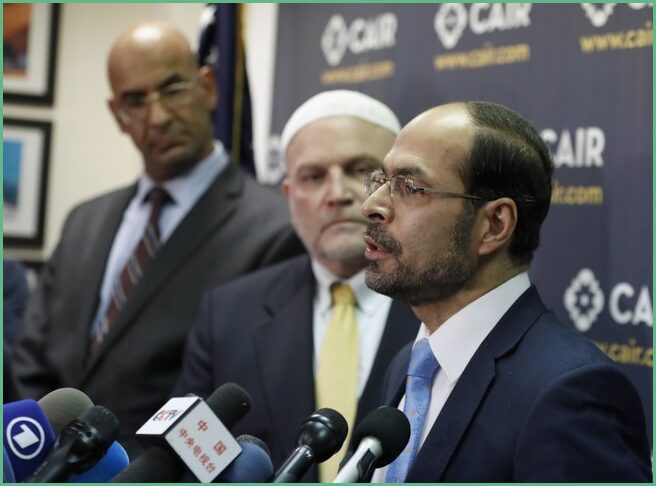
Now, the Council on American-Islamic Relations (CAIR) is demanding that the charges be dropped immediately. Their public statement frames the prosecution as punitive overreach and an affront to activists criticizing Israel, a stance that will please some and infuriate others. Republicans watching this will see a familiar pattern where certain activist groups ask for legal leniency while demanding harsh enforcement when the roles are reversed.
That is the heart of the conservative critique: equal application of the law, not selective mercy. If a Christian leader loudly called for charges to be dropped for three Christians who had scribbled anti-Islam graffiti full of profanity on a mosque, the reaction would not be calls to protect their protest rights. Instead, the chorus would be condemnation, moralizing, and an appetite to punish perceived religious bias.
Public defenders of the vandals have leaned into protest rhetoric, suggesting graffiti and civil disobedience are the language of the unheard and therefore justifiable. That line reads well in op-eds but rings hollow when you see the target was a religious institution and the content included explicit slurs and profane attacks. Lawmakers and law enforcers have to balance free speech protections with protecting citizens and faith communities from targeted intimidation.
I think that protests, graffiti — that sort of thing — is the language [of the] unheard, so my heart went out to them.
That exact quote captures the tension between sympathy for protest and the reality of criminal conduct, and it illustrates how some defenders substitute sentiment for judgment. Radical causes attract a lot of loud sympathizers who want to contextualize or excuse illegal acts rather than condemn them. Conservatives argue the proper response is accountability, not apologetics.
The incident also invites broader questions beyond this one church: what do we protect first, the right to dissent or the right to safety and religious liberty? A functioning society protects both, but it draws a line at deliberate vandalism motivated by bias. When the bias targets a protected characteristic like religion, the law rightly treats the act as more than ordinary property damage.
Some on the left will insist prosecuting this case is a slippery slope to criminalizing criticism of foreign policy, but that conflates content with conduct. Peaceful protest and critical speech happen all the time without spray paint and threats, and the legal system can distinguish between lawful dissent and criminal mischief energized by prejudice. The point conservatives keep coming back to is equal protection under the law, not preferential treatment based on the political identity of the perpetrators.
There are also painful, real-world consequences for communities that suffer targeted attacks on their houses of worship, and trivializing those harms in service of political narratives does damage. The faith community deserves the same protections anybody else gets when their buildings are defaced and their people threatened. When activists demand leniency in such cases, they delegitimize the suffering of those targeted and feed a sense of tribal double standards.
And then there is the larger culture war theatre: media outrage, theatrical congressional posturing, and academics writing hot takes that play best on social feeds. Conservatives see this as performative and selective, and they call it out when it happens. The rule of law should be steady and impartial, not a tool for political theater.

