

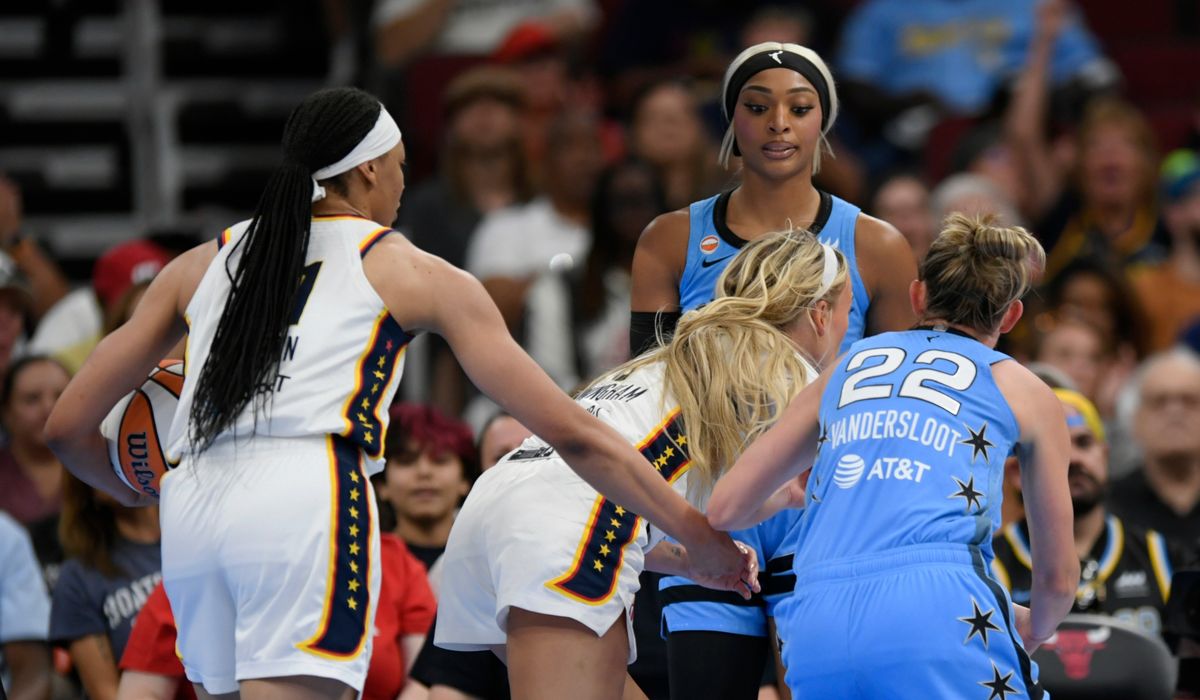
Chicago Sky guard DiJonai Carrington was ejected after a flagrant foul to Sophie Cunningham’s head and later posted “WHITE PRIVILEGE” on social media, sparking debate about on-court safety and online responses.
The altercation happened during Saturday’s game between the Chicago Sky and the Indiana Fever when DiJonai Carrington was called for a flagrant foul on Sophie Cunningham that the officials deemed dangerous enough to warrant an ejection. Eyewitnesses described a hard contact to Cunningham’s head, and play stopped immediately so medical staff could check her. The ejection ended Carrington’s night and shifted attention from the scoreboard to player safety and sportsmanship.
After leaving the court, Carrington posted the phrase “WHITE PRIVILEGE” on her social media account, a choice that quickly drew attention and conversation beyond the arena. The terse, provocative post raised questions about motive and context, since it came right after the ejection and the safety incident. Fans and commentators reacted in real time, splitting between those focused on the physical play and those focused on the social media message.
League officials confirmed that the foul was assessed as flagrant and that standard review procedures were underway to determine any further discipline. The WNBA has clear language around flagrant contact, especially when it involves the head, and referees are trained to eject players when they believe actions put someone at risk. The investigation typically looks at intent, history, and the severity of the hit before any suspension is announced.
On the court, teammates and coaches responded with visible concern for Cunningham’s condition while also dealing with the sudden absence of Carrington. Medical staff cleared Cunningham to return to the locker room for further evaluation, a routine step after head contact that prioritizes health over continuation. The Fever’s internal focus was on ensuring no lasting injury, even as postgame interviews shifted to the ejection and the aftermath online.
The incident underscored how quickly a physical play can transform into a broader cultural flashpoint when social media enters the mix. A single post containing “WHITE PRIVILEGE” turned the story toward race and interpretation, complicating what began strictly as an in-game safety issue. That overlap between athletics and public commentary is now a familiar part of modern sports coverage, and it forces teams and leagues to handle two lanes of response simultaneously.
Coaches and front offices are increasingly mindful of that dual responsibility: address the immediate competitive and health concerns, and then manage public communications that follow. That often means coordinated statements, internal reviews, and sometimes discipline that reflects both on-court actions and off-court conduct. The way an organization responds can affect locker room morale, fan perception, and the league’s public image.
For fans, the event was a reminder of the stakes in professional basketball where speed and contact meet high emotions and national attention. Safety protocols around head contact remain a major focus across all leagues, and any incident that involves possible concussion risk draws swift action. The WNBA’s emphasis on player welfare will likely shape how this situation is resolved, even as the social media element complicates the timeline for a full response.
Beyond the immediate fallout, incidents like this typically prompt conversations about training, officiating consistency, and how players manage competitive intensity. Teams may revisit practice plans or disciplinary standards, and referees will review positioning and judgment calls from the game. Meanwhile, the public debate sparked by the post will continue to intersect with those technical issues, keeping the story alive in headlines and on social feeds until the league completes its review.

