

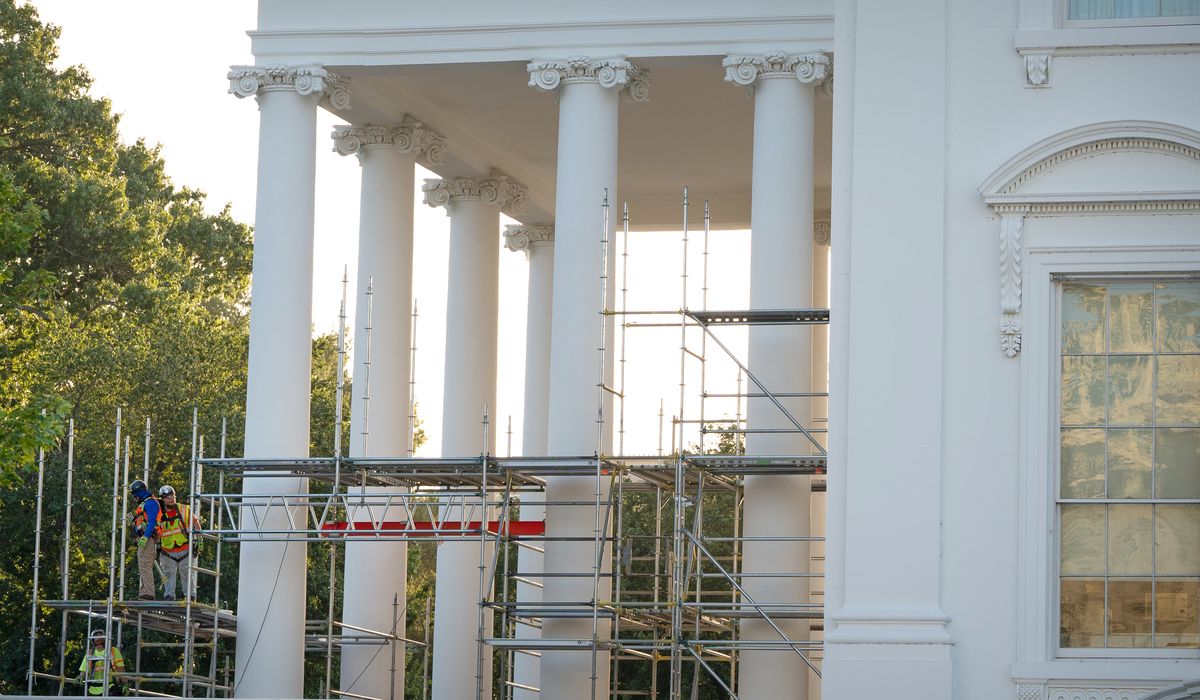
The D.C. Fire and EMS Department transported a worker to the hospital Monday after the person was injured while working on scaffolding around the White House’s North Portico, prompting an on-scene emergency response and safety concerns around ongoing maintenance work at a high-profile federal site.
The incident took place at scaffolding erected around the North Portico of the White House, where work crews were carrying out routine exterior tasks. Emergency responders arrived quickly, and the worker was taken to a nearby hospital for evaluation and treatment.
Scenes like this highlight how even standard maintenance work can turn dangerous when heights and heavy equipment are involved. Scaffolding collapses, falls and related injuries can happen suddenly, and crews rely on training and protocols to reduce those risks.
At properties with a lot of foot traffic and media attention, such as the White House grounds, coordination between contractors and on-site security teams is critical. That coordination also extends to the first responders who must secure the scene and provide medical care without creating additional safety hazards.
Workers on high scaffolds typically use personal protective equipment and tie-off systems to prevent falls, but equipment and procedures can fail or be used incorrectly. When an injury occurs, responders focus on stabilizing the patient, getting them off the scaffold safely and moving them to definitive medical care.
Because the North Portico area is a highly visible location, the response drew attention and raised questions about whether extra precautions were in place. Public interest in incidents near prominent federal buildings often leads to faster reviews of site safety practices.
Maintenance and renovation work around major public buildings usually requires permits, inspections and contractor briefings on emergency access. Those layers of oversight are designed to catch hazards before they lead to injury, but the risk cannot be eliminated entirely.
Contractors working at federal sites frequently operate under strict timelines and tight coordination with security and operations staff. That environment can increase pressure on crews to keep projects moving, which makes clear, enforced safety rules essential on every shift.
Emergency medical teams responding to construction-related injuries are trained to manage trauma, immobilize injured workers and prevent additional harm during extraction from scaffolds. Quick care and safe transport to hospital facilities are the priorities once responders arrive on scene.
Officials often review such events to determine whether equipment failed, procedures were followed and training was adequate. Those reviews aim to find practical fixes, from replacing faulty hardware to improving on-site supervision and safety checks.
Independent safety audits and internal contractor inspections are common after a reported injury near sensitive sites to ensure no systemic gaps exist. These follow-up checks help protect both workers and the public during ongoing maintenance work.
Construction and maintenance trades have well-established best practices for scaffold setup, daily inspections and worker protection, but carrying those practices into every job depends on consistent oversight. Safety culture, from crew foremen to project managers, shapes whether protocols are followed under pressure.
Documentation such as inspection logs, safety plans and worker training records can play a key role in any post-incident review. Those records help clarify what happened and guide practical steps to reduce the chance of repeat incidents.
When high-profile sites are involved, transparency about what occurred is important to the public and to the teams charged with maintaining those locations. Clear communication about safety steps taken after an incident can reassure the public and support better practices going forward.
For now, the main fact remains that a worker was injured while working on scaffolding around the White House’s North Portico and was transported to a hospital Monday, with responders managing the scene and follow-up safety checks likely to take place.

