

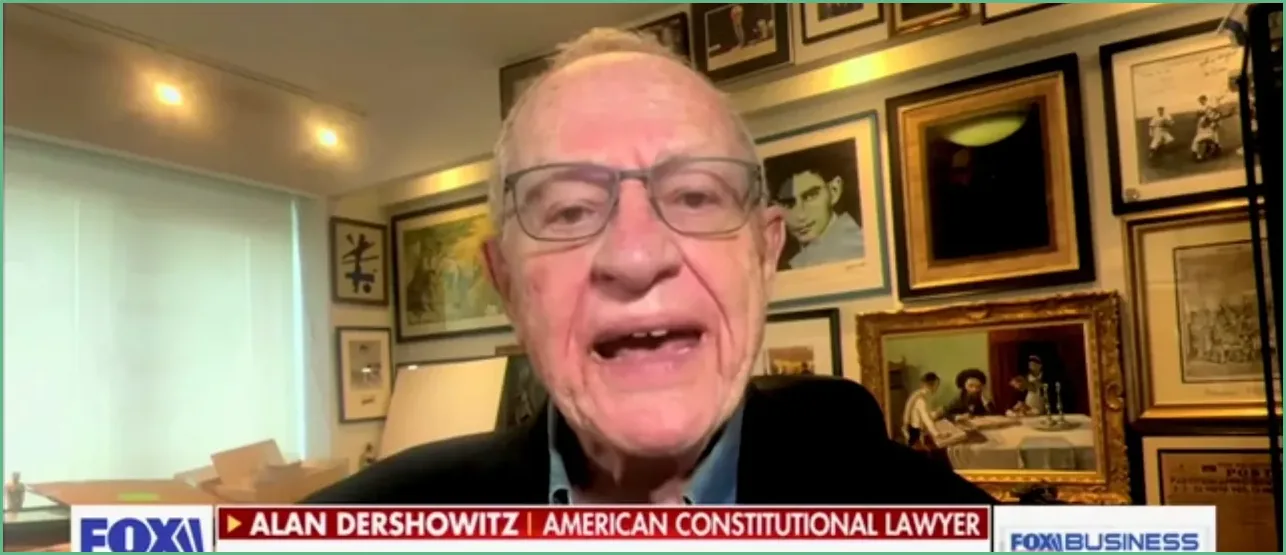
Alan Dershowitz Says Jack Smith ‘Disgraced Himself’ After Tracking GOP Senators’ Calls
Alan Dershowitz, the Harvard Law professor emeritus, told Fox Business that former special counsel Jack Smith “disgrace himself” for reportedly obtaining private phone records tied to Republican senators. The charge landed like a thunderclap in a Washington still sensitive about law, privacy, and political weaponization. Republicans say this is not just a scandal; it is a constitutional wound that needs fixing.
Senate Republicans Monday that the FBI used grand jury subpoenas in 2023 to seize phone records from nine GOP senators, and the revelation has Republican lawmakers demanding answers. The timing and the target list — senior members of one party — make this more than routine legal process in their view. From the GOP perspective, this reeks of political overreach tied to investigations spun into partisan tools.
“The idea of a special counsel intruding on private phone calls without, as far as I know, notifying the recipients of the phone calls. I think that does require a congressional investigation. Jack Smith has disgraced himself,” Dershowitz told host Elizabeth MacDonald.
Dershowitz did not couch his criticism. He framed the move as an extraordinary breach of privacy and a step across constitutional lines that demands congressional scrutiny now rather than later. For Republicans, that scrutiny is not optional politics; it is basic oversight to protect citizens and elected officials from unchecked prosecutorial power.
“Oh, much too far. Have obviously constitutional immunity of a certain kind. Obviously the telephone wasn’t invented at the time of the Constitution,” Dershowitz said when the host asked if the special counsel had crossed a line. His point was blunt: modern surveillance powers cannot be shoehorned into a constitution that never envisioned such intrusions without tight safeguards.
Senate Judiciary Committee Chairman Chuck Grassley released the FBI record Monday, and Republicans stressed the phone records were obtained lawfully through a grand jury process. That technical legality, however, does not erase political context or the appearance of targeting. For many conservatives, lawful procedures used in a partisan frame still amount to abuse if the institutional motive is to silence or intimidate a political opposition.
“This document shows the Biden FBI spied on eight of my Republican Senate colleagues during its Arctic Frost investigation into ‘election conspiracy.’ Arctic Frost later became Jack Smith’s elector case against Trump,” Grassley said. Those are not casual words from a committee chairman; they represent a hard allegation tying an FBI probe to downstream prosecutions with obvious political consequences.
Documents released earlier showed the probe that led to Smith’s indictment of President Donald Trump also swept up a network of conservative groups and figures. Names like Turning Point USA and the RNC have been mentioned in reporting tied to the broader investigative sweep, and Republicans say those ties demonstrate a pattern. The argument is simple: this was not limited investigative curiosity but a broad dragnet across conservative politics.
Grassley warned that “Arctic Frost wasn’t just a case to politically investigate Trump.” He added, “It was the vehicle by which partisan FBI agents and DOJ prosecutors could achieve their partisan ends and improperly investigate the entire Republican political apparatus.” Those words capture the GOP’s core complaint: institutions that should be neutral instead acted like political instruments.
Republicans supporting oversight insist that transparency is the remedy, not reflexive trust in prosecutors whose work touches political rivals. They want to know who approved the subpoenas, what the scope was, and whether any notifications or minimization procedures were followed when communications involved members of Congress. Oversight, they argue, is how the system corrects itself before deeper damage is done.
Democrats and DOJ defenders will point to grand jury secrecy rules and the need to protect investigative integrity. That argument has weight in certain circumstances, but it does not fully answer the broader political context or the responsibility to avoid the appearance of partisan targeting. In the GOP view, secrecy cannot become a shield for politically dangerous conduct.
For conservatives watching this unfold, the stakes are not just about one special counsel or one set of phone logs. This episode feeds a larger narrative about federal institutions drifting into politics and against citizens who hold different views. The response from Republican leaders — more oversight, more hearings, more sunlight — is meant to restore basic guardrails without undoing legitimate law enforcement when properly applied.
Whatever the legal technicalities, public trust in law enforcement and prosecutorial neutrality matters for the republic. Republicans are calling for accountability because, without it, the next politically charged investigation could be worse. The path forward, from this perspective, is clear: investigate, explain, and reform so that privacy and constitutional norms are respected and political weaponization ends now.

