

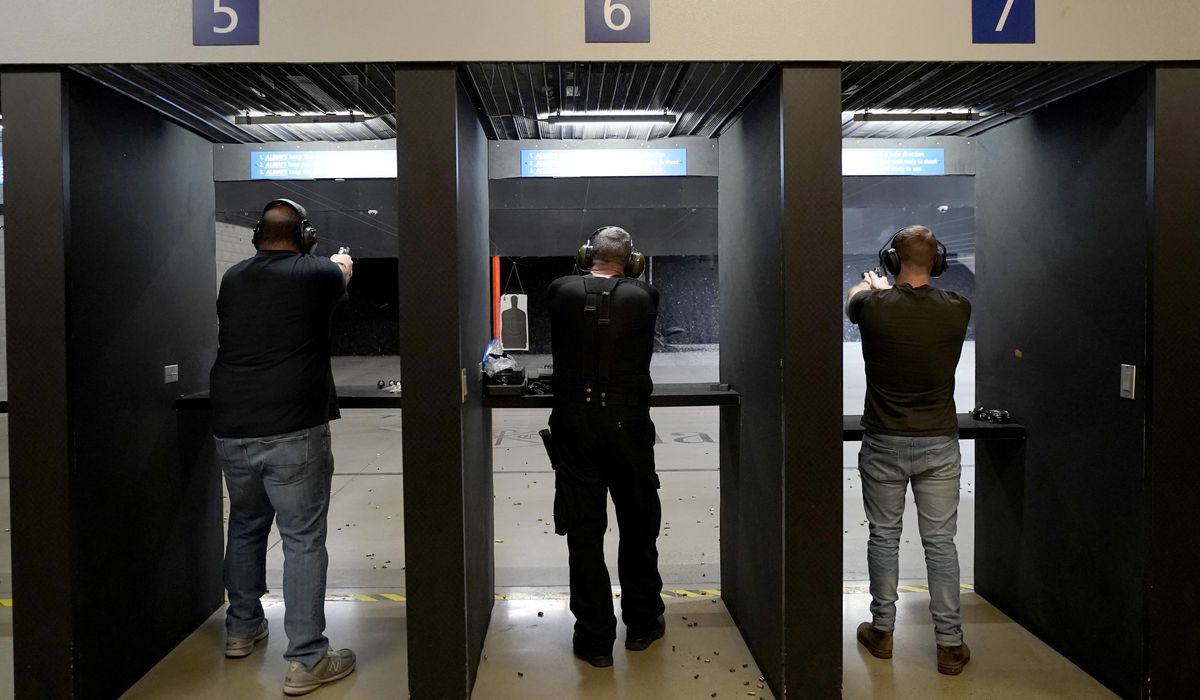
The Department of Justice has taken legal action against Montgomery County over local gun-carry rules, arguing those rules unlawfully limit where licensed gun owners can bear firearms, including around houses of worship.
The Department of Justice sued Montgomery County, Maryland, on Monday, arguing the county’s ordinance restricting where licensed gun owners may carry firearms, including in and near churches and synagogues, violates constitutional and federal protections. This move pits federal authority and individual rights against a county-level attempt to tightly regulate everyday carry. The clash highlights the tension between local safety policies and nationwide civil liberties debates.
County officials crafted the ordinance to create broad off-limits zones, citing public safety and concerns about violence near sensitive locations. Supporters of the law say strict boundaries make communities safer, but critics contend those restrictions are blanket bans that sweep up law-abiding, licensed citizens. From a Republican perspective, the ordinance amounts to government overreach that weakens lawful self-defense and disrespects state-issued carry permits.
The DOJ’s complaint centers on the principle that licensed gun owners should not lose the practical ability to protect themselves and others when stepping into public spaces, including faith centers. The lawsuit frames the county rules as conflicting with federal law and the Constitution, arguing that local ordinances cannot nullify fundamental rights recognized at higher levels. Republicans see this enforcement as necessary to protect individual freedom and maintain consistent statewide standards for lawful carry.
Religious institutions were singled out in the county text, with churches and synagogues mentioned as areas where carry could be limited or banned. That raises fresh concerns about the safety of worshipers and whether congregations will be left more vulnerable by blanket restrictions. From a conservative viewpoint, making houses of worship off-limits to licensed defenders transfers risk away from criminals and onto peaceful civilians who follow the law.
The legal fight also underscores practical questions: if a permit holder is forced to disarm near crowded public buildings, who responds when violence erupts? Montgomery County’s policy assumes disarmament reduces danger, but it also reduces the number of prepared, law-abiding people capable of responding instantly. Republicans argue common-sense rules should protect both public safety and the right to defend oneself without creating impossible traps for permit holders.
The DOJ filing opens the courthouse door to broader scrutiny of similar local ordinances nationwide, because if Montgomery County can enforce sweeping carry bans, others may follow. Conservatives worry that a patchwork of local laws undermines the consistency that permit systems are meant to provide, leaving residents uncertain about where they can safely carry. A federal challenge aims to stop that fracturing and reassert uniform legal expectations across jurisdictions.
Beyond legal arguments, the case fuels political debate over the proper balance between local control and federal oversight. Montgomery County officials emphasize local prerogatives and tailored responses to community needs, while federal authorities emphasize constitutional guarantees that should not vary dramatically by county line. The conservative stance favors a predictable, rights-respecting baseline enforced by higher courts and federal actors when local measures overstep.
Expect the litigation to draw attention from civil liberties groups, faith communities, and public safety stakeholders who will all stake out positions. Republican commentators are likely to praise the DOJ’s intervention as a defense of individual rights and a necessary pushback against municipal excess. The courtroom will be where competing visions of safety, liberty, and local self-governance are hashed out under established law.
The outcome could set a precedent affecting how municipalities regulate the presence of licensed carriers near sensitive locations. If the DOJ prevails, counties will face stronger limits on how broadly they can restrict lawful carry, especially when those rules touch on constitutional guarantees. If local officials hold their ground, it could embolden other jurisdictions to adopt similar sweeping zones and escalate further federal-local clashes.

