

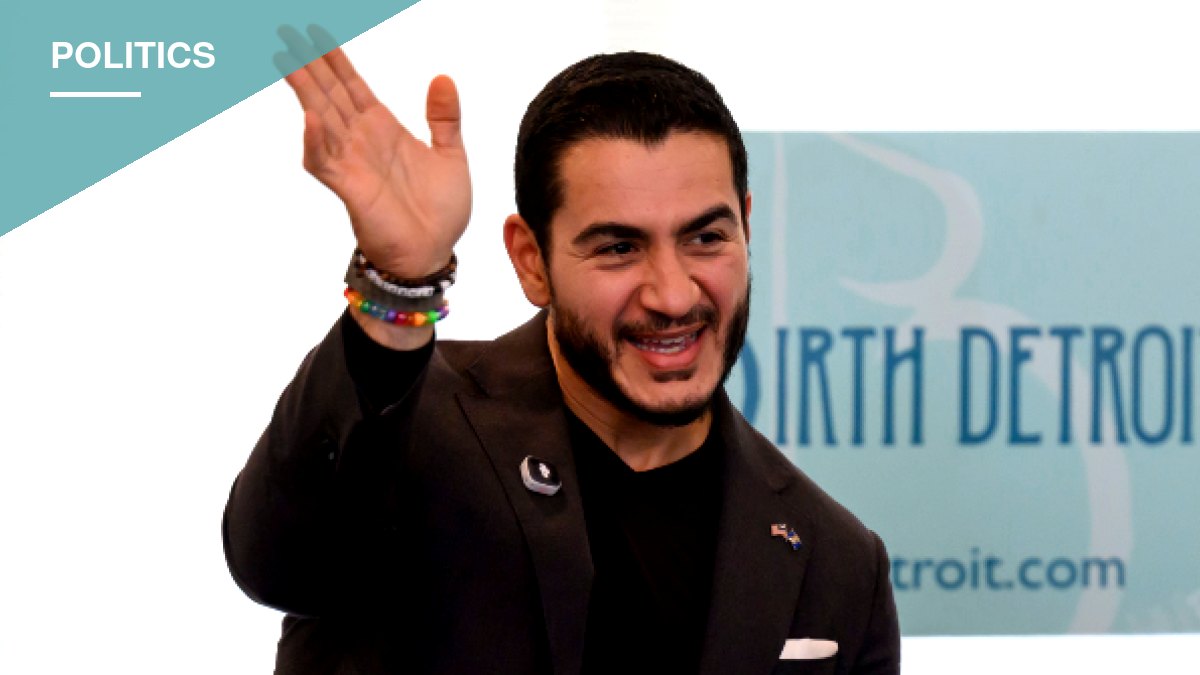
Michigan Democratic Senate candidate Abdul El-Sayed once described anti-fentanyl laws aimed at punishing drug dealers as “draconian” and voiced support for supervised drug consumption sites, according to podcast recordings reviewed by Breitbart News.
The comments have surfaced as El-Sayed has accused his Republican opponent, Mike Rogers, of voting to “EXPAND the opioid epidemic.”
On a June 27, 2023, episode of his podcast, El-Sayed argued that conservative responses to fentanyl had largely consisted of blaming the southern border or passing harsh anti-dealer laws.
While claiming to be fighting fentanyl, the conservative response has amounted to doing one of two things: blaming the influx of fentanyl on the southern border or passing draconian anti-fentanyl laws designed to punish dealers and deter use. These bills were proposed in 46 of 50 states. Virginia codified fentanyl as a ‘weapon of terrorism.’ Thirty states have a drug-induced-homicide statute on the books. Look, fentanyl is a scourge. There’s no doubt about it. And we absolutely need to protect unsuspecting people from it. But the question is, does the law-and-order, throw-the-book-at-them approach actually work?
Earlier, in a December 20, 2022, episode, El-Sayed made the case for supervised consumption sites, where people could use illegal drugs while being monitored.
The other important part of this, though, is making sure that there are spaces where people can use in an observed manner. You know, the challenge is that in a world where we criminalize drug use, people will hide their drug use. And if they hide, that’s what creates the risk of potentially overdosing in a situation where no one sees you and potentially dying. And so one of the things that we have to think about is how do we create spaces where people can use safely? And I know folks out there might be thinking, ‘Well, aren’t you empowering people to use drugs?’ Well, what you’re doing is empowering them not to die because of the disease of addiction.
The debate over supervised consumption sites has drawn scrutiny elsewhere. In an April 20, 2026, Washington Post opinion piece, Manhattan Institute senior fellow Charles Fain Lehman and former White House drug-policy adviser Kevin A. Sabet pointed to controlled studies in British Columbia and Ontario that found no reduction in overdose deaths or hospitalizations after such sites opened. They also noted a federal appeals court ruled that a proposed site in Philadelphia would violate the federal “crack house” statute.
RNC spokesman Hunter Lovell criticized El-Sayed over the resurfaced remarks. “Abdul El-Sayed doesn’t want to punish fentanyl traffickers; he wants to make their job easier. While fentanyl kills Michiganders every single day, El-Sayed is out here defending the people poisoning our communities,” Lovell told Breitbart News.
The remarks come as El-Sayed’s campaign has drawn attention for its financial backing. El-Sayed is benefiting from $30 million in spending by the Senate Majority PAC, despite having campaigned against the influence of wealthy donors in politics. The PAC has received $15 million in contributions linked to individuals with reported associations involving Jeffrey Epstein, including Vinod Khosla and Jon Stryker, along with donations from George Soros’s Democracy PAC and Michael Bloomberg’s American Opportunity Action.
The PAC committed an additional $10 million to Michigan’s Senate race after El-Sayed met with Senate Minority Leader Chuck Schumer last week.

