

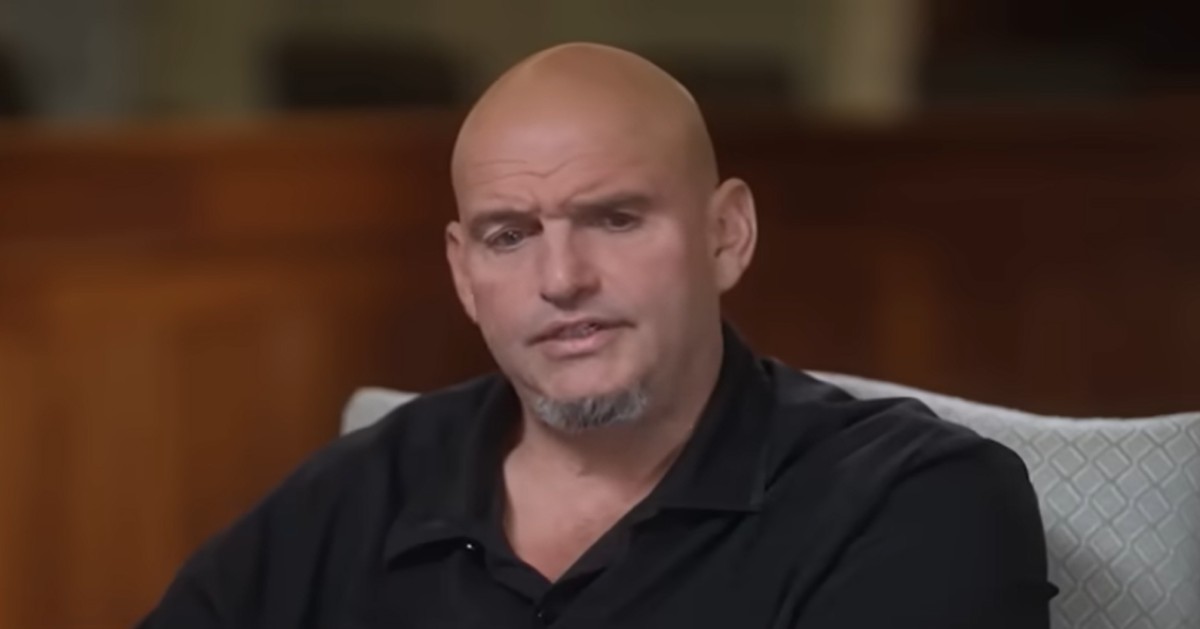
Senator John Fetterman publicly slammed trends inside his party, calling out growing anti-Israel sentiment and resistance to condemning socialism, while insisting he will stand firmly with Israel and reject socialist policies.
Fetterman, a high-profile Democrat from Pennsylvania, used a recent national interview to criticize fellow party members who are turning sharper against Israel and flirting with socialist rhetoric. He made clear that those moves are alarming to him and to many voters who still see Israel as a key ally. His remarks landed during a TV appearance that has prompted discussion across political circles. The senator’s tone was direct and unapologetic.
He specifically singled out newer candidates who make opposition to Israel a central plank of their campaigns, saying that trend signals a growing divide within the party. Fetterman framed this shift as a motivating reason for him to double down in support of Israel rather than back away. He stressed loyalty to the alliance even as parts of his party move in a different direction. That stance drew both praise and criticism from across the political spectrum.
Fetterman said that demands to New York City Mayor-Elect Assemblyman Zohran Mamdani (D) on Israel from the Democratic Socialists of America are “absurd and arrogant, and it’s just like tough guy, well, we would arrest Netanyahu, like, you have no authority to do that. And the United States [is] not a part of the ICC. So, it’s — again, it’s empty kinds of threats.”
Those remarks targeted specific calls by activists and newly elected officials that Fetterman felt were out of step and lacking in practical authority. He characterized the rhetoric as performative and warned it could alienate mainstream voters who support a steady, pro-Israel policy. At the same time, he used the opportunity to define his own position more sharply. He emphasized pride in the U.S.-Israel partnership.
And now, it’s like, yes, parts of my party [are] becoming more and more anti-Israel, and the new candidates now make it more and more part — front and center in their campaign to be anti-Israel. Well, that just affirms me — that’s a signal to just lean in harder and be very proud to stand with Israel, because that’s our key ally, and I refuse to ever turn our back, regardless [of] if there’s part of my party that’s been willing to do these things.
Beyond the Israel angle, Fetterman also took aim at Democrats who declined to condemn socialism in a recent House vote, noting that nearly 100 members opposed the resolution. He framed that split as troubling, pointing out that for many people who have lived under socialist systems the consequences are clear and painful. His comments were aimed at reminding colleagues and voters about practical outcomes rather than abstract theory. For him, the lesson was straightforward: bad ideas can have real costs.
Fetterman told McEnany that if you ‘go to any place that live or have lived under socialism, 100 percent would vote to condemn it. I’ve spoke to people when I’ve been in those kind of former countries and they say it’s a disaster and they can’t believe America is even having this conversation. ‘You know, there’s that expression, you know, bad ideas just won’t die. And I don’t know why our party is going to talk about it for these things, but I would strongly reject it. And, obviously I would have voted to condemn that if that was ever part in the Senate,’ Fetterman added.
Fetterman’s voice stands out because he is willing to publicly dispute the direction of his own party without stepping away from his party label. He framed his objections not as party betrayal but as a defense of longstanding alliances and as a warning against economic experiments that many voters fear. That posture resonates with voters who want clear, pragmatic positions on foreign policy and economic governance. It also complicates the internal debate among Democrats over messaging and priorities.
Whatever one thinks of his record, Fetterman’s statements make it plain he intends to be an outspoken presence on these issues rather than a silent bystander. His remarks will likely fuel further debate inside the party and beyond about where its center of gravity really lies. The split over Israel and socialism is now visible to voters and activists alike, and it will shape how campaigns and leaders position themselves going forward.

