

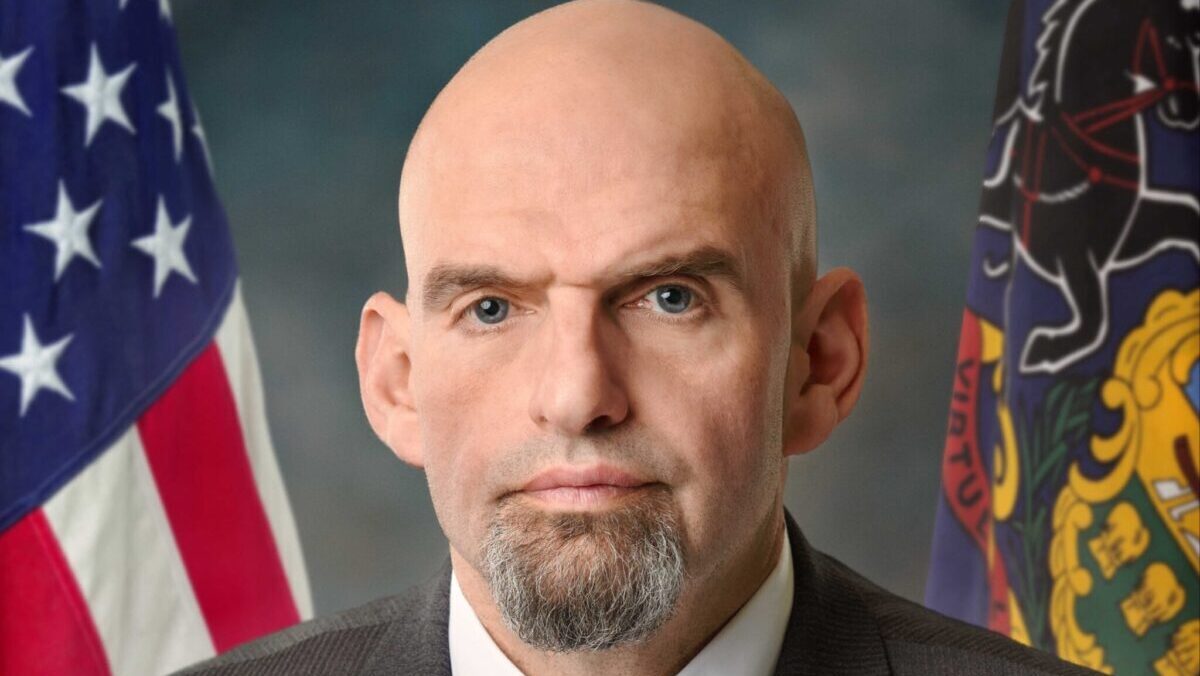
Sen. John Fetterman has broken with most Senate Democrats and urged reopening the federal government to prevent harm to millions who rely on benefits, pushing a pragmatic, country-first argument over party loyalty. He warned that a stubborn bloc of Democrats is dug in, highlighted the looming SNAP shortfall affecting 42 million Americans and 2 million Pennsylvanians, and said he would put hungry Americans and essential paychecks ahead of partisan points.
Most Senate Democrats are holding firm in their refusal to pass a continuing resolution to reopen the federal government, a stance that risks halting vital services and paychecks. That collective position has left a legislature stuck while federal programs and people wait on a decision. The stalemate has real consequences for families, service workers, and military support.
Pennsylvania Sen. John Fetterman has distinctly separated himself from his colleagues by publicly urging a different approach. He told Fox News that he sees “a critical mass of my fellow Democrats that are dug in and now, until there’s an absolute ironclad kind of a deal,” and used blunt language to press for reopening the government first. That remark underscores his frustration with procedural brinksmanship that keeps benefits hanging in the balance.
Fetterman also pointed to cooperation possibilities across the aisle, saying, “And I do fundamentally believe [Senate Majority] Leader [John] Thune is an honorable guy and I do believe we could have a sincere conversation after we can open it [the government] up,” and urging an immediate end to the shutdown. He argued against political gamesmanship, adding, “And then, we don’t have to do this three-card monte, about, you know, do this, do that, do the other thing.” Those lines were delivered with the bluntness voters hear often when Washington lets basic duties slide.
The senator made clear that the crunch is not abstract. SNAP, the Supplemental Nutrition Assistance Program that feeds roughly 42 million Americans, is on track to run out of funds by the start of next month if the government remains closed. That shortfall would hit households already stretched thin and create urgent hardship for communities that rely on regular benefit cycles to put food on the table.
Fetterman emphasized the human toll while also laying out a simple sequence: open the government, keep benefits flowing, then negotiate policy changes. “Let’s just open it up, and then we have our SNAP [Supplemental Nutrition Assistance Program], we have everyone’s [sic] paid,” he said, arguing for stability before bargaining. He suggested there are Republicans willing to consider extensions of certain tax credits, which could create a bipartisan path forward once systems are back online.
From a Republican perspective, Fetterman’s stance is notable because it echoes a basic conservative principle: government should fulfill core responsibilities first. Conservatives insist that federal finances must support the military, law enforcement, federal workers and safety-net programs without hostage-taking. When elected officials prioritize political leverage over the daily needs of citizens, the argument goes, they are failing the public.
Fetterman framed his position as a moral choice rather than a tactical move, telling another Fox host, “I am always going to vote country over my party and if I pay a price within my base, that’s something I am willing to do.” He doubled down with, “For me, it’s hungry Americans over party. Paying our military over party. Paying Capitol Police and federal workers over party. I choose country over party,” insisting that concrete obligations should trump party calculus.
That country-over-party line will resonate with voters tired of Washington standoffs and politicians who treat governance as a bargaining chip. The pressure now falls on both chambers to respond to the sharp reality Fetterman described: millions depend on prompt action, and a prolonged shutdown will deliver real, avoidable pain. Lawmakers who prefer brinkmanship will have to explain why blocking the basics is worth the cost to families and communities.

