

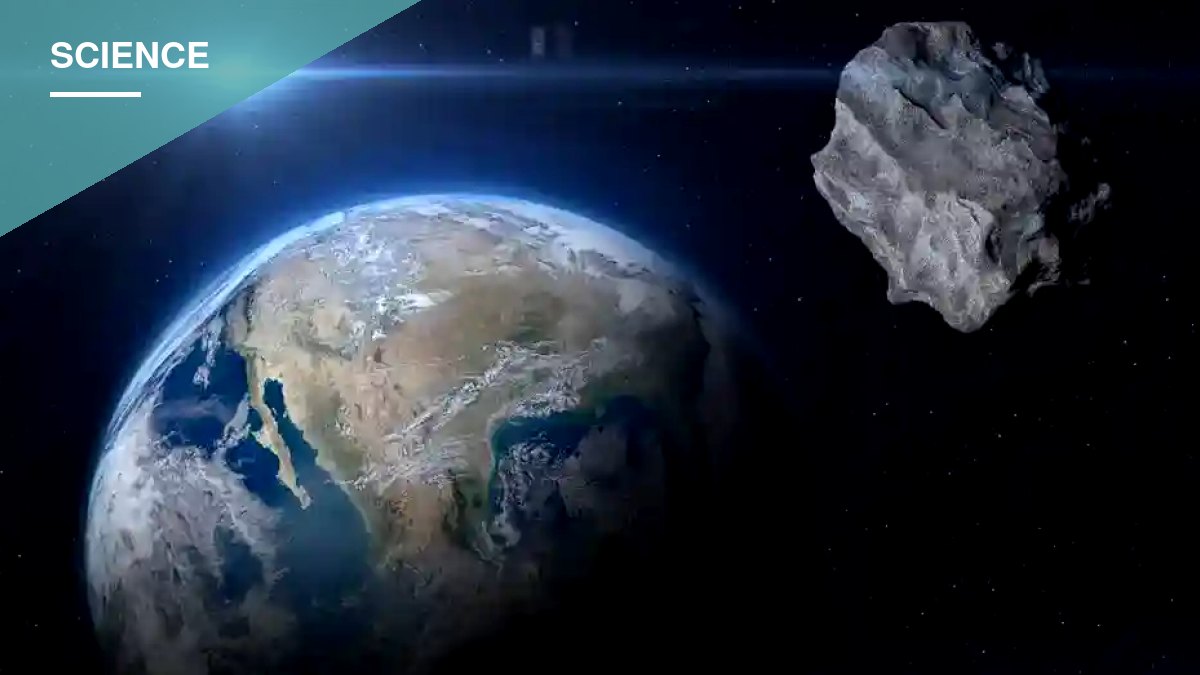
A Harvard astrophysicist is openly disputing NASA Administrator Jared Isaacman’s assessment that a small, fast-moving object in the solar system is simply an asteroid, arguing the object’s unexplained acceleration rules out that label entirely.
The object, designated 1998 KY26, is about 36 feet wide and classified as a near-Earth asteroid. But it has been accelerating in a way that gravity alone does not explain, prompting competing theories about what it actually is.
Isaacman addressed the object Thursday on “Fox & Friends,” saying, “I’ve not seen any evidence to suggest this is…anything other than an asteroid.”
Harvard’s Avi Loeb pushed back the next day in an interview with Fox News Digital. “Well, first of all, it’s not an asteroid because 1998 KY26 appears to have non-gravitational acceleration, meaning it’s being pushed by some force other than gravity, and asteroids are just rocks,” Loeb said.
A Lost Soviet Spacecraft?
Loeb and his colleagues have been examining whether KY26 could actually be Phobos 1, a Soviet spacecraft that lost contact while en route to Mars in 1988. He said his team found that KY26’s trajectory closely resembles the failed mission’s path, and calculated that sunlight reflecting off the spacecraft could produce a push matching the acceleration observed.
Loeb also cited recent observations showing the object is highly reflective and rotates roughly once every five minutes, details he says fit a human-made craft better than a natural body.
The Dark Comet Theory
Other researchers have floated the idea that KY26 is a “dark comet” — a rocky object that behaves like a comet, producing thrust from escaping gas, without the visible cloud or tail typical of comets. New research from Georgia Tech has cast doubt on whether KY26 could retain enough ice to make that work, while separate research has suggested pressure from sunlight and surface heat radiation could explain the acceleration instead.
Loeb said the absence of any visible tail or outgassing is what makes the dark-comet explanation hard to accept. “It could be a comet shedding some gas backward that is pushing it forward, but in that case we should have seen the gas,” he said. “We should have seen the dust because for comets we see a tail and the dust particles are being pushed away from the sun by the solar radiation. We don’t see a cometary tail. We don’t see any evidence for outgassing around this object. That’s the puzzle.”
Loeb likened the dispute to misidentifying an unfamiliar animal because it resembles a familiar one. “If you are an expert on zebras and you see an elephant, you would say the elephant is a zebra without stripes,” he said. “But that’s an oxymoron because it’s a completely different animal.”
“Innovation in science requires some imagination,” he added. “It requires you to allow for the possibility that our knowledge is incomplete.”
A 2031 Reckoning
Fox News Digital asked NASA to respond to Loeb’s comments and whether Isaacman stands by his assessment of KY26. Loeb, for his part, acknowledged his team’s theory is unproven, but said a definitive answer may arrive in 2031, when Japan’s Hayabusa2 spacecraft is expected to rendezvous with the object.
“We predict that when they land on it, instead of seeing an iceberg, they will find the label ‘Made in the USSR,'” Loeb said.
Asked whether his Phobos 1 theory would be finished if Hayabusa2 instead finds a plain rock or piece of ice, Loeb did not hesitate: “Yes,” he said.

