

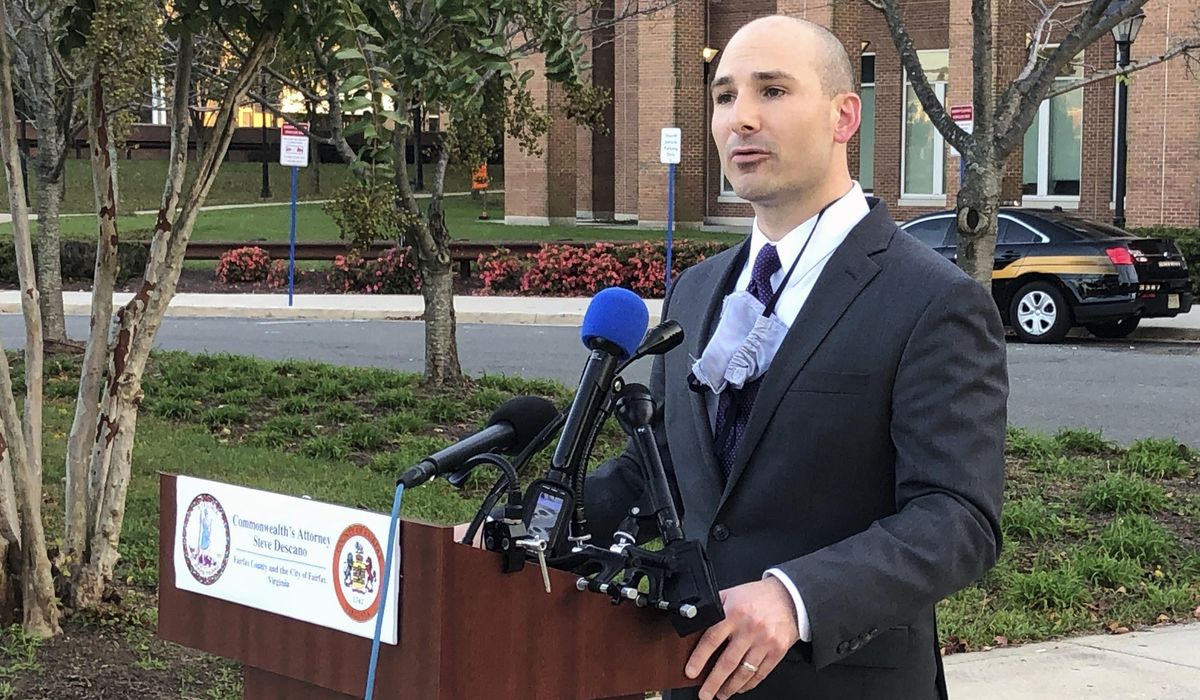
The House Judiciary Committee has called Fairfax County Sheriff Stacey Kincaid and Commonwealth’s Attorney Steve Descano to testify and defend their sanctuary policies at a hearing next month.
Congress is stepping in where local officials have set policies that many see as soft on lawbreaking. The hearing will force a public accounting of how sanctuary policies are implemented and what consequences follow. For many conservatives, this is about restoring basic order and enforcing existing laws rather than letting politics dictate public safety.
Local leaders run counties and prosecutors make charging decisions, but federal oversight can be appropriate when policies clash with national priorities. Elected officials in Washington, including members of the House Judiciary Committee, argue that sanctuary practices undermine immigration law and public safety. Expect pointed questions about whether Virginia officials put politics ahead of law enforcement and community protection.
Fairfax County sits near the nation’s capital and its decisions ripple outward into national debates over law, order, and borders. Officials there have adopted practices intended to limit cooperation with federal immigration authorities. Critics contend those choices create safe havens for criminal behavior and remove tools from police who need every advantage to keep communities safe.
The hearing will look at accountability and transparency, two concepts Republican lawmakers routinely stress. Committee members will ask how many offenders avoided federal immigration actions because local policies blocked cooperation. They will also press on whether data and clear rules exist so citizens can judge whether public safety has improved or deteriorated under these policies.
There is a constitutional angle too, since some Republicans believe local sanctuary policies conflict with federal statutes on immigration enforcement. The committee is likely to probe whether local actors are effectively nullifying federal law by refusing to assist federal agents. That argument frames the hearing as about the rule of law, not just partisan politics.
Fairfax leaders will be on the hot seat to explain the practical effects of their choices, including any increases in repeat offending or declines in public trust. Prosecutors who decline to pursue certain charges or who favor diversion programs will have to defend those decisions against the committee’s demand for sharper metrics. Republicans will insist that political experiments cannot come at the expense of victims and neighborhoods that deserve safety.
Committee Republicans will press for concrete outcomes, not slogans or rhetoric, insisting officials show how their policies reduce crime and improve community relations. Lawmakers will ask for records, arrest and recidivism statistics, and examples where cooperation was refused and what happened next. The goal is to separate ideology from measurable results that voters can evaluate.
Expect tough exchanges about interagency coordination, data sharing, and whether local policies impede federal investigations. Republicans will also question whether these sanctuary stances have fiscal consequences, from diverting law enforcement resources to increasing incarceration costs when cases later escalate. Fiscal prudence and public safety are often paired arguments in these oversight settings.
For residents of Fairfax and nearby communities, the hearing will be more than political theater; it could shape future policy and funding. If the committee finds local practices harmful, it could recommend legislative fixes or tighter conditions on federal grants. Conversely, if officials justify their approach with convincing evidence, those findings could influence other jurisdictions considering similar policies.
Whatever the outcome, the hearing underscores a broader national tug of war over who sets the rules when local policies collide with federal priorities. Republicans on the committee will press for accountability and for restoring clear lines between local discretion and federal law enforcement responsibilities. The coming testimony will give voters a clearer sense of which approach better protects neighborhoods and respects the law.

