

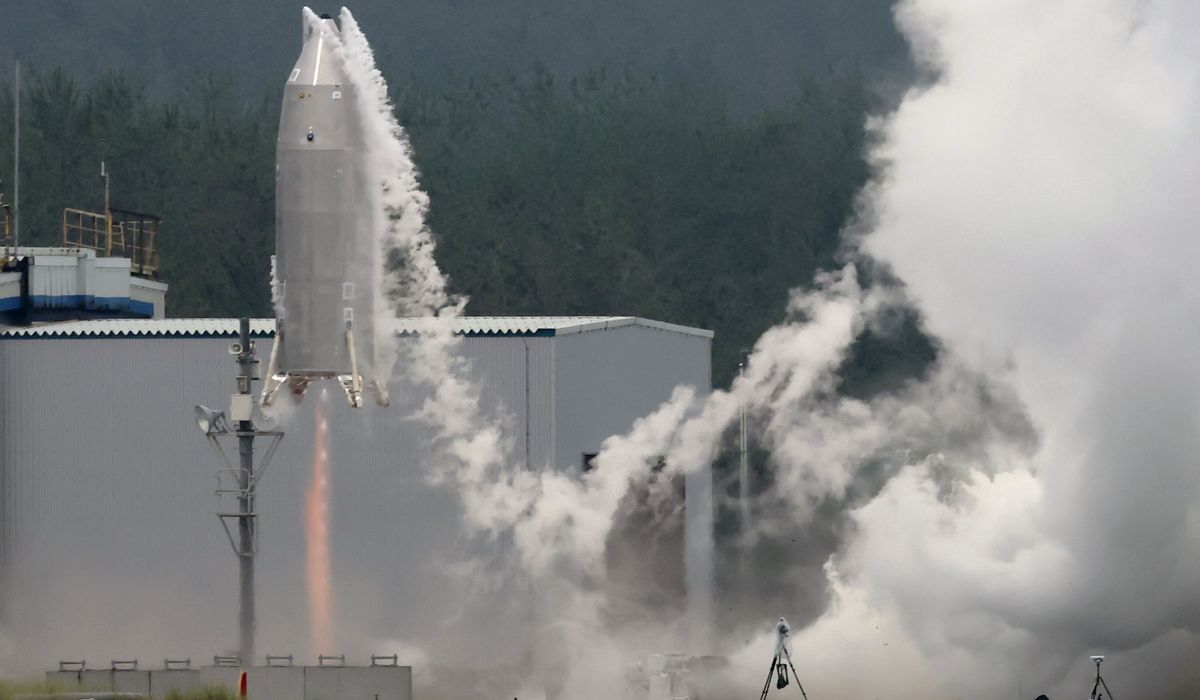
Japan’s experimental reusable rocket took off and safely landed in a first test flight Saturday, a milestone that advances the nation’s push to master reusability and to lower the cost of launches while strengthening its position in the global space arena.
The launch and recovery demonstrated that a program long in development can move from concept to practical tests, and the visible success will reshape expectations for future missions. Engineers watched a prototype vehicle complete the intended profile and return intact, which is the crucial early benchmark for any reusable launch system. This test does not finish the work, but it does prove the basic approach can work under real-flight conditions.
Reusable rockets change the economics of access to space by replacing single-use hardware with systems that can fly multiple times. The up-front expenses in development and testing are high, but repeated flights spread that cost over many missions and reduce per-launch prices. For nations and companies that depend on a steady cadence of satellite deployments, a working reusable launcher can unlock new business models and faster rollout of capabilities.
Technically, reusability is simple to describe and fiendishly hard to execute: controlled descent, precision landing, and rapid turnaround of hardware. Each stage of the vehicle must survive harsh re-entry loads and then be inspected, refurbished, and cleared to fly again without prohibitive cost. That chain of reliability is what separates an impressive single test from an operational system that trims costs year after year.
Japan’s effort joins a global trend as governments and private firms chase cheaper, more frequent launches. That competition is accelerating innovation and driving down price points across the industry, but it also raises the bar for reliability and regulatory oversight. Nations that establish dependable, repeatable launch operations can attract more commercial customers and support domestic satellite builders with more predictable access to orbit.
Beyond economics, reusable launchers influence strategic and environmental calculations. Faster, less costly access to space enables a broader mix of missions from communications constellations to scientific platforms, while reusable hardware can reduce manufacturing waste tied to expendable stages. At the same time, governments must balance the benefits with safety oversight, debris mitigation, and export controls to ensure responsible growth of national launch capabilities.
The path ahead includes more flights, incremental improvements, and the gradual buildup of operational procedures for maintenance and turnarounds. Each successful trial provides lessons for design tweaks, material choices, and ground-support infrastructure that shorten inspection times and improve reliability. If those steps continue to yield returns, Japan could offer a competitive alternative in a crowded market for orbital launches.
Public response to the flight underscores both national pride and a pragmatic focus on timelines and costs. Observers will be watching how quickly follow-up flights occur and how the program scales toward routine missions. The initial touchdown is only the first of many milestones needed to turn promising hardware into a sustained, cost-saving service for both government and commercial customers.

