

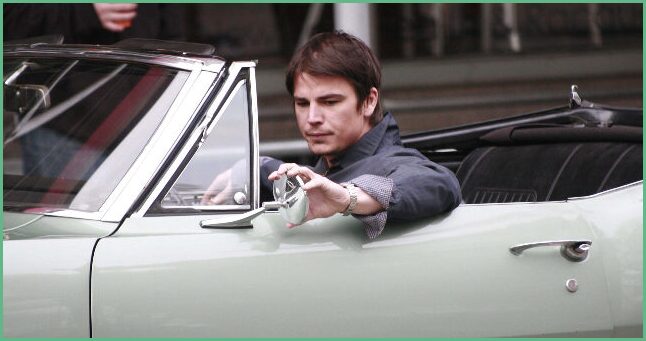
Actor Josh Hartnett has reportedly been hospitalized after colliding with a police vehicle while filming in Canada. The news landed quickly and quietly, the kind of headline that makes anyone who follows film sets pause. Details remain scarce, but the basic fact is unnerving: a local shoot turned into a medical event for a well-known actor.
Hartnett rose to fame in the late 1990s and early 2000s with a string of high-profile roles that made him a familiar face to mainstream audiences. He has built a career moving between Hollywood pictures and smaller, more thoughtful projects, cultivating a reputation for taking on diverse parts. That background is why reports of his hospitalization hit harder for fans and industry colleagues alike.
Reports say the collision involved a police vehicle and occurred during filming on location in Canada, though specifics about how the incident unfolded have not been fully reported. On-set accidents can range from minor mishaps to serious incidents, and the involvement of emergency vehicles adds an unusual twist. For now, the picture is incomplete and people are watching for reliable updates.
There has not been a clear, detailed statement released to the public about Hartnett’s condition or the exact circumstances that led to the collision. When facts are thin, speculation spreads fast, so responsible outlets and concerned viewers are calling for verified information from the production or Hartnett’s representatives. The wish for transparency is also a call for accuracy, because guesswork can hurt people who are already dealing with a stressful situation.
Incidents like this force a conversation about safety protocols and oversight when productions are working away from major studio lots. Productions are supposed to follow strict rules around stunts, vehicle choreography, and interactions with local law enforcement, and those rules are backed by unions and insurance policies. But even the best plans can break down, and when they do the consequences can be immediate and visible.
The film world has been forced to confront safety realities in recent years, and high-profile accidents have prompted industry reviews and new guidelines. Those events brought questions about training, supervision, and accountability into the open, especially when mishaps involve weapons, vehicles, or complex stunts. A single incident on a closed set can ripple outward, influencing regulations and how future shoots are insured and supervised.
Public reaction to Hartnett’s hospitalization has been a mix of concern and curiosity, with fans sending well wishes and industry peers reflecting on the risks of on-location work. Social media amplifies these moments, turning private recoveries into public narratives almost instantly. That puts pressure on productions to communicate quickly but carefully, balancing privacy with the public interest.
Local authorities will likely investigate any collision that involves an emergency vehicle, and the production company may conduct its own internal review as well. Insurance carriers pay close attention in these cases, and liability issues can become complex when multiple parties and jurisdictions are involved. The outcomes of those reviews often determine whether changes are made to protocols or whether legal action follows.
Hartnett’s fans and colleagues will be hoping for straightforward updates and a clear path to recovery, whatever the medical situation turns out to be. The immediate priorities in incidents like this are health and support, followed by a slow sorting of facts and responsibilities. For now, the sensible response is to wish him well and wait for confirmed information rather than amplifying rumors.
In the weeks ahead, expect more precise reporting as authorities and the production share findings or statements. If the collision prompts procedural changes, it could become a case study for how productions manage safety on location. Either way, this incident is a reminder that filmmaking can be unpredictable and that real human consequences can follow small missteps.
For now, the industry will watch and the public will hope for good news about Hartnett’s condition. When more reliable information becomes available, it will help everyone understand what happened and whether anything could have been done differently. Until that time, the simplest and most necessary reaction is concern for the person at the center of the story.

