

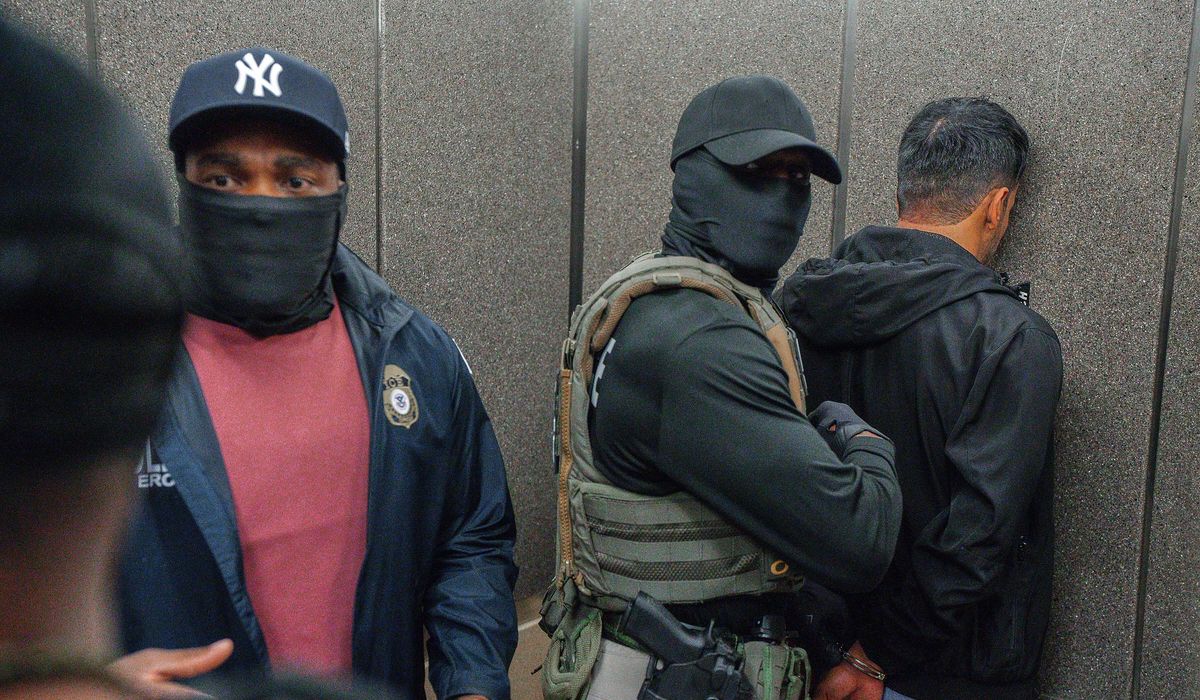
A federal judge has blocked New York’s new law barring ICE officers from wearing masks while on duty in the state, but allowed another law that blocks localities from signing cooperation agreements.
This ruling touches on two basic tensions: officer safety and state control versus federal immigration enforcement. The court stepped in to prevent a rule that would have kept federal officers from masking their identities while doing dangerous, high-risk work. At the same time, it left intact a separate state restriction that aims to keep local governments from cutting deals that limit cooperation with federal authorities.
For conservatives who back strong immigration enforcement, the judge’s action on the mask rule is a clear win. Masking can be a critical tool for officers conducting undercover operations and protecting their own safety, especially when confronting violent smugglers or organized smuggling rings. Blocking the ban preserves a practical element of tactical operations that many public safety professionals say is essential to doing their job without exposing themselves or informants to undue risk.
Allowing the law that restricts local cooperation agreements also aligns with the principle that states and federal agencies should not be undercut by jurisdictions that refuse to cooperate. From a Republican standpoint, federal immigration enforcement serves the national interest and public safety, and local policies that effectively weaken that enforcement create gaps that criminals and smugglers can exploit. The judge’s split ruling reinforces the idea that federal priorities deserve deference in matters of national security and immigration.
Critics will argue the mask issue is about transparency and civil liberties, but law enforcement sources counter that anonymity can protect investigations and lives. When officers are required to reveal their identities in every interaction, the risks to undercover work and the safety of witnesses rise dramatically. That trade-off matters, especially in environments where cartel networks and organized crime have shown a willingness to retaliate.
The other side of the ruling highlights a separate concern: localities seeking to shield themselves from federal law. Policies that allow cities or counties to sign away cooperation with federal agencies can create safe havens, intentional or not. The judge’s decision to uphold the restriction against those cooperation agreements pushes back against a patchwork of local policies that can frustrate coordinated enforcement and undermine consistent application of immigration laws.
Republican lawmakers have long argued that fragmented approaches to immigration enforcement make communities less safe overall. When local governments refuse to work with federal authorities, it weakens border security and complicates efforts to remove dangerous individuals. Upholding limits on those local agreements is consistent with a broader stance favoring uniform enforcement and clear lines of authority between state and federal officials.
Legal fights like this one are also a reminder that courts will be gatekeepers when state legislatures try to set rules that collide with federal priorities. The split nature of this decision shows how courts balance competing values: protecting individual and public safety on one hand while preserving federal supremacy and national interests on the other. Judges can, and do, carve out outcomes that reflect that balancing act rather than adopting an all-or-nothing approach.
What happens next could set the tone for similar disputes elsewhere, where local and state policies clash with federal enforcement goals. If courts repeatedly block restrictions on federal tactics, agencies will maintain tools they argue are necessary. If courts uphold limits on local noncooperation measures, states and cities will find it harder to sidestep coordinated enforcement efforts.
This ruling won’t end the dispute, but it does reinforce a couple of basic points important to conservatives: officers need practical protections to do dangerous work effectively, and federal immigration policy requires cooperation across jurisdictions to function. Those principles are likely to shape the next rounds of legal and legislative contests over how best to manage enforcement and public safety.

