

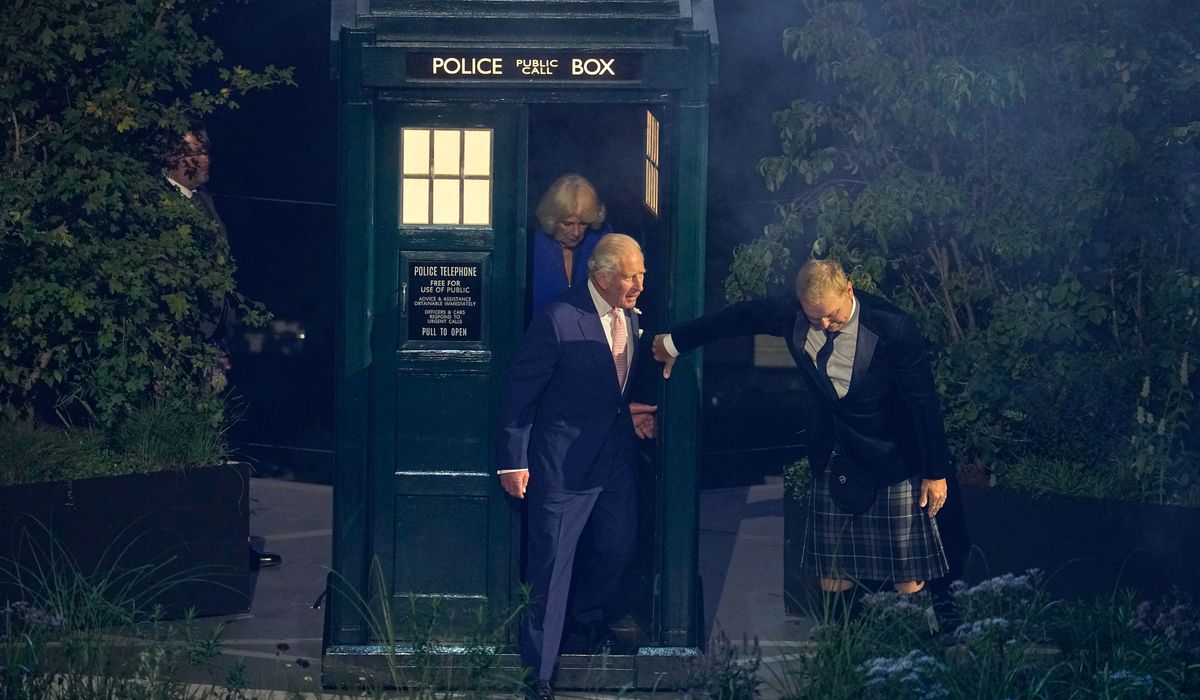
King Charles III made a theatrical entrance as he formally opened the 23rd Commonwealth Games in Glasgow, emerging Thursday from the TARDIS of intergalactic adventurer “Doctor Who.”
The moment was part pageant, part pop culture stunt, and it stretched the usual boundaries of a royal opening without changing the basic facts: the sovereign appeared, the ceremony proceeded, and the Games began. The choice of props and staging emphasized spectacle, leaning into recognizable British icons to grab attention and set a playful tone. For many in the stadium it was an unexpected mashup of ceremony and showmanship that set the night buzzing.
The event mixed established ritual with contemporary performance in a way that made the monarchy feel more present and less distant than some past openings. King Charles III fulfilled the formal duty of opening the Games while allowing the creative team to stage a moment built for headlines and social media. That approach placed the crown at the center of a deliberately modern cultural moment without altering the monarch’s role.
From a production perspective the TARDIS gag invited a wink and a nod to modern audiences, using familiar imagery to create surprise and friendly spectacle. The crowd reaction ranged from laughter to enthusiastic applause as the sequence unfolded, and the moment landed as a memorable highlight of the night. Behind the theatrics, the official opening still followed the necessary protocols that mark the start of an international sporting event.
The blend of tradition and theatricality reflected a deliberate attempt to broaden appeal, especially among younger viewers who may recognize the pop-culture reference instantly. Creative direction for ceremonies now often borrows from film, television, and music to craft moments that travel quickly across platforms. That strategy can be polarizing, but it also ensures the ceremony registers beyond the stadium and into wider conversation.
The Games themselves remain the central focus: athletes from across Commonwealth nations will compete in a wide range of disciplines and carry home medals, stories, and personal milestones. Glasgow as host city provides a backdrop of local pride, venues, and volunteers that keep the competition running smoothly. The opening ceremony provides a theatrical gateway to days of sport, where performance on the field and in the pool becomes the real measure of success.
Public response to a theatrical royal entrance tended to be mixed across social channels and among spectators, with some praising the levity and others questioning the tone for a solemn civic duty. Critics argued that spectacle can overshadow the athletes or the causes the Games promote, while supporters welcomed the energy and modern touch. In either case, the opening managed to command attention, which remains a primary objective of any large-scale ceremony.
As the lights dimmed and the last notes of music faded, athletes took their places and the stadium shifted from pageant to preparation, with officials and teams turning toward the competitions ahead. The theatrical flourish of the opening will likely be remembered as a distinctive moment, but the schedule moves on to heats, semifinals, and finals where performance decides outcome. For now the crowd disperses with chatter about the entrance, and the City of Glasgow turns attention to the first events on the Games calendar.

