

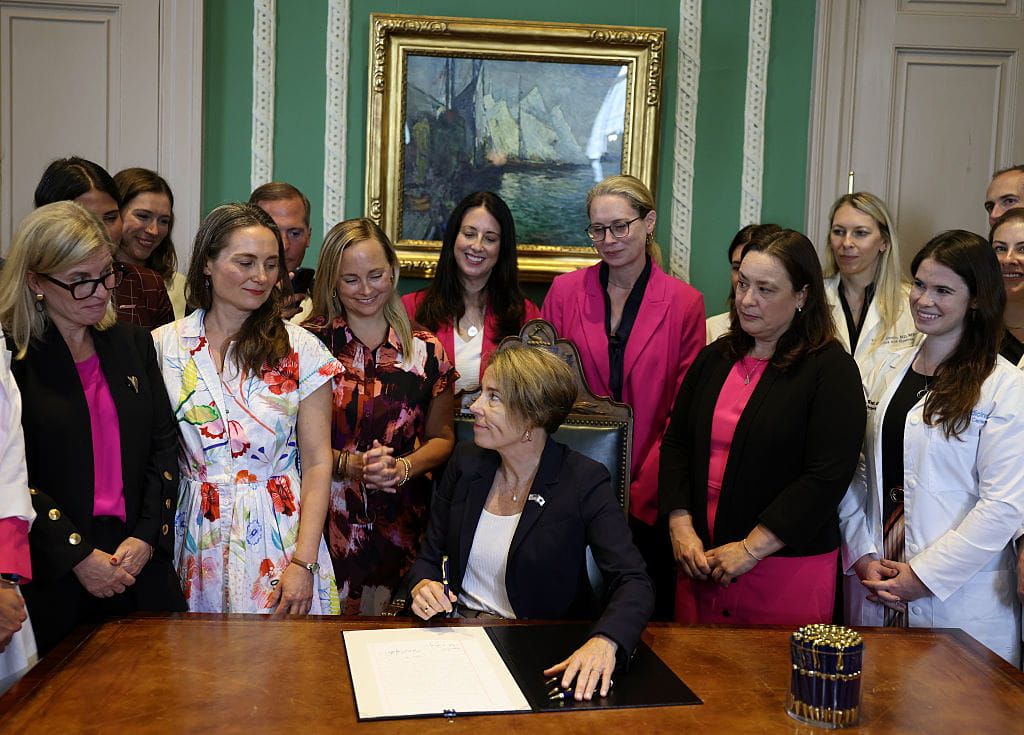
Massachusetts has passed the Prioritizing Patient Access to Care Act, removing gestational limits and making abortion available up to birth under a physician’s professional judgment, joining nine other states and Washington, DC, in adopting no-limit abortion laws after the Supreme Court’s Dobbs decision returned policy to the states.
The new law in Massachusetts strips away the gestational limits that once governed abortion and replaces them with open wording that defers to doctors’ judgment. That change shifts the legal framework from a fixed cutoff based on viability to a flexible standard that critics say leaves the unborn unprotected. For Republican readers, this looks like a clear example of power concentrated in liberal state legislatures and the medical establishment rather than in law and public consensus.
This measure, passed in the post-Dobbs era, makes Massachusetts the tenth state, along with Washington, DC, to enact a no-limit abortion law since the Supreme Court overturned Roe v. Wade and returned authority to the states. Before Dobbs, many states retained some gestational limits tied to viability outside the womb, however contested those lines were. The political reality now is stark: blue states are moving aggressively to remove those limits while red states generally tighten protections for the unborn.
The text of the act bases access on the “professional judgment of the physician,” language that supporters say protects patient care and clinical decision-making. Opponents counter that this wording effectively empowers doctors to authorize terminations without meaningful legal guardrails for the fetus. That tension—between a mother’s choices and the legal recognition of the unborn child—is the heart of why this issue remains so polarizing across the country.
The bill’s sponsor wrote on social media, “Medical decisions should be made by a patient and their doctor. Period.” She followed that with a broader defense of the law: “Massachusetts is home to one of the nation’s leading health care systems. Patients deserve medically appropriate care without unnecessary legal barriers that fail to reflect the realities of medicine. By removing those barriers, we can help ensure no one is forced to leave Massachusetts to receive the care they need.” Those lines capture the Democratic framing: access, health care, and freedom from legal interference.
From a conservative standpoint, however, framing this as pure medical necessity ignores moral and ethical questions about fetal life. Advances in imaging and neonatal care have complicated the old viability benchmarks, and many on the right argue that lawmakers should respond by strengthening protections, not abandoning limits. The Massachusetts law makes it easier for those who oppose limits to pursue an agenda that gives virtually no legal weight to the unborn.
Practical consequences matter beyond the arguments. Removing gestational limits invites last‑minute decisions driven by pressure, confusion, or convenience, putting physicians in the uncomfortable position of making life-or-death calls under vague legal cover. It also intensifies interstate tensions: residents of permissive states may travel for care, and nearby conservative states face pressure to react politically and legally. For Republicans, this is a signal to double down on clear, consistent law that balances maternal care with protections for unborn children.
Massachusetts’ move is part of a broader pattern that followed the Dobbs ruling in 2022: where state legislatures are controlled by Democrats, restrictions fall away in the name of access and patient-centered care. Where Republicans hold power, lawmakers tend to pursue limits and protections for the unborn. That partisan split has turned abortion into a patchwork policy across the nation, with citizens’ rights and protections varying dramatically depending on where they live.
The debate will keep playing out in courtrooms, statehouses, and public opinion. For now, Massachusetts stands with the other nine states and Washington, DC, in a posture that prioritizes unrestricted access through clinical discretion. Lawmakers and voters on the right see that posture as a policy failure in need of correction; those on the left see it as a necessary restoration of medical autonomy and patient choice.

