

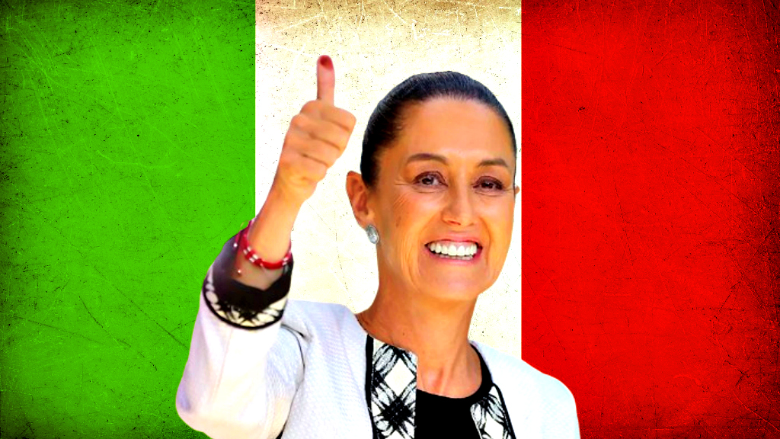
Just days after a congratulatory call with President-elect Donald Trump, Mexican President Claudia Sheinbaum appears to be considering significant policy changes, signaling a dramatic shift in Mexico’s approach to U.S. relations. The post-election conversation, which began cordially, reportedly turned to pressing matters of border security and trade—issues central to Trump’s campaign platform.
The implications of this interaction are profound, with potential changes spanning immigration enforcement, economic strategy, and even Mexico’s internal politics. For Sheinbaum, the stakes couldn’t be higher as Trump prepares to assume office with a hardline stance on U.S.-Mexico relations.
One of the key topics of discussion during the call was the state of the U.S.-Mexico border. Trump, known for his blunt approach, reportedly pressed Sheinbaum on the need for stricter security measures. Mexico’s border efforts, particularly on its northern frontier, have long been criticized as insufficient.
Mexican Congressman Raul Torres echoed these concerns in an interview with Fox News Digital. “Sheinbaum’s administration will have to reinforce the security strategy on the southern border by deploying the National Guard and strengthening the presence of the National Migration Institute,” he said.
Under growing pressure, Sheinbaum is expected to ramp up immigration enforcement. This could include cracking down on migrants entering Mexico from its own southern border and collaborating more closely with U.S. authorities.
Beyond border security, Trump’s tough stance on trade presents another challenge for Mexico. During his campaign, Trump floated the idea of imposing tariffs on Mexican goods, a move that could severely impact Mexico’s economy.
The automotive industry, one of Mexico’s most critical sectors, is particularly vulnerable. According to the U.S. International Trade Administration, vehicle production—including parts manufacturing—accounts for 3.6% of Mexico’s gross domestic product. Trump’s proposed tariffs could devastate this industry, rippling across the country’s economy.
Marcelo Ebrard, Mexico’s economy minister, has hinted that Mexico may retaliate with its own tariffs on U.S. goods. However, such measures could further strain the already delicate economic relationship between the two nations.
Trump’s promised crackdown on illegal immigration also presents a significant challenge for Sheinbaum’s administration. His proposed deportation efforts could disrupt the lives of thousands of migrants, many of whom travel through Mexico en route to the U.S.
Rodrigo Montes de Oca, a scholar at the Baker Institute, warned that Trump’s policies would demand a more robust response from Mexico. “Everything is going to be much more complex because they will not only focus on immigration but also on trade and security,” he explained.
To stay in Trump’s good graces, Mexico may need to adopt stricter measures, both at its own borders and in how it cooperates with U.S. authorities.
Adding to the pressure, Trump has hinted at exposing U.S. intelligence on Mexican politicians with alleged ties to drug cartels if Mexico does not cooperate. This threat carries significant weight in a country where cartels wield immense influence, and political corruption is a persistent issue.
Sheinbaum, who took office following a record number of political assassinations during the election season, is keenly aware of the dangers posed by cartel-linked scandals. For her administration, the stakes are as much about preserving Mexico’s sovereignty as they are about avoiding public embarrassment and internal unrest.
Sheinbaum’s recent public statements suggest a delicate balancing act. While she has assured Mexicans that the country’s sovereignty will not be compromised, she also acknowledges the need to maintain a positive relationship with the incoming U.S. administration.
For Trump, the call with Sheinbaum may mark the beginning of a broader strategy to push Mexico into alignment with his policies. The expectations are clear: cooperate on border security, trade, and immigration, or face the economic and political consequences.
In the coming weeks, Mexico will likely accelerate efforts to address these issues, deploying more resources to its borders and considering new trade strategies to mitigate potential fallout.
The Trump-Sheinbaum call underscores the high stakes of U.S.-Mexico relations as the new administration prepares to take office. For Sheinbaum, the message is unmistakable: align with Trump’s vision, or risk economic penalties and political scrutiny.
With immigration, trade, and cartel influence dominating the conversation, the next four years promise to be a pivotal period for both nations. Whether Sheinbaum can navigate these challenges while protecting Mexico’s interests remains to be seen, but one thing is clear—Trump is setting the tone for a tougher, more uncompromising partnership.


6 Comments
“Marcelo Ebrard, Mexico’s economy minister, has hinted that Mexico may retaliate with its own tariffs on U.S. goods.”
Bring it!
Lets see whose economy fares the worse.
yes bring it …
Crush them they sent so much mayhem and drugs here they need to be gone already!
no surprise that two ZIONISTS get along
Can you define Zionist?
The broader context of US/Mexico relations demonstrates the fecklessness of democrat policies that disengage subjects like immigration to other interests like trade. Trump understands the connective nature of various levers of power and has been good at gaining concessions from allies and foes alike. Mexico also understands the inter-connectivity of those issues but is perfectly willing to take advantage of US weakness when presented with the opportunity. It’s amazing to me that dems never learn and always give away the store.