

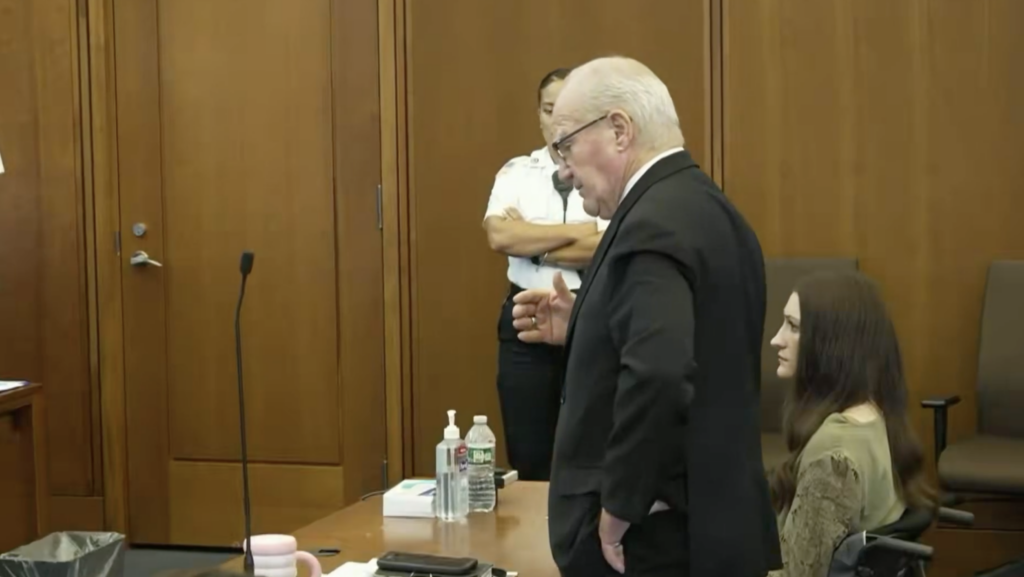
A judge declared a mistrial after a single juror refused to join a unanimous verdict in the Lindsay Clancy case, with the defense raising questions about possible juror bias and legal teams preparing for what comes next.
The judge overseeing the Lindsay Clancy case declared a mistrial Friday after only a single juror prevented a unanimous verdict, reportedly because he was willing to convict the self-admitted baby killer. Courtroom observers described tense deliberations and a juror pool pushed to its limits by a case that has drawn high emotion. That single holdout changed the outcome of weeks of testimony and forced both sides back to square one.
Defense attorney Kevin Reddington appeared to suggest the holdout juror might be bigoted against disabled people, framing that suggestion as a factor in the deadlock rather than a straightforward disagreement about the facts. The defense argued the juror’s attitudes affected the group’s ability to reach consensus, which the judge had to weigh before declaring the trial ended without a verdict. Whether that claim will matter in future proceedings is now a live legal question.
A mistrial for a hung jury is a familiar procedural outcome: when jurors cannot agree unanimously, the judge can end the trial without resolving guilt one way or the other. That does not equate to an acquittal, and it does not bar retrial in most circumstances. For now, the declaration simply returns the case to the docket and hands control back to the prosecutor’s office to decide next steps.
Jury dynamics are messy and unpredictable, especially in emotionally heavy cases. A single juror with strong views can derail deliberations by refusing to move from an initial position, whether out of conviction, confusion, or prejudice. Defense and prosecution both watch for signs of that kind of intransigence during voir dire, but nothing in selection can perfectly forecast how a person will behave under days of pressure.
Public reaction to the mistrial was immediate on social platforms and in commentary, with many people replaying testimony and parsing courtroom moments for clues about what went wrong. Discussions have centered not just on the legal mechanics but also on the human stories behind the case, including questions about disability and culpability that Reddington raised. That mix of legal detail and public emotion is why high-profile trials rarely stay confined to the courthouse.
From the prosecutor’s perspective, a mistrial opens the door to a retrial if officials believe they can secure a unanimous jury the next time. The double jeopardy clause generally does not prevent a retrial after a jury cannot reach a verdict, so the state can refile charges and start again if it chooses. That decision usually depends on whether the prosecution thinks the evidence will fare better with a different jury or under a modified trial strategy.
For the defense, the mistrial can be both relief and risk: it halts an immediate conviction but preserves the possibility of another round of proceedings. Defense counsel may press pretrial motions, seek changes in venue, or adjust strategies for jury selection to avoid encountering the same issues. The suggestion that bias influenced deliberations could also shape how the defense prepares for a possible retrial, although judges weigh such claims carefully before granting remedies.
In the coming weeks, court clerks will handle scheduling and the parties will decide whether to pursue another full trial, plea negotiations, or procedural fights over evidence and juror conduct. Both sides face the practical realities of refiling, gathering witnesses a second time, and anticipating renewed public attention. The case remains unresolved, and the legal and human questions it raised are sure to follow the next steps in the process.

