

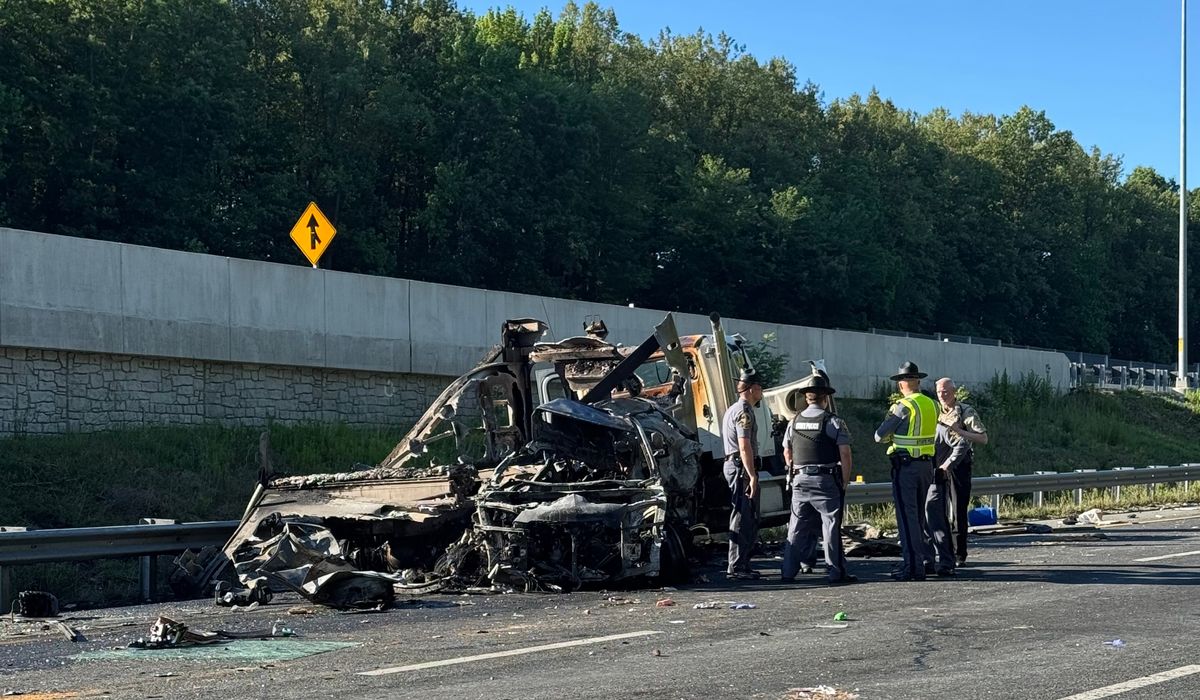
Authorities have filed criminal charges against a naturalized U.S. citizen accused of causing a deadly early-Friday crash on Interstate 95 in Stafford that left five people dead, including two children.
Police say the wreck happened early Friday on Interstate 95 in Stafford, and that five people died as a result, two of them children. The person charged is a naturalized U.S. citizen, and authorities have moved forward with criminal counts in connection with the collision. Officials describe the case as active and under investigation by local and state law enforcement.
The charged individual’s immigration status is noted in reports, but officials are handling the case within the criminal justice system rather than through immigration procedures. A naturalized citizen faces the same state criminal charges as any other defendant, and prosecutors are responsible for proving the case in court. Defense attorneys, when involved, will have the opportunity to contest evidence and argue on their client’s behalf.
Investigators typically gather a range of evidence after a fatal highway crash, including vehicle positions, skid marks, witness statements, and any available video. Traffic-collision reconstruction specialists are often called in to piece together the sequence of events and estimate speeds or forces involved. Physical evidence from vehicles and the scene can be crucial to building or opposing criminal charges.
Authorities often examine whether impairment, distraction, medical emergency, or mechanical failure played any role in a fatal crash, and they may test for alcohol or drugs when there is probable cause. If impairment is found, it can result in additional charges or aggravating factors at trial. In many cases, prosecutors will determine charges based on the totality of evidence assembled by investigators.
Victims’ families face sudden, devastating loss in incidents like this, and local resources such as victim-witness units or community support groups may become involved. Law enforcement agencies frequently coordinate with those units to keep families informed about case developments and next steps. Public statements from officials can be limited early on to protect the integrity of the investigation while still offering needed information to loved ones.
Criminal cases after deadly crashes can proceed in different ways, from plea agreements to full jury trials, and outcomes hinge on the strength of the evidence as well as legal arguments. Charges can change as investigators uncover new facts or as prosecutors weigh additional information. Court appearances, bond hearings, and discovery exchanges are standard parts of the timeline once an arrest is made and charges are filed.
Public safety discussions often follow high-profile crashes, with local leaders and transportation agencies reviewing road design, signage, lighting, and enforcement patterns. Those conversations can lead to targeted safety measures, traffic enforcement campaigns, or infrastructure upgrades aimed at preventing future tragedies. While policy moves may be considered, they occur separately from the criminal case against the accused driver.
In incidents involving multiple fatalities, the case can draw intense media attention and community emotion, which puts pressure on authorities to be transparent but also careful. Investigators and prosecutors must balance the public’s right to know with the defendant’s right to a fair process, and courts are mindful of prejudicial publicity. Ultimately, the legal process will determine responsibility for the crash based on admissible evidence and applicable law.
For now, the focus remains on the criminal charges that have been filed and on providing a thorough investigation into what led to the deadly early-Friday collision on Interstate 95 in Stafford. Families, investigators, and the community will be watching how the case unfolds in court, where the facts will be evaluated under established legal standards. As the process continues, officials will likely release further details consistent with investigative and prosecutorial practices.

