

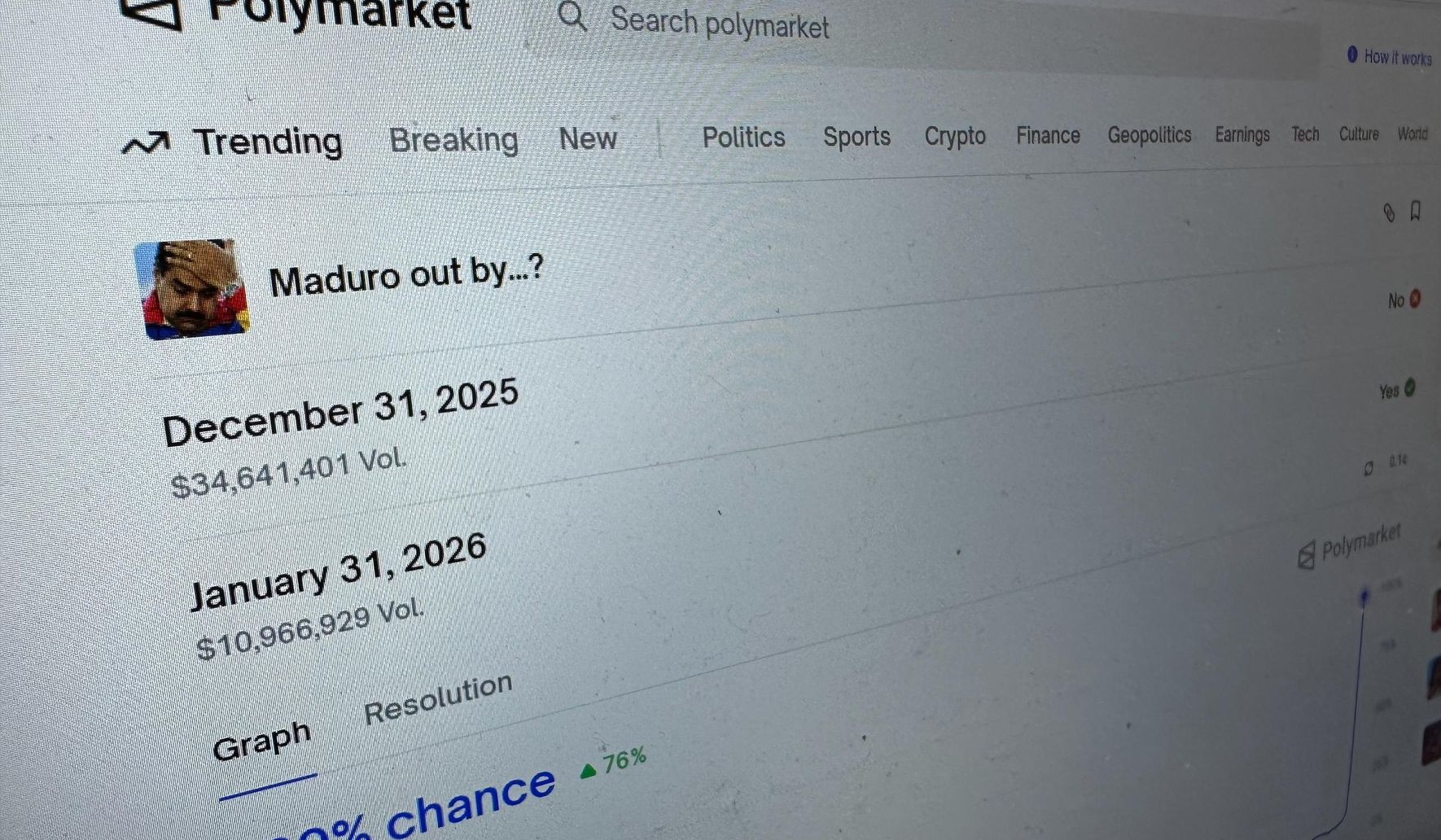
Polymarket traders profited after U.S. and Israeli strikes on Iran, with six users correctly predicting the exact day of the attacks and others cashing in on the broader outcome.
Online prediction markets are built on two basic ideas: people put money on future events and market prices reflect collective expectations. What happened here was straightforward: a subset of users on Polymarket placed bets tied to military action, and when strikes occurred, winners collected sizable payouts. That outcome exposed a sharp tension between private speculation and the real-world human and geopolitical stakes behind those events.
From a Republican perspective, markets often reveal useful signals, but this episode raises alarms about incentives. Betting on armed conflict can reward actors who profit from instability, and that skews public incentives in a dangerous direction. The fact that six individuals accurately picked the exact date of strikes only amplifies concerns about how information flows and who benefits when violence becomes a tradable risk.
Policymakers need to grapple with a basic regulatory question: when does a private market cross into something that affects national security or foreign policy? Free enterprise is a core principle, and markets that surface honest expectations have value. Still, the marketplace for war-related outcomes sits at an uneasy junction where profit motives and state interests can collide.
There are also ethical questions that money alone cannot answer. When financial markets assign odds to casualties, infrastructure damage, or sovereign responses, society should pause and ask whether those trades are morally acceptable. It is one thing to hedge against election results or weather; it is another to treat military action as a commodity where prices spike and fall like any other asset.
Transparency around who trades and why matters. Anonymous accounts and opaque liquidity providers can hide motives and obscure whether transactions are purely speculative or tied to information leaks. Accountability and clearer reporting rules would help determine whether trades simply reflected open-source intelligence or whether something more troubling was at play.
Legal frameworks are not fully adapted to this terrain. Securities and commodities regulators focus on fraud and market manipulation, but betting on foreign military strikes presents novel issues that may not fit neatly into existing statutes. That gap leaves a gray zone where harmful behavior could slip through while regulators scramble to catch up.
At the same time, it is worth acknowledging a simple fact: markets aggregate views and can help reveal collective expectations, which has value for decision makers. But that value does not erase the need for guardrails when national security and human lives are on the line. A practical approach must balance liberty with responsibility, and that conversation will be uncomfortable.
For conservative lawmakers, the immediate questions are concrete: how to protect classified information, how to deter manipulation that could influence real-world actions, and how to preserve free markets while preventing perverse incentives. Those are policy debates about limits, enforcement, and the proper role of government in policing digital marketplaces tied to geopolitical events.
The Polymarket episode also reinforces a cultural point about modern conflict: information moves fast, and private platforms can amplify demand for that information in ways we haven’t fully anticipated. Markets, social feeds, and encrypted messaging create an ecosystem where speculation and strategy can overlap, and that reality will shape how leaders think about both national security and economic policy.

