

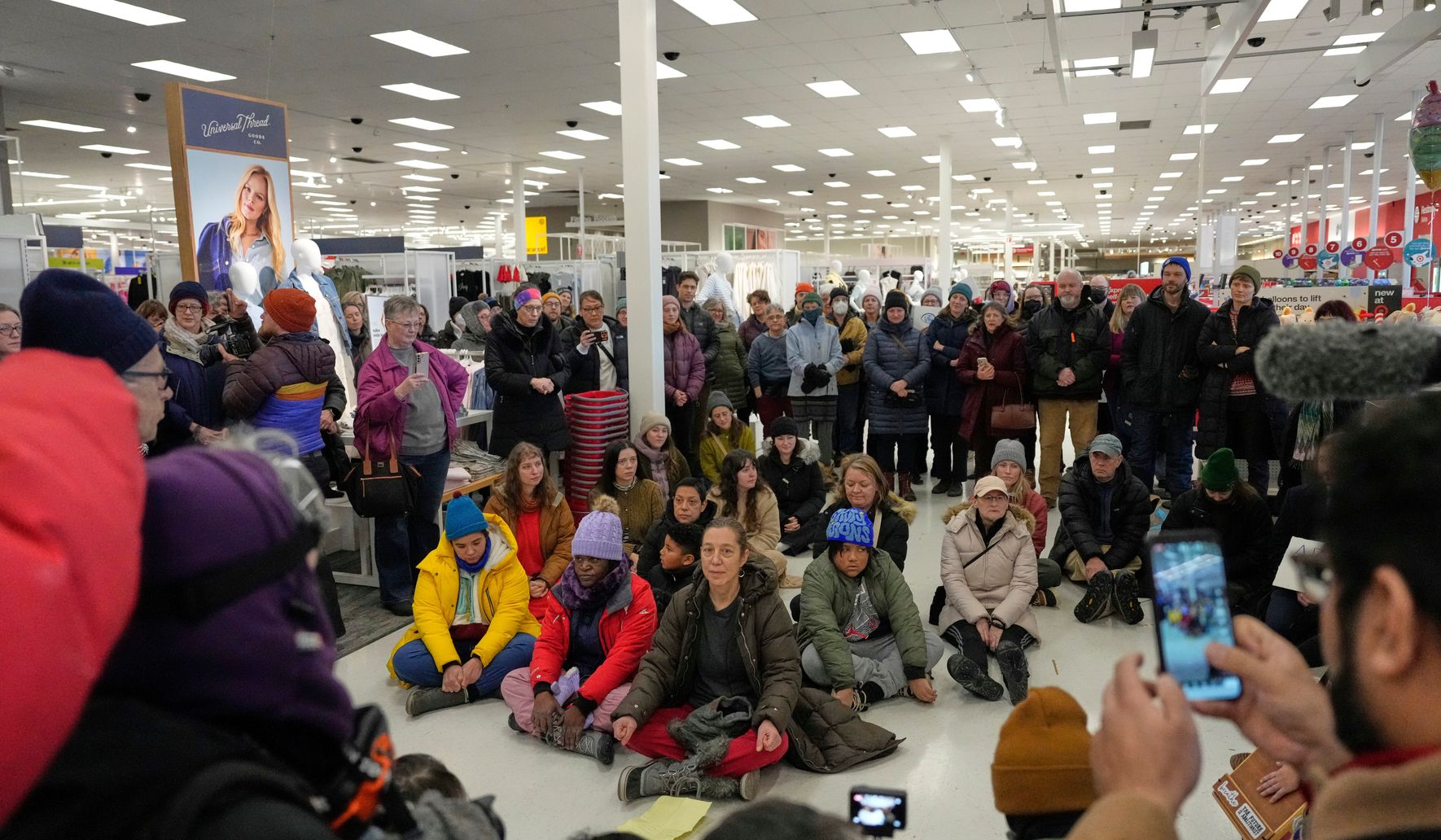
Protesters occupied a Target store in Minnesota on Monday to demand that the Minneapolis-based retailer bar Immigration and Customs Enforcement from its property.
A group of activists entered a Target store in Minnesota and staged an occupation on Monday, pressing the retailer to take a clear stance on Immigration and Customs Enforcement presence. They called on the Minneapolis-based company to forbid the agency from its property, framing the move as a corporate responsibility issue. The action drew attention from shoppers and local onlookers who encountered the demonstration.
The protesters said they wanted Target to adopt a policy that prevents ICE from operating on store premises, arguing that corporate ground rules should protect community members. Their presence in the store was intended to spotlight a perceived gap between corporate image and local enforcement activity. The tactic relied on disruption to get the issue noticed by management and the public.
From a Republican viewpoint, occupations of private businesses raise questions about respect for property rights and the rule of law. Businesses operate under a framework of laws and safety regulations, and unplanned occupations create liability and safety concerns for employees and customers. Democrats often frame these actions as moral protest, but Republicans emphasize orderly channels for change.
Target, as a large private employer and national brand, faces the challenge of balancing customer safety, legal obligations, and public pressure. Companies must decide whether to create formal rules about law enforcement presence on their property or continue to leave responses to case-by-case judgment. Either route carries reputational and operational consequences that executives cannot ignore.
Law enforcement agencies like Immigration and Customs Enforcement operate under federal authority, often with mandates tied to national security and immigration law. Critics argue some enforcement actions can be harsh or misguided, while supporters say agency work is essential to maintaining order at the border and nationwide. The tension between community concerns and federal responsibilities is part of the broader immigration debate.
Protest tactics that involve occupying private commercial space complicate that debate by bringing corporate entities into the field of policy disputes. Retailers do not set federal policy, but they can be pressured to adopt internal standards about who can and cannot operate on private property. That pressure can push companies into political territory they may prefer to avoid.
Employees caught in the middle of protests often face the immediate consequences of disruptions, including interrupted shifts and safety anxieties. Store staff did not create the policy choices under dispute, yet they must manage the fallout when demonstrations occur inside sales floors. Republicans tend to highlight the need to protect workers and customers from being used as leverage in political fights.
On the other hand, corporations wield significant influence and can shape local norms by setting access rules for third-party agencies on their land. If a retailer decided to prohibit a federal agency from operating on its premises, that would be a clear corporate policy choice with ripple effects. Such a decision could spark legal and political pushback depending on the specifics of the interaction.
Public demonstrations like this one also test local political leadership and law enforcement responses. Cities must weigh free speech protections against laws that forbid trespass and disorderly conduct. Republican perspectives typically prioritize clear enforcement of property rights and predictability in how protests are handled.
Activists chose visible, consumer-facing spaces to amplify their message because retailers attract wide daily foot traffic and media attention. That strategy can be effective at raising awareness, but it shifts the spotlight from policy specifics to spectacle. For conservative observers, spectacle does not substitute for legislative or legal reform.
Target’s corporate headquarters in Minneapolis means the company often finds itself in the center of local and national debates. Being a hometown brand makes it an appealing target for campaigns that want to pressure a recognizable name. Corporate leaders must decide how to respond in ways that preserve customer trust and legal compliance.
The administration of a store during an occupation is a logistical challenge that includes evaluating threats, communicating with employees, and coordinating with law enforcement. Quick, clear protocols help reduce ambiguity about responsibilities and legal exposure when protests erupt. Republicans generally argue that private businesses should have strong protections and clear recourse when their operations are disrupted.
For those pushing corporate policy changes, occupation tactics are a blunt instrument that can force a conversation but may also alienate potential allies. Persuading a company to change often requires sustained campaigning and presenting a viable alternative that aligns with business priorities. Political allies of corporate freedom argue for mobilizing consumers through choices rather than coerced in-store actions.
The larger immigration debate will continue to play out across legal, political, and corporate arenas, and incidents like the Target occupation add another flashpoint. Republicans emphasize that law and order, secure borders, and predictable enforcement matter for public confidence. Businesses must weigh public relations against legal realities when these issues surface at their doors.
Local officials and corporate representatives will likely continue to receive pressure from both sides as advocacy groups use high-profile venues for visibility. The political dimension of such protests means resolutions are rarely simple and often require policy, legal, or contractual clarity. Conservative voices will press for measures that protect property, prioritize worker safety, and uphold legal frameworks.
Observers watching the Minneapolis occupation will see it as part of a broader pattern where activists target national brands to leverage change. Republican commentary often focuses on ensuring that protests stay within legal bounds and do not create enduring risks for ordinary citizens. How Target responds could set a precedent for future actions at other retailers.
The occupation on Monday serves as a reminder that private property decisions can become battlegrounds for public policy disputes. Companies will continue to face demands to adopt stances on contentious federal matters, and their choices will influence both local sentiment and national conversation. Republicans argue the right approach is to protect businesses while advocating policy changes through elected representatives.
In the end, the incident in Minnesota underscores a complicated intersection of protest, corporate responsibility, and federal enforcement. Each side will keep pushing its priorities, and communities will weigh the immediate impacts against long-term policy goals. The debate over how businesses and agencies interact will continue to evolve as similar confrontations unfold elsewhere.

