

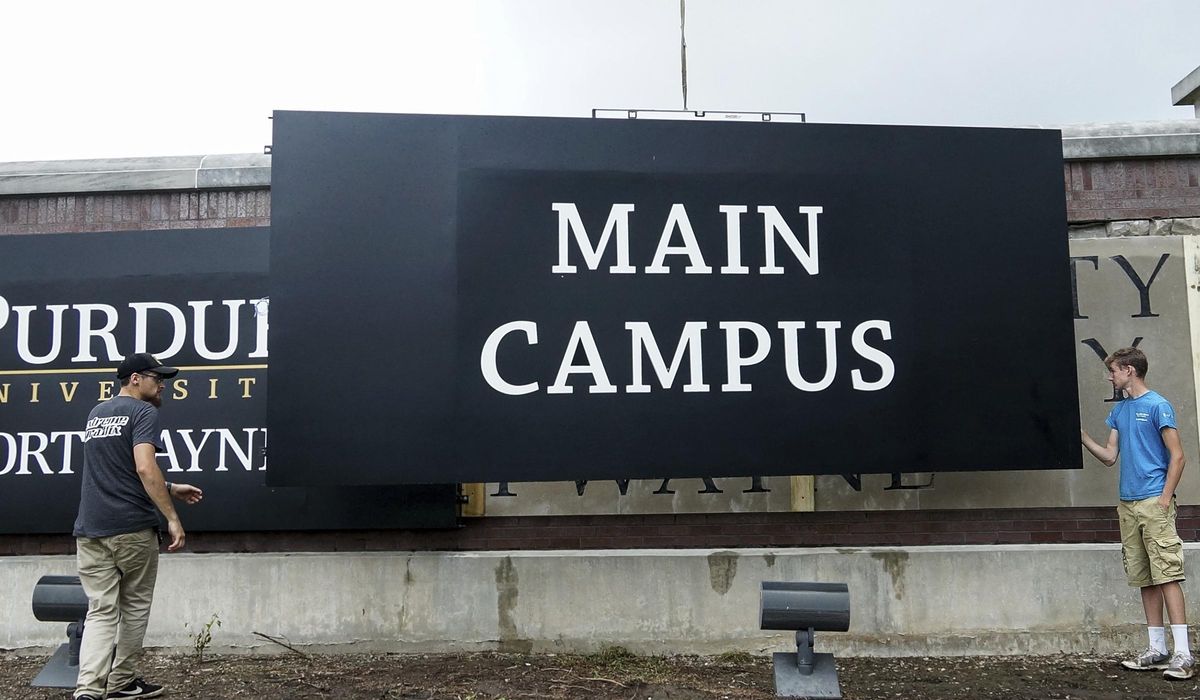
Purdue University’s incoming class of 10,000 freshmen will be the first in the nation to have artificial intelligence graduation requirements when classes start next month. This change marks a major shift in how universities treat AI literacy and signals a broader effort to make students ready for an economy where generative tools are part of everyday work. The move is both practical and symbolic, showing that AI is no longer an optional elective but a core competency for college graduates.
Purdue is putting an AI baseline into its degree programs, meaning students will face specific coursework or certification before they graduate. That requirement is designed to ensure every student, regardless of major, understands AI’s capabilities, limitations, and ethical dimensions. It aims to move AI from a fringe technical topic into a common competency universities expect of all graduates.
The approach blends technical training with practical use cases, so students learn how to apply tools rather than just read about algorithms. Expect modules on prompt craft, critical evaluation of AI outputs, and hands-on projects that tie the technology to real-world problems. Faculty are being asked to integrate these lessons into existing courses so the requirement doesn’t become a separate box to check but part of the curriculum itself.
Administrators argue this prepares students for workplaces that already use AI for writing, data analysis, and decision support. Employers consistently list AI familiarity as a desirable skill, and Purdue’s requirement is a direct response to that demand. The university sees the policy as leveling the playing field so all graduates can compete regardless of their major.
Not everyone agrees on how deep that training should go, and debates are already underway about scope and assessment. Some faculty worry that a one-size-fits-all requirement oversimplifies a complex field and risks teaching surface-level tricks instead of foundational understanding. Others counter that a pragmatic, skills-based approach gives students usable competency quickly and helps them avoid falling behind in a fast-moving job market.
Academic integrity is a central concern as AI tools become ubiquitous. Purdue’s framework includes guidance on responsible use, attribution, and how to demonstrate original thought when generative systems are involved. The school plans to combine technical checks with education on ethics so students can spot hallucinations, bias, and misuse rather than rely solely on detection software.
There are questions about resources and scale when a campus commits to training 10,000 new students at once. Purdue will need instructional designers, faculty training sessions, and assessment systems to handle the load, and that requires funding and coordination. Still, scaling successfully could set a model for other institutions by proving a campus-wide requirement can be implemented without fragmenting degree programs.
Students are likely to react in a mix of curiosity and pushback, with some embracing new tools and others cautious about additional requirements. Early evidence from pilot programs suggests students appreciate practical instruction that makes AI useful for classwork and future jobs. Transparent expectations and clear assessment criteria should help ease concerns about fairness and workload.
On the policy side, universities are balancing innovation with safeguards so learners don’t become over-reliant on automated outputs. The goal is not to ban tools but to teach discernment, so graduates can use AI to augment their work while retaining accountability for results. That balance is tricky, but universities that get it right can produce graduates who are both creative and critical.
Industry partnerships are likely to play a role, with tech companies offering resources, tool access, or expertise to campus programs. Those partnerships can speed implementation and provide students with exposure to current tools, though they also raise questions about influence and vendor dependence. Clear boundaries and academic control over curricula will be essential to preserve educational integrity.
As Purdue launches its requirement next month, other schools will be watching closely for lessons on curriculum design, assessment, and scaling. The experiment will reveal whether a broad AI graduation requirement truly improves student readiness or simply adds a new credential. Either way, the move pushes the higher education conversation forward by treating AI as a core skill rather than an optional topic.

