

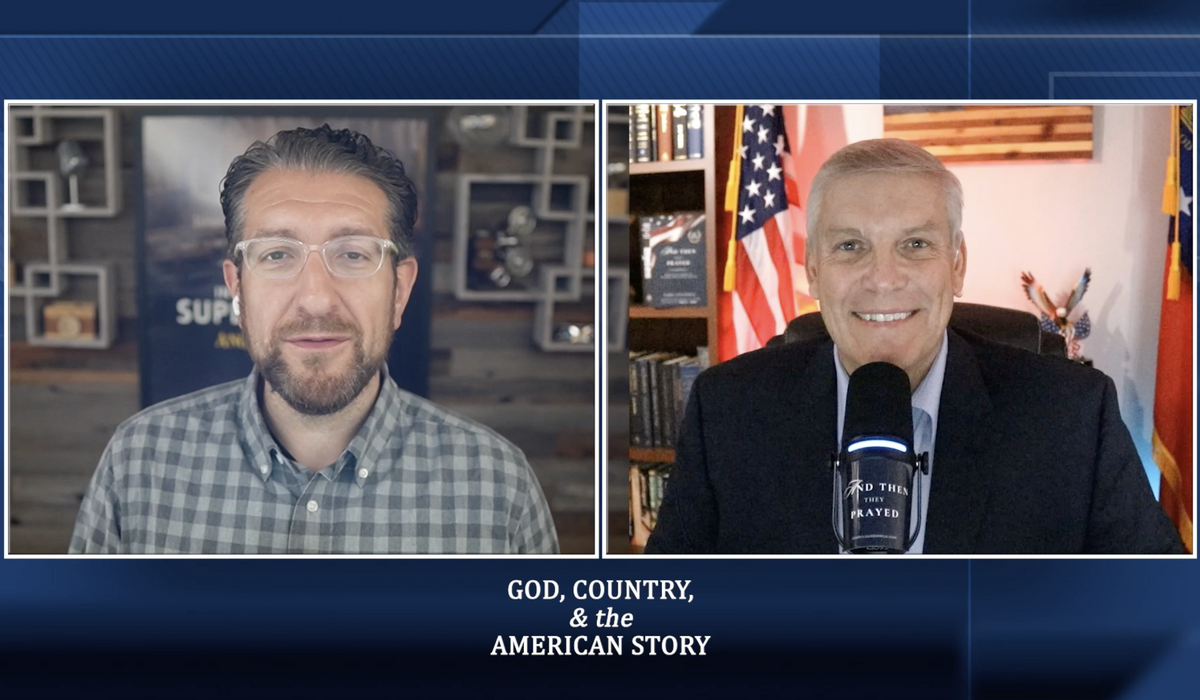
Congressman Barry Loudermilk talks about faith, history, and the role of prayer in shaping America in “And Then They Prayed: Moments in American History Impacted by Prayer.”
Congressman Barry Loudermilk sits down with Billy Hallowell to talk about faith and the lessons history hands us when citizens and leaders turn to prayer. The conversation centers on specific moments where prayer intersected with pivotal decisions and public life. Loudermilk frames these incidents as evidence that faith played a real role in guiding the republic at critical points.
The book “And Then They Prayed: Moments in American History Impacted by Prayer.” is presented not as a textbook but as a series of snapshots where prayer influenced outcomes. Loudermilk argues these moments deserve attention from policymakers and everyday people alike. His tone in the interview is straightforward and unapologetic about the place of faith in public life.
What stands out is how Loudermilk connects those moments to contemporary debates over religion in the public square. He argues that removing prayer from civic life weakens social cohesion and moral clarity. From a Republican perspective, he sees faith as part of the fabric that supports liberty and responsibility.
Loudermilk and Hallowell discuss practical examples drawn from American history that readers might recognize or find surprising. The examples are used to underline a larger point: prayer has been part of leadership, not a sidebar to it. Those stories are framed to encourage reflection about the relationship between private belief and public action.
The congressman pushes back against arguments that faith must be entirely private to be legitimate in politics. He says a healthy republic tolerates public expressions of belief while protecting individual freedoms. That balance, he suggests, is central to conservative thought about American institutions.
Throughout the interview Loudermilk stresses personal responsibility alongside spiritual practice. He presents prayer not as a replacement for policy work but as a companion to wise decision making. For him, faith informs priorities, fosters humility, and reminds leaders of duties beyond electoral cycles.
Readers hear specific anecdotes that serve as both history lesson and moral prompt, delivered in a conversational style that avoids academic distance. Hallowell’s questions give Loudermilk room to tie those episodes to modern policy challenges. The result is an appeal to conservatives who want faith acknowledged in the public square without erasing pluralism.
The book also functions as a corrective to narratives that marginalize religious voices in civic life, a theme Loudermilk returns to more than once. He frames religious practice as an engine of community resilience and civic engagement rather than something divisive. That argument is pitched to fellow citizens who care about preserving institutions and passing values to the next generation.
There is a clear argument here for restoring cultural respect for prayer as an American practice that shaped moments of courage and clarity. Loudermilk suggests that when leaders and citizens pray, they are practicing a form of accountability that transcends polls and short-term gains. The interview leaves no doubt he believes faith belongs at the table when the nation considers its direction.
In plain language, the conversation champions faith as a constructive force for public life and policy within a conservative framework. Loudermilk wants readers to see the past as instructive and the present as a chance to re-embrace the moral resources that sustained the nation. For listeners who value tradition and moral clarity, the discussion aims to be both reassuring and mobilizing.

