

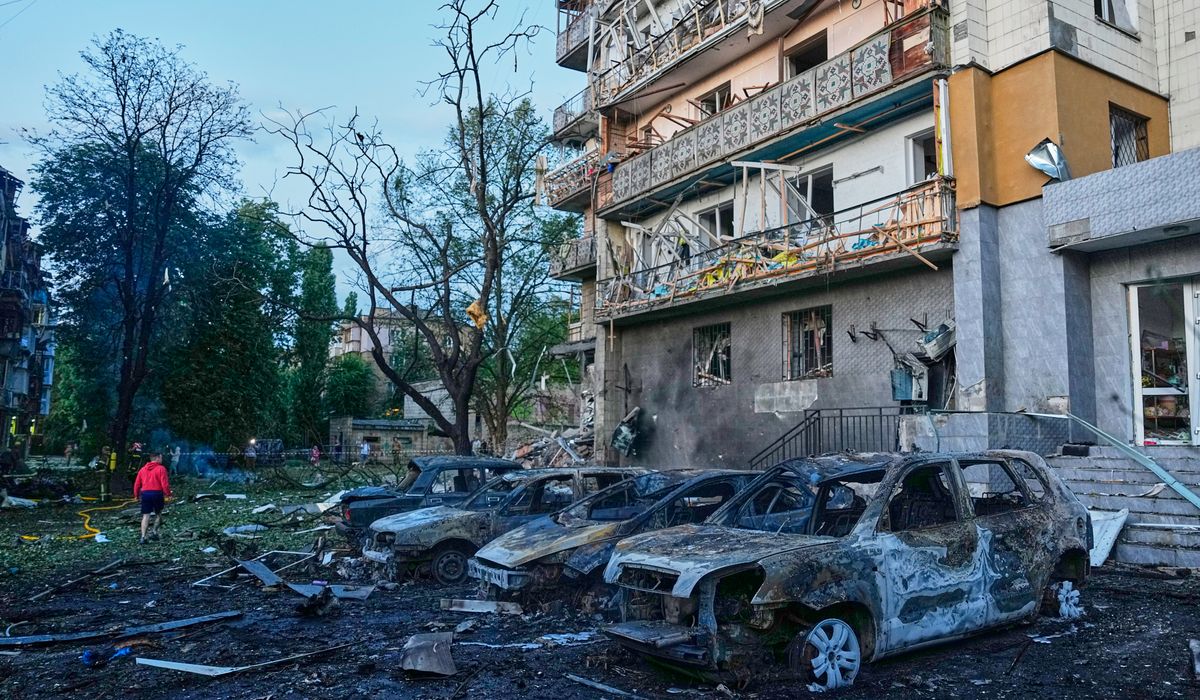
Ukrainian President Volodymyr Zelenskyy pleaded for more U.S.-made Patriot missile interceptors on Sunday after a Russian missile-and-drone attack on Kyiv left at least one Ukrainian dead and caused additional damage.
The attack on Kyiv underlined how vulnerable cities remain to long-range strikes, even as Ukraine keeps pushing back. Public officials and commentators immediately called for more advanced air defenses, arguing that shortfalls in interceptors are a persistent problem. This is now a recurring scene: weapons fall, civilians suffer, and leaders ask for what they say will blunt future attacks.
From a Republican perspective, the answer is clear and simple. Supporting Ukraine with the right defensive tools aligns with U.S. national security interests and deters further aggression by signaling consequences. Supplying additional Patriot interceptors would not be a blank check; it is a focused investment in both civilian protection and battlefield stability.
Patriot systems are designed to hit incoming missiles and drones at higher altitudes than many short-range air defenses, which makes them particularly valuable for protecting capital cities and strategic sites. They require trained crews, logistics, and regular resupply of interceptors, which is why requests for additional missiles come alongside calls for sustained partnership. The debate is less about whether the system works and more about committing to the scale and speed of support.
Critics on the left sometimes emphasize negotiation and sanctions over kinetic support, but history shows that credible defense lowers the chance of escalation by reducing the payoff for attacking. When a state understands its opponent can neutralize strikes, it faces greater political and military costs for continued aggression. That simple logic is often missing from hand-wringing arguments that prioritize optics over outcomes.
Republicans have consistently argued that showing strength saves lives and spares resources in the long run. The practical question now is matching words with materiel. Interceptor missiles are consumables. Each engagement depletes stockpiles, and manufacturing timelines matter. A failure to replenish those stocks invites repeat attacks and forces Ukraine to divert troops and resources to protect infrastructure instead of seizing the initiative.
There is also a political dimension at home. Lawmakers who resist robust aid packages must answer whether their hesitation aligns with a strategic calculation or with domestic theater. Voters deserve clarity on whether their representatives prefer leaving an allied capital exposed or making the investment needed to prevent more bloodshed. This is not theory; it is about real decisions with immediate consequences.
Operationally, sending interceptors and related support is not an act of escalation. Defensive systems are by nature protective, aimed at reducing casualties and preserving civilian life. For the United States, bolstering Ukraine’s air defenses is a pragmatic move to prevent regional instability that could draw in others. Pragmatism should guide policy, not a reflexive fear of appearing involved.
Equipping Ukraine to defend its skies also buys time for diplomatic avenues to work. Defense does not foreclose negotiation; it creates the conditions under which talks can happen from a position of strength. The alternative is appeasement that invites further attacks and forces harder choices later on, when options narrow and costs rise.
On the ground, Ukrainian forces have shown they can use advanced systems effectively when supplied, integrating them into layered defenses that reduce the number of strikes that reach urban centers. Civilian casualty numbers and infrastructure damage provide a budgetary and moral imperative to act now. Practical aid focused on interceptors, training, and maintenance is a way to translate political will into concrete survival for millions.
As leaders weigh the next steps, the choice is straightforward for those who prioritize American strength and allied resilience. Delivering the promised systems, ensuring they are properly sustained, and committing to sensible levels of support are the measures that will actually change the risk calculus for the Kremlin. That mix of resolve and realism is what will protect civilians and keep the streets of Kyiv safer tomorrow.

