

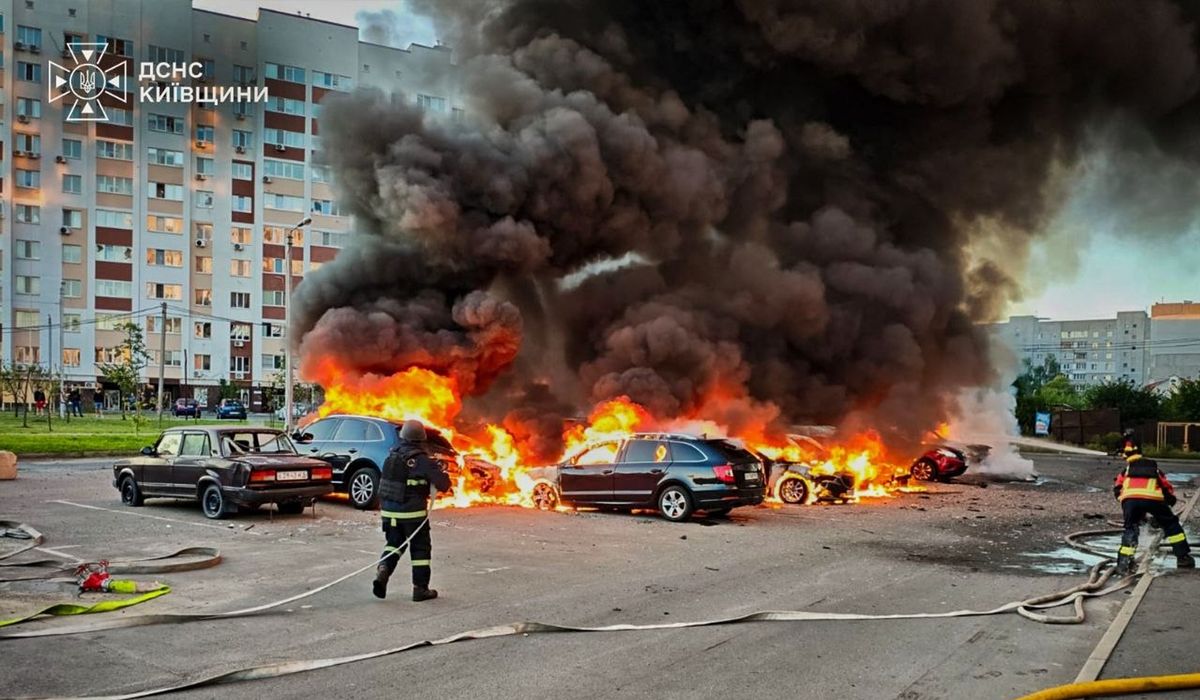
Russian forces on Friday resumed a drone barrage of Ukraine’s Kyiv region, striking more than a dozen apartment buildings and storage depots in a second straight day of aerial attacks, officials said.
Russian forces launched a renewed drone campaign against the Kyiv region on Friday, hitting residential blocks and storage sites across multiple towns. The strikes marked a second consecutive day of aerial attacks, underscoring the continuing threat to civilians and infrastructure near the capital. Local officials reported extensive damage to apartments and logistics facilities that support both daily life and relief efforts.
The pattern of targeting storage depots and housing suggests a mix of tactical pressure and attempts to degrade civilian resilience. Damaged depots disrupt supplies and complicate relief routes, while hits on apartment buildings heighten displacement and fear. For families already living with uncertainty, these strikes translate into lost homes and shattered routines overnight.
Ukraine’s air defenses responded during the barrage, engaging incoming drones and attempting to limit the fallout from the attacks. Intercepting swarms of small aerial vehicles is technically demanding and strains resources, particularly when attacks are sustained over consecutive days. Officials described emergency crews working through the night to clear rubble and restore basic services where possible.
Beyond the immediate impact on civilians, the attacks carry broader strategic implications for Kyiv and its defenders. Strikes on storage sites complicate logistics for humanitarian and military supply chains, while repeated pressure keeps cities on edge and resources tied up in recovery. This kind of attritional campaign is meant to wear down both material stockpiles and civilian morale.
From a national security standpoint, U.S. and allied observers see the strikes as part of a larger effort to test air defenses and probing responses. Republican policymakers tend to view such campaigns as proof that deterrence and sustained support are essential. They argue that predictable, firm backing for Ukraine helps prevent further escalation and protects Western interests by keeping aggression costly.
On the humanitarian front, municipal services face a grinding task: sheltering displaced residents, restoring power, and rerouting food and medical aid. Hospitals and first responders operate under strain, with staff juggling surge care alongside power outages and supply shortfalls. Citizens report nights of broken windows and interrupted sleep as warning sirens and explosions punctuate routine life.
International reaction followed the familiar pattern of condemnation and calls for accountability, but words alone are insufficient in the face of ongoing attacks. Sanctions and diplomatic pressure remain tools, but they arrive at different speeds and have varying degrees of impact. The operational reality inside Ukraine demands immediate, effective responses to protect civilians and maintain logistical resilience.
Meanwhile, Ukraine’s military continues to adapt its tactics, prioritizing protection of supply lines and urban areas while attempting to push back attackers where possible. The strain on resources is evident, and both materiel and intelligence support make a real difference on the ground. Observers note that sustainability of aid and the speed of resupply affect how quickly towns can recover after each nighttime barrage.
For residents of the Kyiv region, the constant threat shapes daily choices and long-term plans, from school schedules to where to store food and fuel. Community volunteers and local governments keep organizing relief centers and shelter capacity despite recurring damage. The human cost is immediate and measurable, even as military and diplomatic actors weigh their next moves.

