

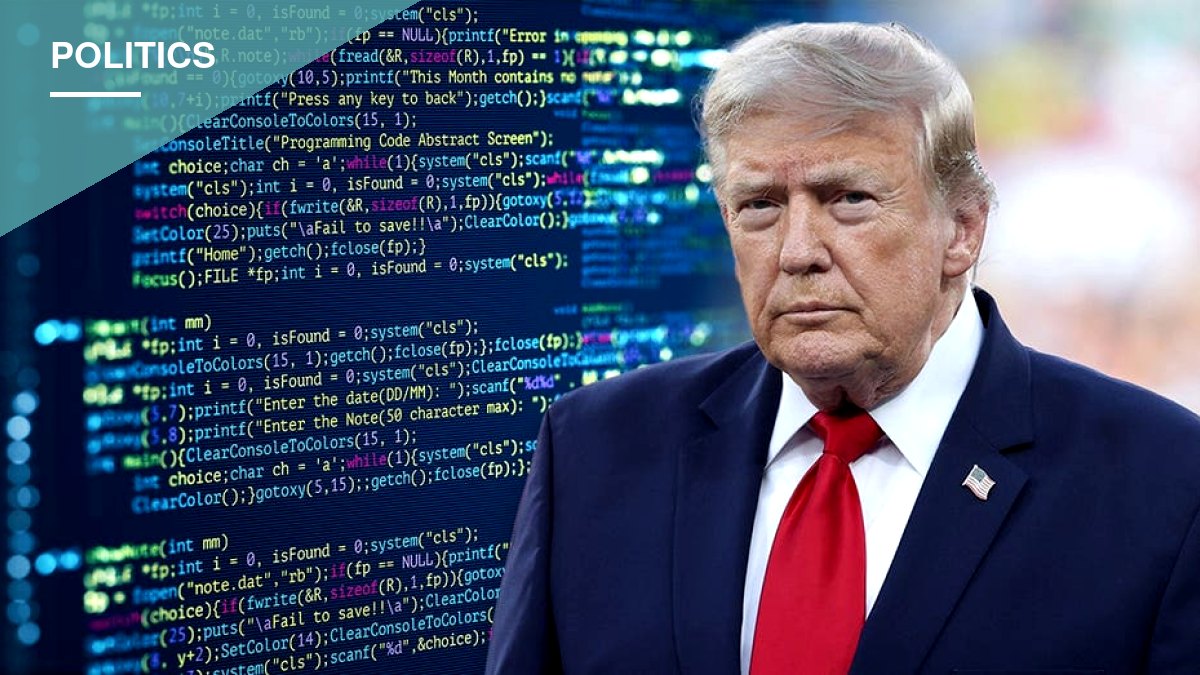
A growing debate in Washington over whether to regulate artificial intelligence is drawing comparisons to the Y2K scare of the late 1990s, when predictions of technological catastrophe led to a massive, costly response that ultimately averted only minor problems.
Vermont Sen. Bernie Sanders has been among the most prominent voices warning about AI’s dangers. In April, Sanders wrote that AI “kills jobs, equality, connection, democracy and maybe the human race.”
Sanders’ warning reflects a broader pattern among Democrats, who are increasingly calling for federal guardrails on AI development, citing risks that range from job losses and inequality to threats against democracy itself. Heritage Foundation technology analyst Annie Chestnut Tutor told Fox News Digital that political motives may be at play.
“Democrats are capitalizing on the fears of Americans that angst over AI,” Tutor said.
The apocalyptic tone isn’t limited to elected officials. Former Anthropic researcher Jacob Coxon left the AI company over concerns about the race toward self-improving systems, warning that developers are “gambling with our lives” and that AI could “kill us all by the end of the decade.”
Echoes of Y2K
Junk Science publisher and founder Steven Milloy argues the current AI panic mirrors the Y2K frenzy, when experts feared the calendar rollover from 1999 to 2000 would trigger power-grid failures, air-traffic disasters and even planes falling from the sky. The U.S. spent an estimated $100 billion — roughly $200 billion in today’s dollars, according to a 2000 Senate report — preparing for a crisis that, in the end, caused few major disruptions.
“You could draw all sorts of scary scenarios with Y2K as well,” Milloy told Fox News Digital. “The financial system was just going to collapse because people had not written their programs for the year 2000. I had been writing programs in the 1980s for the government, so I’m well aware of the program. But of course, the tech industry knew about the problem, and to the extent that was a real problem, took action to fix it. The same can happen with AI.”
Tutor offered a similar, if more measured, take, saying Y2K’s relatively smooth outcome resulted from real engineering work rather than luck.
“The reason now, like, we all laugh about Y2K is because actually software engineers and, like, financial analysts, they’ve worked really hard to ensure that the catastrophic incidents [didn’t] happen,” Tutor said. “I think the same thing could happen with AI. If AI is built right, it can be more beneficial to Americans than the doomsday scenario.”
Trump administration’s approach
President Donald Trump has made rapid AI development, and the data centers needed to power it, a policy priority, while his administration touts the technology’s economic upside. Democrats, meanwhile, are pressing the issue ahead of the midterm elections.
The administration has backed some targeted measures, including AI-powered cyber defenses for critical infrastructure, criminal enforcement against AI-enabled hacking, and proposals aimed at curbing AI-driven child exploitation. But Trump has dismissed broader catastrophic warnings as a “hoax,” language he has also used for years to describe climate change concerns.
“Give me a real-life practical scenario of how this can happen,” Trump said. “And then if you know what the scenario is, then you can stop it.”
Milloy drew a direct line between AI warnings and past climate predictions, including forecasts that entire nations could be swallowed by rising seas, that Arctic summer ice would vanish within years, and that Glacier National Park’s glaciers would disappear by 2020.
“There are a lot of parallels between climate hysteria and AI hysteria,” Milloy said. “Climate was existential. It was going to destroy the planet, and by implication, humanity. As we learned last week, AI is going to destroy humanity also on a very short time frame.”
Milloy contends that lawmakers pushing for sweeping AI restrictions have not produced enough concrete evidence of catastrophic scenarios to justify such action, and he warned that overregulation carries its own risks.
“The opportunity costs are potentially huge,” Milloy said, pointing to the potential for AI-assisted breakthroughs in medicine and productivity, while acknowledging their full scale remains unknown.

