

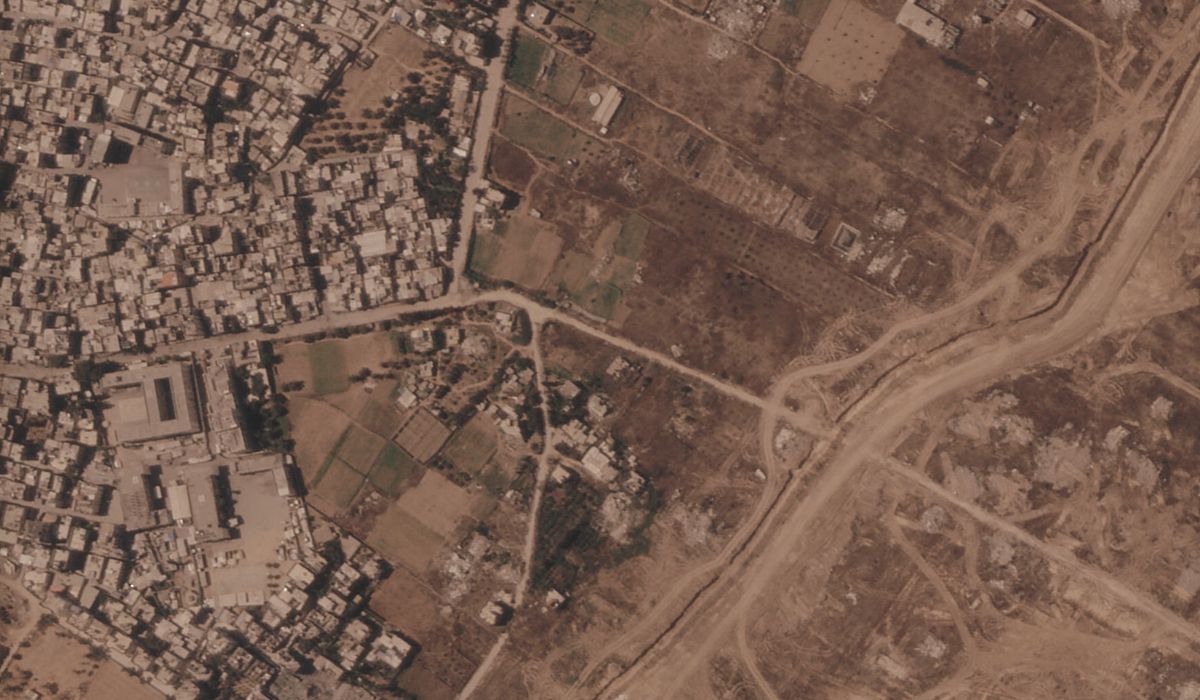
The Israeli military is quietly but quickly building a giant earthen barrier separating the over 50% of the Gaza Strip it controls from the rest of the territory, according to satellite imagery.
Satellite imagery shows the Israeli military moving fast on a construction project described as a giant earthen barrier, and the scale of it is striking. The line of work appears to cut between areas under control and the remaining territory, and observers note that more than half of the Gaza Strip is affected. This development is drawing attention because it changes the landscape and the logistics on the ground. It also raises questions about how civilians and aid will be handled in the months ahead.
From a Republican viewpoint, the need for clear, direct security measures is not controversial when a nation faces persistent threats along its borders. Israel has a sovereign right to protect its forces and population, and building fortifications has a long history in warfare and border control. Still, building a barrier inside a densely populated territory is a major move that will have immediate tactical and strategic consequences. Lawmakers and analysts should insist on transparency about how protection and legality are being balanced.
The phrase giant earthen barrier is not rhetorical; imagery shows heavy earthworks, berms and long linear mounds that suggest planning and heavy equipment. Those features are intended to restrict movement and create controlled zones, and engineers usually design them for quick construction and durability. Where barriers intersect with existing urban areas, the effects are amplified because people, utilities and transport routes are tightly packed. That concentration turns any new barrier into an operational game changer.
Given that the works separate over 50% of the Gaza Strip it controls from other areas, the barrier will alter command and supply lines for both military and civilian operations. When half a territory becomes ring-fenced or compartmentalized, traffic flows, aid corridors and the delivery of basic services all shift rapidly. Military planners will be focused on securing approaches and preventing infiltration, while humanitarian groups will confront new choke points. Those competing priorities create pressure points that deserve prompt attention from oversight bodies.
Quiet and quick is a telling phrase here because it implies minimal public debate or advance notice about a major physical change on the ground. Governments often proceed fast when they believe the security payoff outweighs the political cost, but democratic accountability still matters. Members of Congress who care about America’s strategic friendships will want on-the-record briefings about the rationale, the anticipated duration, and the safeguards for civilians. Clarity can reduce frictions with allies and with international institutions.
There are practical questions for anyone watching the area: how will checkpoints be managed, what monitoring will be used to prevent unintended harm, and what plans exist to maintain humanitarian access. These are not academic points when a barrier runs through densely inhabited areas; they are operational realities that affect daily survival for many people. Independent verification of conditions and access routes matters, as does ensuring that aid organizations can operate safely where permitted. Without that, the humanitarian consequences could grow fast.
For national security-minded observers, barriers and fortifications are familiar tools that buy time and options for commanders, and they can reduce immediate threats if properly sustained. But trenches, berms and earthworks do not solve underlying political problems, and they can harden boundaries in ways that complicate later diplomacy. Any long-term strategy that relies heavily on physical separation should be paired with a political plan for stability and reconstruction, or it risks creating frozen conflicts that fester.
The pace of construction and the choice to move ahead quietly will also shape international reactions, including in capitals that are sensitive to civilian harm and proportionality. Republicans who support Israel’s right to defend itself typically also favor measured steps that preserve moral clarity and long-term strategic advantage. That balance calls for regular reporting, clear rules of engagement, and mechanisms to protect noncombatants. Those steps help maintain both effectiveness and legitimacy on the world stage.
Observers interested in the specifics of the project should expect continued monitoring from commercial satellite providers and independent analysts who will track the line of works and its extensions over time. The images already cited by multiple analysts make the basic fact clear: a giant earthen barrier is being erected and it separates over 50% of the Gaza Strip it controls from the rest. How that physical change is managed, overseen and communicated will determine whether it serves a narrow tactical purpose or becomes a longer term structural barrier with broader consequences.

