

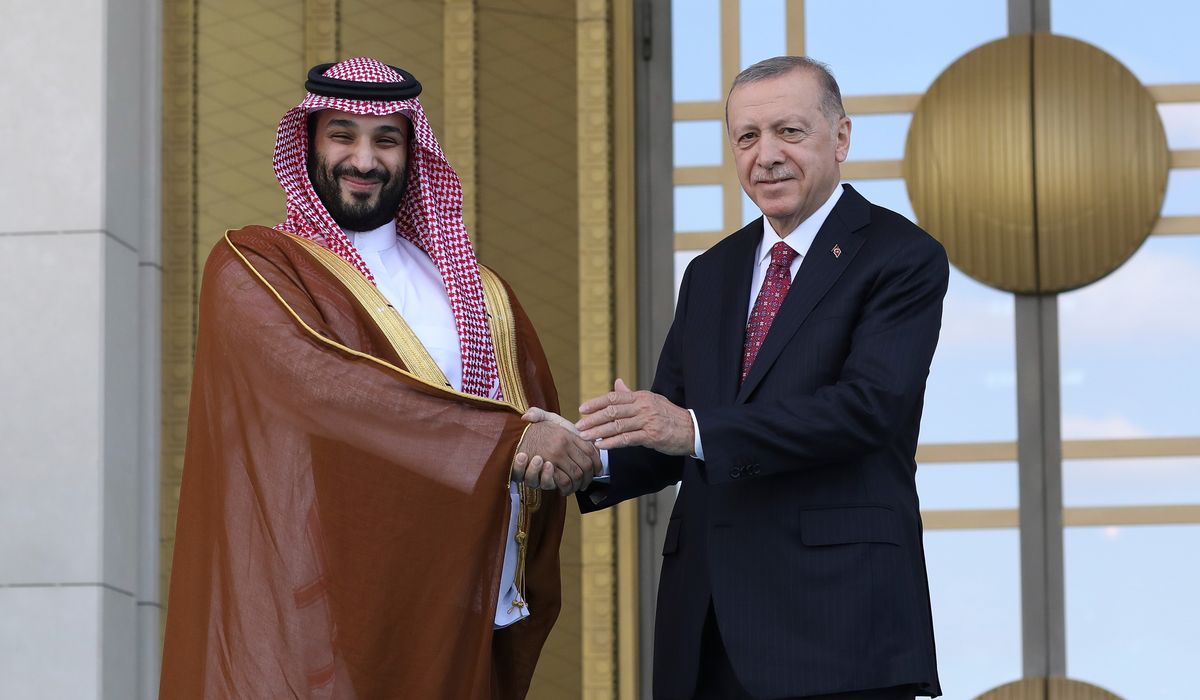
Saudi Arabia, Pakistan and Turkey formalized a new trilateral pact on Friday to expand a mutual defense agreement, tightening a regional security partnership amid the ongoing war in the Middle East.
Saudi Arabia and Pakistan took a clear step toward deeper security coordination by signing a trilateral pact with Turkey on Friday, expanding their existing mutual defense agreement. The move signals an effort to present a united regional front and to coordinate military and strategic planning more closely than before. Leaders framed the pact as a way to manage shared threats and stabilize areas affected by the war in the Middle East.
The agreement builds on prior bilateral ties between Saudi Arabia and Pakistan while folding Turkey into a more integrated security arrangement. For Washington, and particularly for Republicans who favor a strong international posture, this development underscores the need for America to bolster alliances that check destabilizing actors. At the same time, the pact reflects regional powers taking responsibility for their neighborhood rather than relying solely on external guarantors.
From a Republican viewpoint, the practical value of such a pact is straightforward: allies that coordinate defense reduce the likelihood of wider conflict and raise the costs for any actor considering aggression. That said, the United States should assess how this trilateral framework complements NATO ties, regional partnerships, and global deterrence plans without being drawn into local disputes by default. The signatories may prefer autonomy, but stronger ties among them can also be a force multiplier for Western interests when aligned properly.
Strategically, combining the capabilities and political weight of Saudi Arabia, Pakistan and Turkey can change regional calculations. Turkey brings NATO experience and a large, modern military structure; Saudi Arabia brings economic leverage and regional influence; Pakistan contributes a historically significant military role in South Asia. Together they can coordinate intelligence sharing, logistics, and maritime and air patrols to protect trade routes and energy infrastructure that matter to global markets.
There are risks and trade-offs too. A trilateral defense pact must navigate differing priorities: Turkey’s regional ambitions, Pakistan’s geopolitical focus, and Saudi Arabia’s security priorities might not always line up. Any agreement will need clear command arrangements and dispute-resolution mechanisms to avoid misunderstandings that could escalate. Republicans typically favor clear chains of command and predictable rules of engagement, so transparency in how the pact operates will be key to its credibility.
Another important dimension is how this pact affects rival states and nonstate actors active in the Middle East. Coordinated defense postures can discourage proxy escalation and provide a platform to counter terrorism and maritime threats. But they can also prompt counterbalancing moves from other regional powers, which raises the stakes for diplomacy alongside deterrence. A measured Republican approach would combine firm deterrence with steady diplomatic channels to minimize unintended escalation.
Economics and energy security are tightly linked to any regional defense arrangement, and this trilateral pact is no exception. Stability along key shipping lanes and around energy-producing areas matters to global markets, and closer military cooperation among these three countries can help protect those interests. For conservatives who prioritize predictable energy supplies and resilient markets, a stronger regional security architecture is seen as a practical asset.
Operationally, success will depend on follow-through: exercises, joint intelligence, logistics cooperation and shared planning for crisis scenarios. The real test comes when the pact is called on to respond, since declarations matter only when matched by capability and will. For Republicans looking at the long game, the development is promising so long as it reinforces deterrence, keeps American options open, and avoids entanglement in conflicts that do not serve U.S. national interests.
Finally, the pact underscores a broader trend: regional powers increasingly organize their own security frameworks, aiming to manage threats close to home. That dynamic offers an opportunity for the U.S. to strengthen partnerships selectively and to support capable allies without assuming the primary security burden. Observers will be watching how the Saudi-Pakistan-Turkey arrangement develops operationally and how it interacts with other international security architectures while the war in the Middle East continues.

