

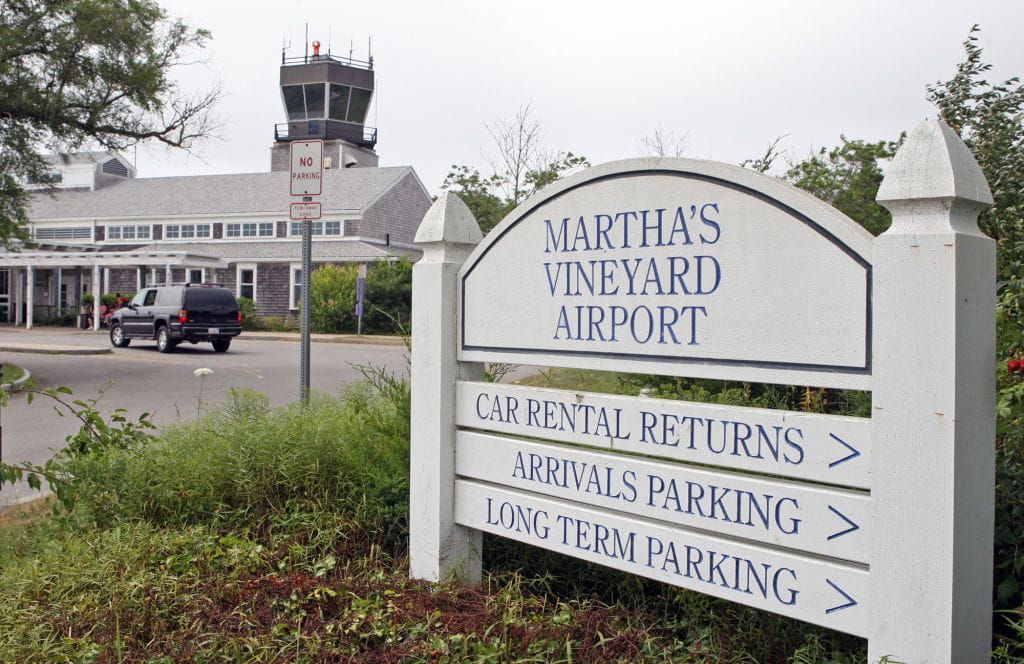
On a wealthy island where summer rituals meet political theater, a speaker series brought Open Society’s message to an affluent crowd and reminded critics just how insulated that scene can be.
Martha’s Vineyard keeps its rituals: fine food, sun, and a circuit of speakers who mostly reassure the island’s comfortable progressive set. This year’s Summer Institute opened with Laleh Ispahani representing Open Society-US, underlining the close ties between elite civic forums and global moneyed influence. The line-up and remarks made it plain that the island’s conversations are far removed from the concerns of most Americans.
The Summer Institute bills itself as weekly talks on politics, the arts, media, and democracy, and this season leaned into those themes with familiar names and familiar arguments. Laleh Ispahani stepped in on July 9 as a late substitute for Binaifer Nowrojee to deliver a keynote titled Protecting Human Rights by Protecting Democracy. Her appearance signaled the sort of heavyweight organizational backing that shapes the agenda at these retreats.
At the event she warned wealthy attendees about creeping threats to institutions and norms, framing the moment as precarious. “Over time, of course, I recognized – as you all do – that the US democracy has never fully lived up to its promise,” she said. “Equality under the law is being tested like never before. Rights are seen as negotiable, and free speech and accountability are under threat.”
She doubled down on that theme in another blunt line aimed at stirring urgency among the crowd. “What we’re seeing is a systematic expansion of government overreach, and it is dangerous,” Ispahani continued. “We’re watching patterns that once defined distant regimes surfacing here, at home.”
The Vineyard crowd can afford to worry about abstract trends; the island’s housing market insists on it. The median sale price of a home in Martha’s Vineyard was $2.45 million over the last three months, a figure that underlines how niche the island’s political salons really are. Concerns raised on the sand are often filtered through a very particular lived experience.
Ispahani also praised confrontational tactics that played well to a crowd comfortable with symbolic gestures. “This is how we push back on the encroachment and the erosion as it’s happening,” she proclaimed. “You throw sand at the gears of this oppression, both at home and abroad.” Such rhetoric invites applause in an insulated setting while prompting skepticism from those who value law and order.
The island’s social rituals extend to a predictable guest list: familiar former insiders, pundits, and the odd tech of moral branding. Scheduled speakers for the 2026 series include John Harwood, Van Jones, Jeh Johnson, and Thomas Friedman. Previous seasons hosted Anthony Fauci in 2025 and Jeffrey Toobin in 2012 and 2019, showing a pattern of comfort food for coastal elites.
Fauci’s 2025 appearance reinforced that pattern, with the former public official recounting the pandemic-era timeline in a way that reassured the audience of his role. “In that period of less than a year, we did something that was completely unprecedented, because it usually takes an average of 7 to 10 or more years to develop a vaccine. We did it in 11 months,” Fauci told the island gathering of his work during the pandemic, The Gazette reported last summer. His narrative played well in a room primed to admire technocratic leadership.
Fauci also lamented political division in a way that fit the event’s tone of moral grievance. “There was a degree of divisiveness which made it impossible to mount a unified, effective public health response,” Fauci exclaimed, repeating the stale circa-2022 canard that “more Republicans living in red states were hospitalized and died from the virus than Democrats living in blue states,” as The Gazette put it. “That doesn’t make any sense at all, that your political affiliation should determine whether you live or die from an infectious disease,” he said.
The spectacle around guest speakers can reach the absurd, proving how much the forum is about reassurance rather than debate. Disgraced figures and establishment names alike have drawn frenzied attention, as happened when Jeffrey Toobin appeared years ago. The island’s social capital often translates into a stamp of intellectual credibility, regardless of controversy.
“It’s summer on the Vineyard; crowds are expected. But nobody, from event organizers to the hundreds of people who gathered outside the Martha’s Vineyard Hebrew Center last Thursday night, expected mayhem at a speaking event about the Supreme Court.
“That night, CNN legal analyst and New Yorker writer Jeffrey Toobin was elevated to bona fide rock star status (think Justin Bieber for the intellectual set) … There was a sudden crush at the door as people tried to get in, and even as the event started, disappointed would-be audience members clamored about, looking for a way inside …
“Inside the center, which seats 325, people rushed for chairs, donors snagging reserved spots and several people holding space for friends or family members. One well-prepared attendee brought her own beach chair, and several people tried to get in through the center’s back door.”
“A line here, a line there, people are desperate, shouting ‘I’m a donor!’” seasonal resident Michael Parker told the paper. “I don’t think they anticipated this,” he added. “We’ll catch the guy on CNN. We’re disappointed, but we’ll live.” That account captures the performative frenzy these events can create among an affluent, self-selecting audience.
At bottom, Martha’s Vineyard’s summer politics read like a closed circuit: wealthy attendees, approved speakers, and mutual validation. For critics on the right, it is a reminder that much of today’s influential conversation happens in places that rarely feel the consequences discussed onstage. The island’s blend of leisure and political theater keeps these debates comfortably insulated from the broader public they claim to defend.

