

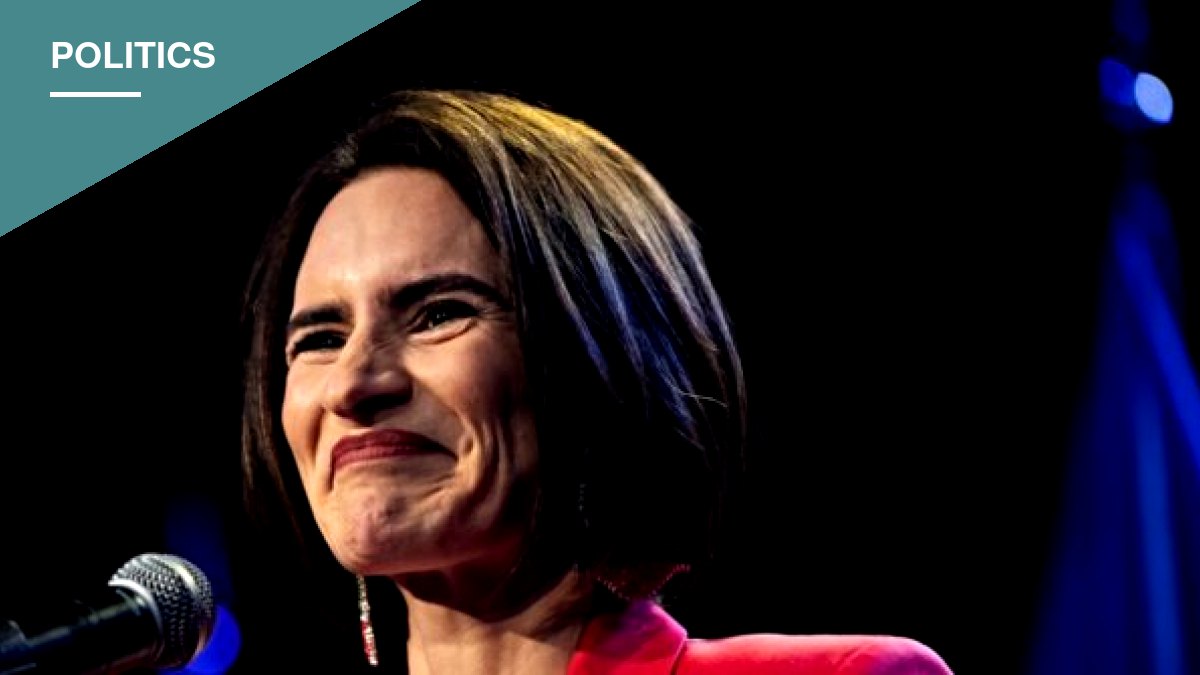
A new state audit has found that the office of Minnesota Lieutenant Governor Peggy Flanagan operated for years with weak financial controls, unresolved recordkeeping failures, and repeated violations of state purchasing rules, according to findings released by the Office of the Legislative Auditor.
Deputy Legislative Auditor Lori Leysen issued 12 findings covering the period from July 1, 2022, through December 31, 2024. The report noted that four of five relevant findings from a prior 2022 audit remained unresolved, pointing to a pattern that persisted across multiple budget cycles rather than a single lapse.
Flanagan, the Democratic nominee for U.S. Senate seeking to succeed retiring Sen. Amy Klobuchar, faces Republican Michele Tafoya in November.
Overpayments and unreturned funds
According to Finding 3 of the audit, Flanagan’s office routinely overpaid separated employees and made no substantial effort to recover the money. When auditors asked in April 2025 why the office had not pursued recovery of thousands of taxpayer dollars paid out in error to former staff, the office responded that doing so was “not in the public interest.”
Purchasing card limits bypassed
Finding 12 of the audit describes cardholders in the office splitting purchases into multiple transactions to avoid the state’s $5,000 single-transaction limit on purchasing cards. Auditors cited $7,893 spent on flowers and $7,343 spent on furniture, each broken into back-to-back transactions. The audit also found that cardholders involved had not signed updated card-use agreements since October 2015, a lapse auditors said allowed the control failure to go unchecked.
Documentation and reimbursement errors
The audit also documented basic recordkeeping failures. Flanagan’s staff overpaid invoices for state airplane usage after errors in recorded travel dates, according to documentation from the Minnesota Department of Transportation; the office ended up paying both the original incorrect invoices and the corrected ones.
Of 40 employee reimbursements tested, 14 contained errors, including miscalculated mileage, improper meal claims, and basic arithmetic mistakes. Separately, 40 of 41 vendor payments tested lacked complete documentation — missing price quotes needed to verify competitive bidding, and missing packing slips or delivery confirmations showing the state actually received what it paid for.
Minnesota Senate Republican Leader Mark Johnson said in a statement responding to the audit: “Overpaying employees, losing state property, and stiffing vendors for months — it’s no wonder massive fraud is exploding across state government.”
State lawmakers noted the 2022 audit produced six major findings, five of which were still considered relevant, and that Flanagan’s office had fully resolved only one of them by the time the newer audit was conducted.

