

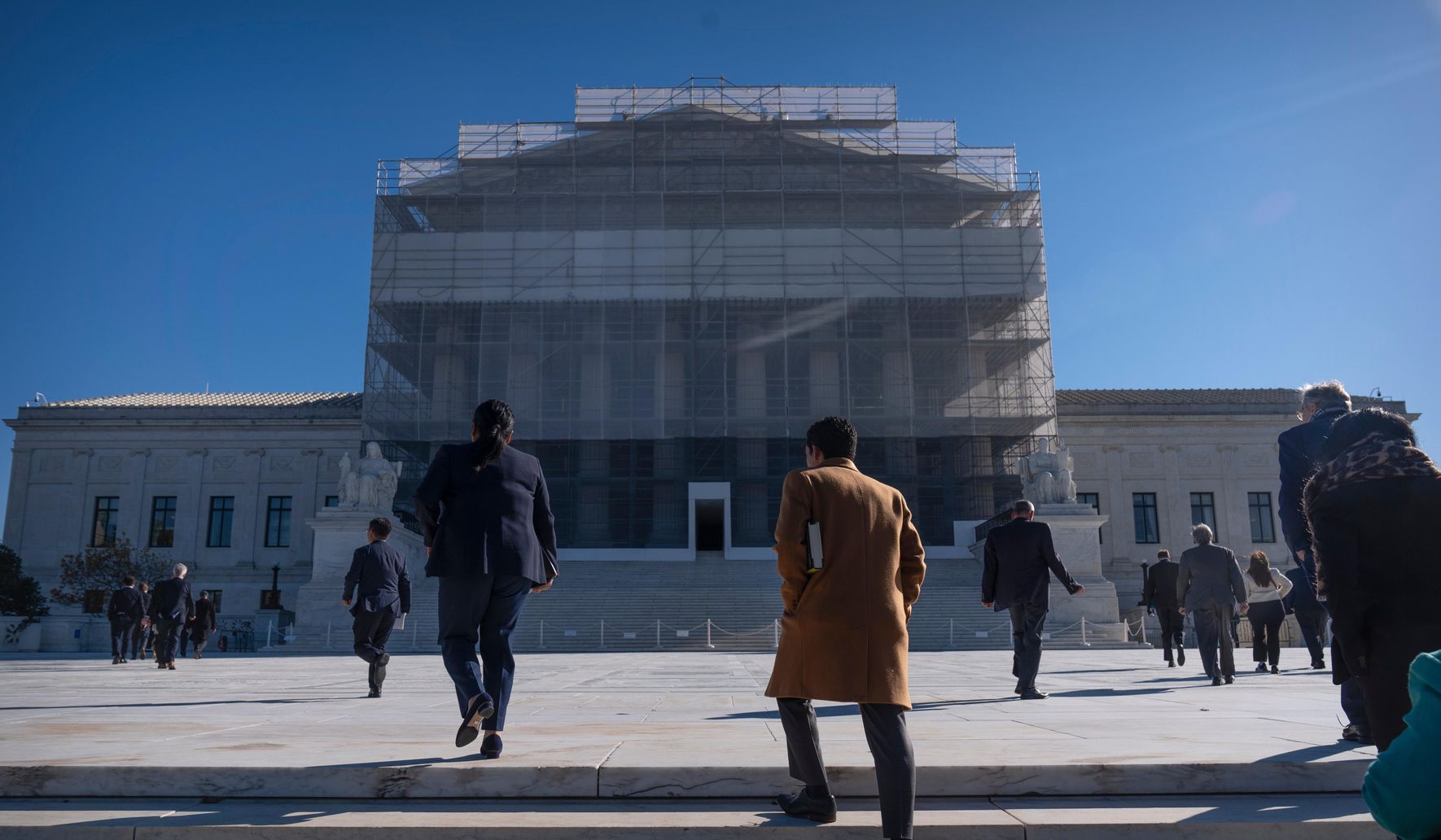
The Supreme Court has several big cases lined up early in the new term that could shape President Trump’s time in office, and those decisions may arrive sooner than many expect. These cases touch on executive authority, criminal subpoenas, election rules, and commerce, and they will test how the high court balances the branches. Stakes are high politically and legally, and the outcomes will matter for governance and for the Republican view of constitutional limits and presidential prerogatives.
It’s still early in the new term, but the Supreme Court already has several major legal battles teed up for rulings that could shape President Trump’s presidency — and they could be issued. That sentence underlines how quickly the court can influence the political calendar, and why conservative observers are watching every filing and argument closely. For Republicans who favor a strong executive, these cases are not abstract; they go to the heart of how the presidency functions when under intense legal pressure.
One cluster of disputes centers on presidential immunity and the scope of executive privilege when a president faces investigation or prosecution. The conservative position favors clear protections that allow a president to perform duties without constant threat of criminal distraction, and supporters argue the court should draw bright lines. Opponents worry about accountability, but a durable rule from the justices could prevent endless lower-court fights and preserve the separations the Constitution requires.
Another major set of questions involves subpoenas and document demands for former and current officials, where the court must decide how far Congress, prosecutors, and special counsels can reach. Republicans generally prefer limits that prevent broad, fishing expeditions that hamstring executive decision making and chill candid advice. A Supreme Court opinion narrowing subpoena power would be welcomed by conservatives as a guardrail against politicized investigations.
Election law issues are also on the docket, and those cases could affect how states manage ballots, voter rolls, and certification disputes in future contests. Many Republicans argue for state authority and strict adherence to election statutes rather than judicially driven remedies, believing that elections are best resolved at the state level. The high court can reaffirm those principles, offering predictability and reducing the temptation to seek last-minute federal fixes.
Economic and administrative questions, from trade and tariffs to agency rulemaking, will test how aggressively the judiciary checks the executive and regulatory state. Conservatives favor judicial skepticism toward agency overreach and want courts to rein in regulators that impose costly, vague mandates without clear statutory authority. A clear set of rulings that restores routine judicial enforcement of statutory limits would bolster market certainty and curb runaway regulatory power.
The timing of decisions matters politically because orders from the Supreme Court can land in the middle of campaigns or key policy windows. Republican strategists know that a favorable ruling can preserve a president’s ability to govern and can blunt opposition narratives about lawlessness or impropriety. That makes these cases both legal fights and high-stakes political events, with outcomes that will echo through the next election cycle.
Finally, the composition and philosophy of the court itself shapes expectations about how these cases will be decided. Conservative justices generally emphasize textualism, original public meaning, and restraint, which aligns with Republican calls for judges to apply the law rather than make it. If the court follows that approach, rulings could reinforce presidential authority in narrowly defined, constitutionally grounded ways that respect both separation of powers and democratic accountability.

