

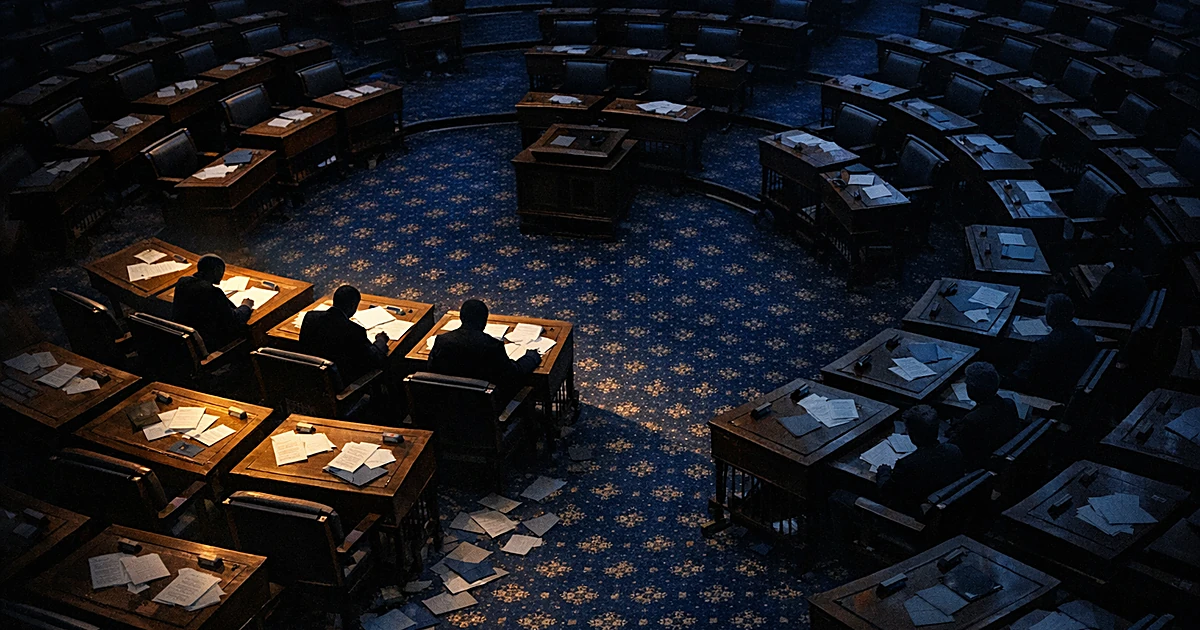
The Senate fell short of passing the SAVE America Act as an amendment during a reconciliation vote, with four Republican senators joining Democrats to defeat Sen. John Kennedy’s proposal, exposing a split between the party base, President Trump, and a small group of senators who refused to force the issue through the budget process.
Early Thursday during a marathon vote-a-rama, Kennedy’s amendment failed 48-to-50 when Senators Thom Tillis, Lisa Murkowski, Susan Collins, and Mitch McConnell broke with the majority. The defeat was a clear setback for a voter-integrity measure that President Donald Trump has repeatedly pushed and framed as nonnegotiable.
Kennedy’s modified proposal would have directed the Senate Rules Committee to craft federal voter ID requirements, limited voting to Election Day only, required ballots be counted within 36 hours, and capped implementation spending at $10 billion. Kennedy acknowledged the Byrd Rule might block parts of the effort, but he argued it was worth attempting under reconciliation anyway.
“Some say it can’t be done under the Budget Act and under the Byrd Rule and reconciliation. And you know what? They may be right. But you know what else? They can’t predict the future. They’re not clairvoyant.”
Despite Kennedy’s framing, four Republican defections doomed the amendment. Collins had signaled support for the SAVE Act in another form, but she opposed this reconciliation vehicle, and McConnell voted no even though his committee would have written the implementation language.
The broader reconciliation package, a roughly $140 billion immigration enforcement plan, still moved forward, so Republicans did not lose the entire fight. That distinction matters politically, but losing this specific vote undercuts the message of unity the base expects on proof-of-citizenship rules for federal elections.
President Trump warned he would not sign other bills until the SAVE Act passed and criticized watered-down versions on social platforms. Whether the amendment’s defeat is seen as a temporary procedural loss or a meaningful betrayal will shape intra-party tensions going forward.
This is familiar terrain for the GOP in this Congress: the House moves a priority, the president applies pressure, and a handful of Senate Republicans raise procedural or substantive objections. The result has often been delay and frustration rather than clear progress on agenda items embraced by the Republican base.
Sen. Alex Padilla, the top Democrat on the Rules Committee, dismissed the effort on the floor as an extreme and unnecessary measure, arguing the Senate had already spent weeks debating the issue without success.
“But I think, despite how you felt about the SAVE America Act, which certainly cannot pass the Senate, even my Republican colleagues would say the measure suggested by our colleague from Louisiana is an even more extreme version.”
Padilla’s dismissal became functionally true when four GOP senators provided the margin needed to sink the amendment. Democrats simply voted no and watched the Republicans provide the decisive votes against the effort, illustrating how fragile a 50-vote majority can be when internal discipline slips.
Kennedy kept a calm tone after the vote and publicly declined to attack colleagues who voted against the amendment, even as the failure reflected badly on the majority’s ability to deliver for a top priority. His remarks underscored both the strategic gamble of pursuing reconciliation and the political costs when it fails.
“If you vote against this bill, I’m not going to say a word. And I’m sure as h*** not going to go on social media and call you an ignorant slut. That’s not the way I roll, unless I’m pushed too far.”
The episode highlights a recurring problem for Senate Republicans: a narrow majority means individual senators can, and do, reshape outcomes on items that matter to the president and the base. From war powers to high-profile nominations, small groups of holdouts carry outsized influence.
Support that looks solid in the abstract can vanish when the vehicle changes. Several senators expressed willingness to back a standalone SAVE Act but balked at attaching it to reconciliation, demonstrating a procedural barrier can be as decisive as a policy disagreement.
What happens next is unclear. The SAVE Act may reappear as a standalone bill, be folded into other measures, or stall indefinitely depending on how much political capital Republican leaders want to spend and how the president responds to intra-party dissent.
For now, the takeaway for voters is simple: the Senate majority could not muster the 50 votes required for a high-profile voter-integrity measure the House passed and the president demanded. When members of your own party provide the margin of defeat, the problem is unity, not opposition.

