

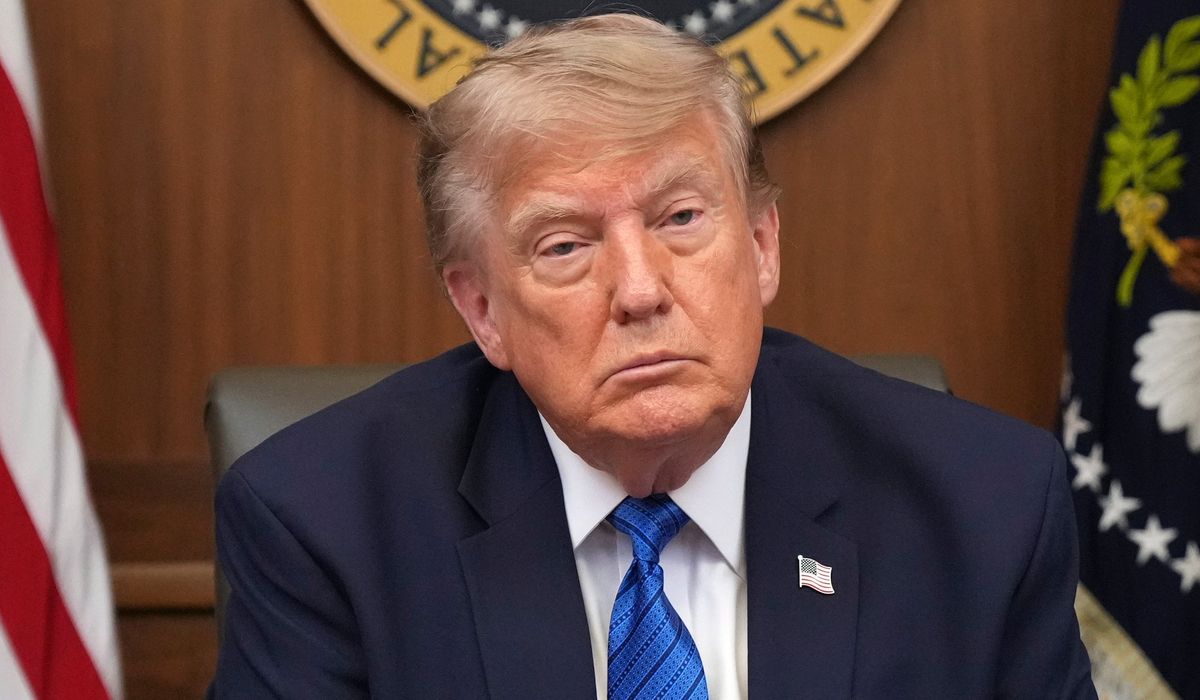
President Trump and his sons announced on Friday that they are appealing a court order that halted a settlement he reached with his own administration over a $10 billion lawsuit involving the IRS.
On Friday, President Trump and his sons said they are appealing a court decision that blocked the deal he reached with his own administration settling his $10 billion lawsuit against the IRS. The family moved quickly to take the dispute up the judicial ladder, signaling they see the injunction as a clear overreach. The appeal aims to restore the settlement and push back against the judge’s intervention.
The settlement had been presented as a resolution between the president and the agencies involved, but the court stepped in and prevented it from taking effect. From a Republican perspective, that move raises serious separation of powers concerns because settlement decisions are traditionally within the executive branch’s authority. Supporters argue the president has the right to negotiate and finalize agreements that resolve disputes with federal agencies.
Legal teams for the Trumps are expected to argue that the court’s blockade undermines executive discretion and opens the door to judicial second-guessing of political settlements. They will likely emphasize settled principles about the executive’s power to determine when and how to settle litigation involving the government. That line of reasoning is central to the appeal and frames the case as more than a single financial dispute.
The $10 billion figure makes this case unusually high profile, and Republicans say the amount only underscores the need for clarity about who has authority to settle high-stakes disputes. Allowing judges to nullify executive agreements because of political discomfort could chill future administrations. Conservative voices worry that a ruling against the settlement would invite courts to become regular participants in policy and financial decisions better left to elected officials.
The involvement of Trump’s sons adds a family and campaign angle that keeps media attention intense and the political stakes high. Their participation underscores the administration’s unified front and its intent to pursue every available legal remedy. For supporters, that demonstrates determination to defend executive prerogatives and to push back against what they view as activist courts.
On the procedural front, the appeal will test how higher courts balance judicial review with respect for executive settlements. Appellate judges will have to consider whether the lower court applied an appropriate legal standard in halting the agreement. The outcome could shape standards about when courts can step in to block deals involving the government.
Republican commentators are framing the legal fight as a defense of constitutional boundaries and a warning against judicial encroachment on political questions. They argue that permitting courts to override settlements negotiated by the executive invites instability and politicizes litigation. That framing keeps the dispute tied to broader debates about the limits of judicial power and the proper role of the branches of government.
As the appeal moves forward, both legal strategy and public messaging will matter for the Trump team. The administration and its attorneys are signaling readiness to argue forcefully at the appellate level, while conservative allies publicize concerns about precedent and executive authority. The coming weeks will determine whether the settlement survives judicial scrutiny or if the dispute escalates further into higher courts.

