

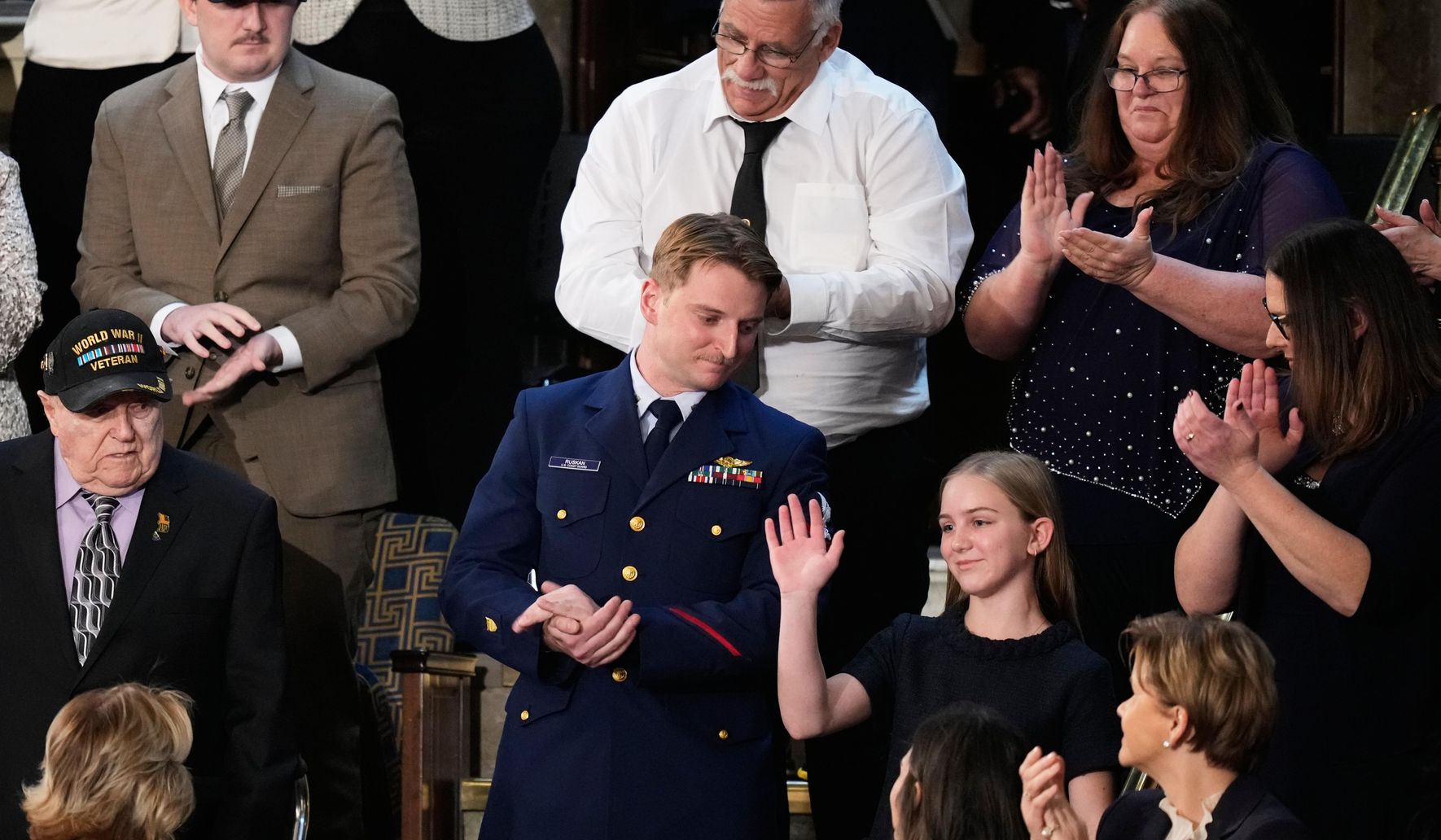
President Trump honored a World War II veteran and a Coast Guard member during his State of the Union address, putting personal recognition of service at the center of the speech.
President Trump singled out World War II veteran George “Buddy” Taggart and U.S. Coast Guard Scott Ruskan during the State of the Union, a reminder that public ceremonies are also stages for respect and recognition. The moment was brief but meaningful, calling attention to two Americans whose service spans generations and branches. For many viewers, that recognition did what speeches should: it put faces to the idea of sacrifice.
George “Buddy” Taggart represents a generation that answered a clear call to duty, and his appearance underscored the enduring debt the nation owes to its World War II veterans. Veterans like Taggart remind us of what civic responsibility looks like in hard times, and why honoring their stories matters beyond rhetoric. Pointing them out in a national address keeps those stories alive for younger Americans who may never meet a veteran in person.
Scott Ruskan, serving in the U.S. Coast Guard, stands for the ongoing, often quiet professionalism of the military services that protect daily American life and commerce. Coast Guard missions range from search and rescue to homeland security, and recognition on a national platform signals that their work does not go unnoticed. Bringing a service member into the spotlight during a high-profile address communicates straightforward gratitude from the government to those who serve now.
Highlighting individual service members gives the State of the Union a human touch, moving it from abstract policy talk to personal stories of sacrifice and duty. Those personal narratives help frame debates about veterans’ benefits, military readiness, and support for families left behind when service members deploy. When presidents point to real people, they remind lawmakers and citizens that votes and budgets have real-life consequences.
For conservatives who emphasize service, duty, and national pride, moments like these are more than symbolism; they are a reaffirmation of values that bind citizens across political divides. Recognizing veterans and active duty personnel during a major address reinforces priorities: honor the past, secure the present, and prepare responsibly for the future. It also opens a window for practical policy talk about improving care, benefits, and support systems for those who served.
There is a practical side to public recognition as well: it focuses attention on how the country treats its veterans once they come home. From healthcare and mental health services to job training and family support, the policy choices lawmakers make determine whether recognition is merely ceremonial or backed by real improvements. Pointing out veterans and active duty members forces elected officials to match applause with action if they want to be consistent in their support.
Moments like the one featuring George “Buddy” Taggart and Scott Ruskan work because they cut through partisan noise and invite a simple response: respect for service. The photos and short on-stage moments may be fleeting, but they shine a light on the people who shoulder risks for the rest of the country. When an address highlights everyday Americans who served, it gives citizens a straightforward lens through which to judge leadership and priorities.

