

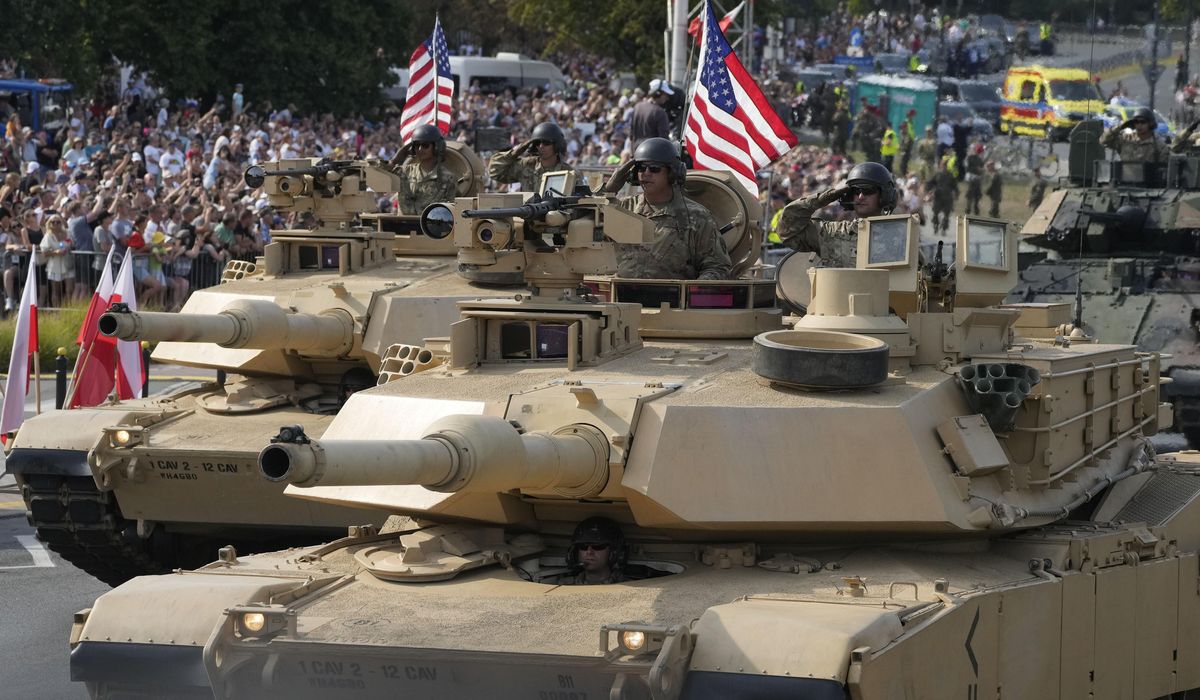
President Trump said Thursday he is sending an additional 5,000 U.S. troops to Poland, reversing a recent decision to cancel certain deployments to Europe. This move restores forward presence in Eastern Europe and signals a tougher posture on deterrence. The announcement sets a clear operational and political shift for U.S. forces and NATO partners.
The deployment of 5,000 additional troops to Poland is a concrete reversal of a prior plan to cancel some European rotations. That change matters because forward presence is the clearest, fastest signal of American resolve to allies and rivals alike. For Republicans, it reads as a return to predictable strength and a preference for posture that prevents threats before they escalate.
Sending forces to Poland reinforces the bilateral bond between Warsaw and Washington while bolstering NATO’s eastern flank. The decision emphasizes interoperability, joint exercises, and visible assets positioned where they can most effectively deter aggression. It also answers concerns from allies who have urged sustained American leadership without equivocation.
From a strategic standpoint, forward-deployed troops complicate an adversary’s calculations and expand the options available to U.S. commanders. Stationing forces abroad is not just symbolic; it creates real time and space for response, intelligence-sharing, and combined readiness. Republican policymakers argue that credible deterrence backed by presence is cheaper than fighting a war after a crisis breaks out.
Logistics and rotation plans will be key to making the deployment sustainable and politically palatable at home. The goal will be to rotate cleanly, maintain high readiness, and limit indefinite permanent basing where possible, while ensuring forces have modern equipment and secure infrastructure. Clear timelines and cost-sharing discussions with allies fit a conservative preference for accountability in overseas commitments.
Domestically, this move plays into a broader debate about who keeps America secure and how to balance deterrence with fiscal discipline. Supporters will point to reduced long-term risk and the geopolitical upside of a robust forward posture. Critics will still question costs and the need for a transparent exit or rotation strategy tied to measurable objectives.
Operationally, commanders will focus on integrating air, land, and cyber capabilities to maximize the force posture in Poland and across neighboring states. Exercises, prepositioned supplies, and improved command-and-control will make those 5,000 troops more than just a headline figure. The immediate effect is to raise the planning horizon for any potential challenger and to give allies confidence that the United States intends to lead from strength.

