

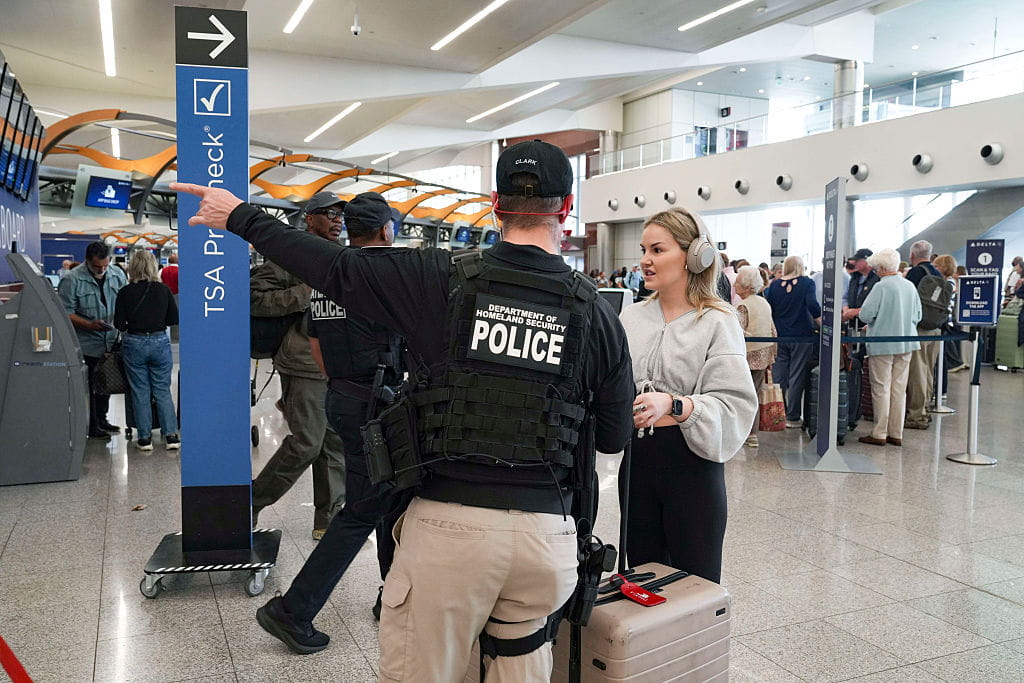
President Donald Trump has floated a bold fix for the growing TSA staffing crisis during the DHS funding standoff: deploy ICE officers to airports to keep security going while the politics play out.
The Department of Homeland Security shutdown has strained airport operations and left TSA short-handed at a time when travel demand remains high. Pilots, travelers, and airline staff are seeing longer lines and missed flights because the agency is running thin on people who screen passengers and secure checkpoints. Republicans point to the staffing gap as a clear reason Congress should settle funding quickly and restore pay certainty for frontline workers.
On Saturday the president threatened to move ICE personnel into airports if Senate Democrats would not agree to immediate DHS funding that restores pay for TSA workers. That statement landed as a practical threat and a political message: security comes first, and if the funding fight drags on, the administration will use existing law enforcement assets to shore up critical functions. Conservatives argue this shows leadership willing to use every tool to protect the public.
ICE agents bring law enforcement experience, patrol skills, and familiarity with screening and arrest procedures that can be adapted to airport needs. They are not identical to TSA screeners by training, but many ICE officers have experience in checkpoints and interdiction roles that translate to airport security tasks. The administration would need to manage cross-training and clear chains of command, yet Republicans see this as a stopgap that preserves safety while lawmakers argue.
Democrats have used appropriations fights as leverage before, and lawmakers on both sides tend to assume the other will blink first. From a Republican perspective, withholding funds that pay TSA staff is political brinkmanship at the expense of travelers and national security. The argument that the minority should be able to hold essential services hostage does not play well with voters who expect functioning airports and safe skies.
Beyond the politics, the operational picture is grim when TSA vacancies surge and morale falls. Lower staffing means longer wait times, more overtime for those who remain, and a higher risk of mistakes born from fatigue. Republicans stress that paying workers and stabilizing staffing is the efficient, responsible course and that emergency measures should not become a routine substitute for proper funding.
There are legal limits and practical hurdles to any sudden redeployment of ICE personnel, and critics will point to role confusion and mission creep. Still, presidential authority over DHS components gives the administration options to shift resources in emergencies. From the right, the priority is clear: secure airports now, then sort policy debates, not the other way around.
Using ICE at airports would also send a message about priorities—law and order, secure borders, and protecting the traveling public. That message resonates with voters concerned about everyday safety more than procedural fights inside the Capitol. Republicans are framing this not as a power grab but as a pragmatic move to ensure continuity of essential services amid partisan obstruction.
Meanwhile, frontline TSA workers want predictability: stable pay, reasonable staffing ratios, and respect for the risks they take every day. Failure to fund DHS puts those workers in the middle, forcing them to absorb operational chaos for political reasons. Conservatives argue that honoring pay and protecting public safety should be bipartisan priorities that transcend budget battles.
The looming possibility of ICE filling airport roles raises real questions about how far an administration should go when Congress stalls on funding critical services. For Republicans, the answer leans toward decisive action to prevent harm and uphold public safety, even if that requires temporary shifts in who performs certain duties. The unfolding standoff tests how the federal government balances political strategy against the practical need to keep airports moving and people safe.

