

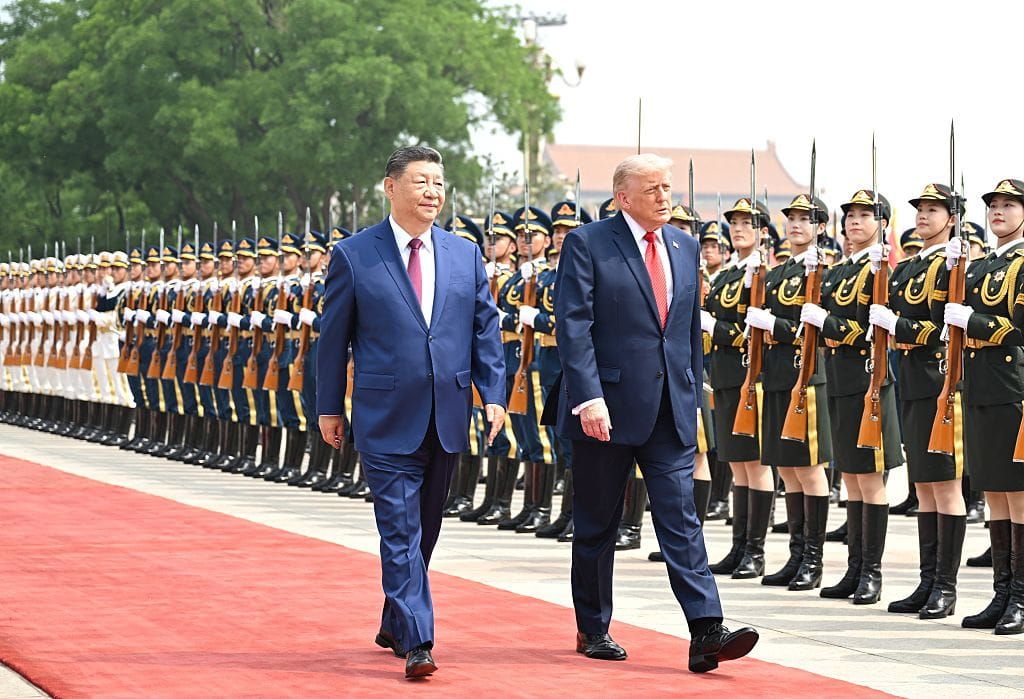
Mike Sarraille, a retired US Navy SEAL, former Recon Marine, and chief talent officer for Overwatch Mission Critical, weighs in on President Donald Trump’s meeting with Chinese Communist Party leader Xi Jinping and what it means for Iran’s future — especially as Beijing chases energy and influence while Tehran faces deeper isolation and mounting economic pressure.
Mike Sarraille appears on Liberty Nation to break down the fallout from Trump’s summit with Xi and to connect recent events to long-standing lessons from the past. His résumé — retired US Navy SEAL, former Recon Marine, and chief talent officer for Overwatch Mission Critical — gives him a hard-nosed view of how alliances, markets, and covert action intersect. The conversation zeroes in on how China’s priorities will shape the region and America’s posture.
At its core, China wants reliable energy, not a healthy Iranian state. Beijing’s approach is transactional: secure oil, guarantee supply lines, and expand influence without costly commitments. That means China will likely deepen economic ties with Iran where it serves Beijing’s needs while staying clear of anything that strengthens Tehran’s independent military power.
For Iran, the result is predictable and grim. Greater dependence on China won’t reverse decades of economic decay caused by sanctions, bad governance, and corruption. Instead, increased Chinese investment and trade will tilt Iran into a narrower orbit of vulnerability, where Tehran loses leverage and domestic conditions continue to deteriorate.
The interview also ties recent covert operations to historical lessons, pointing back to the 1980 Operation Eagle Claw. Sarraille draws a line from that failed mission to the dramatic rescue of two Air Force officers inside Iran over Easter weekend. Military professionals study both success and failure; those comparisons matter because they shape how the U.S. plans future operations and protects personnel in hostile environments.
China’s presence in Iran is not a strategic rescue for Tehran; it is leverage for Beijing. Loans, energy deals, and construction projects will come with strings that favor Chinese firms and Chinese strategic goals. Tehran risks becoming a junior partner in a relationship that extracts resources while offering limited security guarantees in return.
From an economic angle, the squeeze will be real and measurable. Sanctions remain a blunt instrument, but direct commerce with China can hollow out Iran’s bargaining power while failing to deliver broad economic relief for ordinary Iranians. The best-case scenario for Tehran is a brittle, energy-export driven economy that funnels revenue outward and leaves the internal structural problems untouched.
Politically, the summit exposes a tradeoff: deal-making can secure short-term American priorities but also open room for rivals to maneuver. A Republican viewpoint sees value in strong negotiating leverage combined with clear commitments to U.S. security and regional partners. Win or lose in any single meeting, the United States must protect its interests without handing strategic advantage to a rival that only wants resources.
On a cultural note, Sarraille also teases his upcoming docuseries on FOX Nation, The Unsung of Arlington, which explores service and sacrifice from a boots-on-the-ground perspective. The project reflects the same focus he brings to geopolitical analysis: attention to detail and respect for the mission.

