

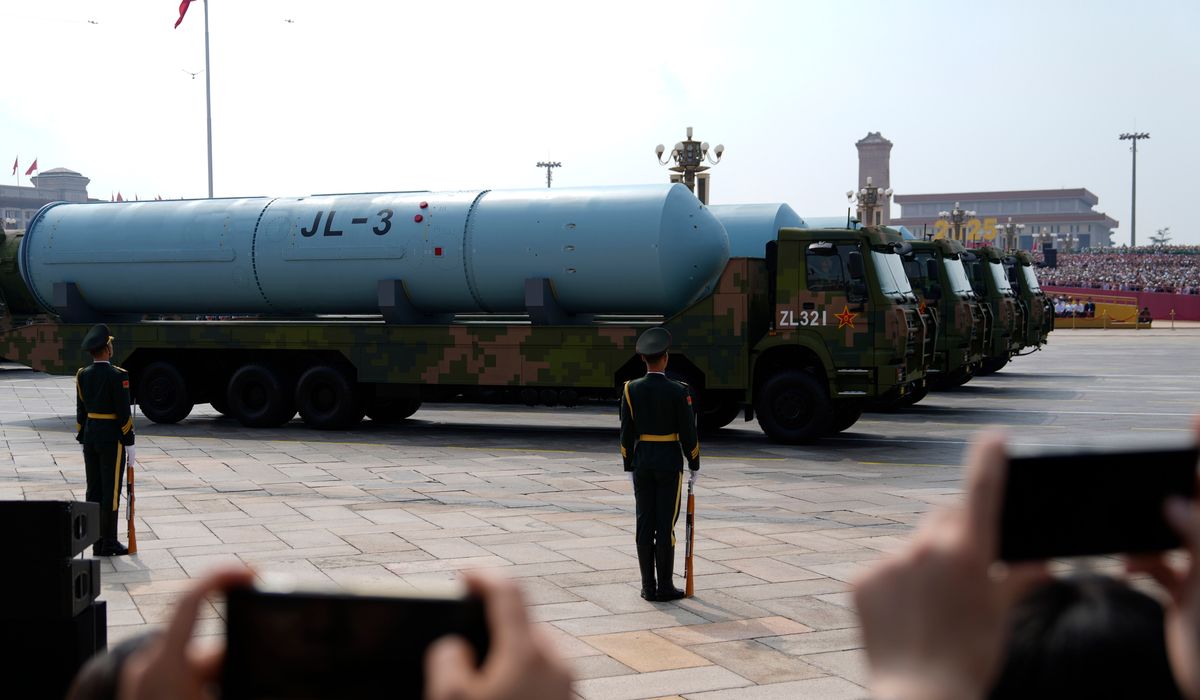
China tested a submarine-launched ballistic missile without adequate warning, prompting the U.S. and 40 countries to demand clearer advance notice and greater transparency to avoid miscalculations and protect regional stability.
China’s recent test of a submarine-launched ballistic missile without adequate warning prompted the U.S. and 40 countries to demand greater advance notice of such tests, the State Department said. That single sentence sits at the center of a wider diplomatic push for predictable behavior in sensitive military domains. In Washington, Republican leaders view unpredictability from Beijing as a direct risk to allies and to deterrence.
The lack of timely notice matter-of-factly raises the stakes for routine military operations in the Indo-Pacific. When a nuclear-capable system is tested without advance coordination, allies and partners are forced to scramble for assessments and risk misreading routine activity as hostile intent. From a policy perspective, transparency reduces the chance of dangerous escalation and keeps channels open for deconfliction.
Republican voices in the U.S. argue that deterrence depends on clarity as much as capability. The message being sent to Beijing is simple: strategic ambiguity that undermines safety will not be tolerated. That stance blends diplomatic pressure with the readiness to reinforce allied defenses and forward posture where necessary.
Forty nations joining the U.S. statement underscores how broadly this issue resonates beyond bilateral tension. Countries with stakes in freedom of navigation and regional stability depend on predictable behavior from major militaries. Collective statements like this one amplify pressure and make clear that transparency is an international expectation, not a special request.
At the State Department level, officials framed the demand as one for greater advance notice, not confrontation. The practical goal is to reduce risk—allowing militaries to distinguish routine tests from escalatory moves. Diplomats prefer a procedural fix that lowers the chance of a miscalculated response during high-tension windows.
Still, Republicans emphasize that procedural fixes must sit alongside firm deterrence. Transparency cannot become a substitute for capability. U.S. policy should balance urging predictable behavior from rivals while preserving the strength and readiness that keeps competitors honest and reassures allies.
This incident also highlights the naval dimension of modern deterrence. Submarine-launched missiles change the strategic environment by offering stealthy launch options, which is why notification practices matter so much. Allies want to know when major systems are being exercised to avoid confusion and to maintain operational safety at sea.
Structuring an effective response means using diplomatic lanes, reinforcing alliances, and sustaining credible military capacity. The bipartisan consensus in Congress often converges around enhancing missile defenses and joint drills with partners. Such measures ensure that calls for transparency are backed by the capability to respond if necessary.
Finally, the broader lesson is that norms and expectations still matter in international security. When a major power conducts sensitive tests without adequate warning, it strains those norms and invites pushback from a wide coalition. Keeping the peace requires both firm words and the credible means to back them up, a point that Republican leaders consistently stress.

