

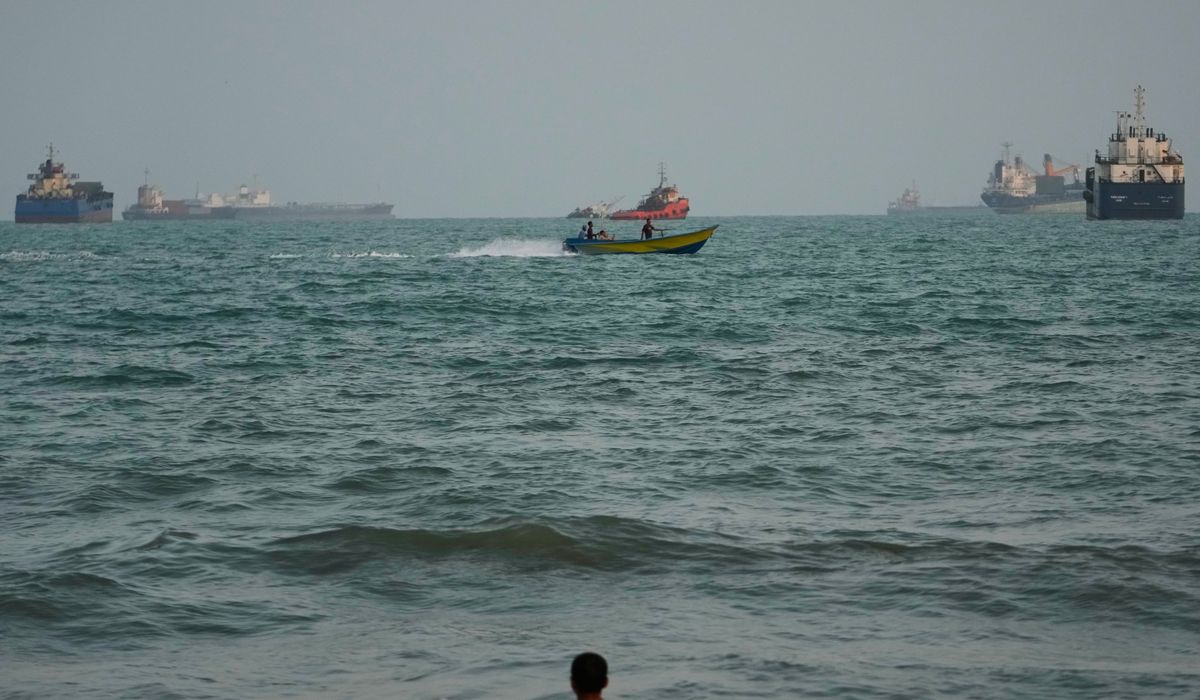
The U.S. military says it struck three Iranian oil tankers after Navy warships came under missile attack, and issued a sharp warning that included the phrase “if necessary, destroy Iran’s limited and expose”.
The U.S. military reported strikes on three Iranian oil tankers after multiple Navy vessels were targeted with missile fire. Officials described the action as a direct response to threats against American forces at sea. The move is presented as a measure to protect naval operations and freedom of navigation.
Military leaders framed the strikes as constrained but decisive, signaling a willingness to meet aggression with force. Commanders emphasized the need to deter further attacks on U.S. ships and sailors operating in contested waters. Those leaders made clear that protecting personnel and assets remained the immediate priority.
The public statement from the Pentagon included a warning that read “if necessary, destroy Iran’s limited and expose” exactly as released. That fragment appeared amid a broader declaration meant to show resolve without escalating into open, prolonged conflict. Critics and supporters alike seized on the language as emblematic of an aggressive posture.
On the operational level, U.S. officials said the strikes targeted tankers believed to be involved in facilitating hostile activities. The military described the action as aimed at reducing Iran’s capacity to use maritime resources as instruments of coercion. That rationale reflects a strategy of striking economic and logistical nodes rather than only direct combatants.
Republican voices in Congress quickly praised the administration and military for taking forceful action to protect American forces. They argued the strikes were a necessary pushback against repeated provocations. Lawmakers framed the response as a reminder that strength and clarity of purpose matter in international relations.
Defense analysts pointed out the risks of miscalculation in such exchanges, but also noted the deterrent value of visible consequences. When a navy can respond swiftly and visibly, potential adversaries must factor that into their calculations. The balance the U.S. seeks is to impose costs without triggering wider war.
Maritime trade and commercial shipping in the region reacted with concern after the strikes were announced, as insurance rates and transit planning adjust to new risks. Shipping companies and insurers monitor such developments closely, and rerouting or added precautions often follow. For nations reliant on the flow of oil and goods, stability in choke points like the Strait of Hormuz remains vital.
Diplomats in allied capitals emphasized the need for de-escalation even as they acknowledged the right to defend sovereign forces. Quiet back-channel efforts often accompany public shows of force, aiming to avoid a spiral of reprisals. Allies worry that missteps at sea can quickly broaden into regional conflagrations unless checked by strong, coordinated diplomacy.
Military officials reiterated rules of engagement designed to protect noncombatants and limit collateral damage. They said intelligence assessments guide target selection and timing to ensure proportionality and legal compliance. Transparency on the decision-making process, they argued, helps maintain domestic and international legitimacy.
Domestic political reactions followed predictable lines, with Republican commentators stressing national resolve and Democratic voices urging caution and a focus on diplomacy. The division reflects broader debates over how best to deter adversaries while avoiding open-ended commitments. Lawmakers on both sides called for briefings to clarify the operational picture and policy goals.
The incident is likely to shape policy discussions about U.S. presence in the region and the tools used to protect it. Military planners will weigh lessons learned about maritime defense, intelligence sharing, and allied coordination. For now, the strikes serve as a clear message that attacks on American vessels will meet a firm response, and that the stakes around freedom of the seas are not abstract.

